| WTI Crude | $82.66/bbl | -2.3% |
| Brent Crude | $84.12/bbl | -0.9% |
| HH Nat Gas | $5.91/MMBtu | +3.3% |
| MB Propane | $1.36/gal | -0.9% |
| 3:2:1 Crack | $20.72/bbl | -5.5% |
Huntsman wants to reduce in-car emissions
American chemicals producer, Huntsman, has launched a new range of low-emission MDI-based polyurethane (PU) foams for automotive interiors.
Automotive interiors?
You'll find polyurethane foams all over your car—think of them the next time you squish your seats or headliner. Polyurethanes are typically made by curing a reaction mixture of isocyanates (frequently MDI or TDI) with polyols (such as MEG), catalysts, surfactants, and a blowing agent.
The problem:
All polymers degrade over time, but when they are exposed to water, heat, and light they tend to degrade faster. Unfortunately for PUs, that means they can degrade into volatile organic compounds (VOCs) such as formaldehyde and acetaldehyde. Now, not all VOCs are bad, in fact, you probably enjoy the smell of VOCs all the time (they are what cause "new car smell" and most fragrances). But to be clear, the VOCs produced by degrading PU aren't super good for you. That's why Huntsman is introducing these PUs that don't emit as many VOCs.
Read the press release here.
TotalEnergies' upcoming molecular recycling plant
French oil major, TotalEnergies (formerly known as Total), has announced plans to build a molecular recycling plant with Plastic Energy somewhere in Texas.
Another one?
Yup—on Monday we talked about Neste's new plant, Exxon's last week, and Shell's another few weeks back. Don't expect this trend to stop. All of these sites are the first of their kind, and not all of the big players have made their big announcements.
The details:
This new plant, when it starts up mid-2024, will be capable of depolymerizing 33,000 tons of plastic waste into pyrolysis oil each year. Plastic Energy will handle the depolymerization and TotalEnergies will convert the pyrolysis product back into virgin-quality plastic (by blending it into their steam crackers and repolymerizing the product).
A little context:
This isn't Plastic Energy's first time working with a big petrochemical producer. They are the ones behind SABIC's molecular recycling site in the Netherlands, Exxon's site in France, and TotalEnergies' megacomplex in France.
Read the press release here.
CATOFIN is coming to India
India-owned natural gas processor, GAIL, has selected Lummus Technology's propane dehydrogenation (PDH) technology for India's first PDH plant.
Some context:
Because of all the new ethane crackers (which don't produce as much propylene as naphtha crackers) the world has relatively less propylene in the market. To account for that, on-purpose propylene plants have been built to fill the void. The leading on-purpose propylene process, Lummus' CATOFIN, removes hydrogen from propane (dehydrogenation) thanks to heat, pressure, and Clariant's catalyst.
Looking forward:
When this site starts up in 2024 it will produce some 500,000 tons of propylene each year (for perspective, this will be the 32nd CATOFIN plant, totaling 22 million tons of propylene per year). All of that propylene will be integrated with a polymerization plant downstream to make polypropylene. Maybe someday we'll see the CO2 these plants produce used to make methanol with all that hydrogen. That's what Celanese is looking to do in Clear Lake, Texas.
Read the press release here.
The Reboiler:
- India will be half of all Asian refinery projects through 2025
- Axens and Sumitomo Chemical are making progress on their joint waste-to-ethanol technology
- LyondellBasell And Covestro completed their waste to energy (to make steam) project
- Evonik started up its specialty silica plant inJapan
- BASF is now working with Svolt to make cathode active materials (CAM)
MOTD: ethylene
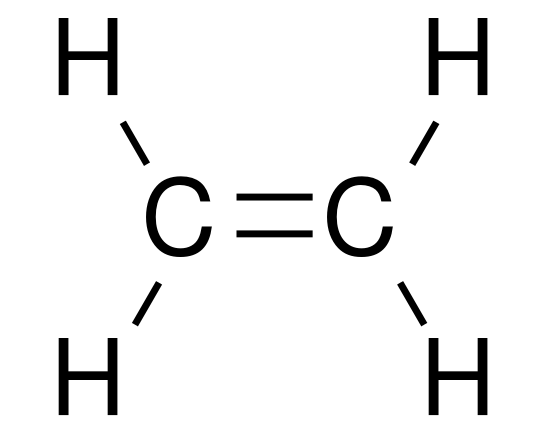
Today's MOTD deserves a round of applause, it's ethylene.
First discovered by this man in 1669, chemists have been playing with this molecule for quite some time. The term, olefin, has it's origin story in the fact that when ethylene is combined with chlorine it produces Dutch oil (which made ethylene an oil-making gas—or as they called it: olefiant gas).
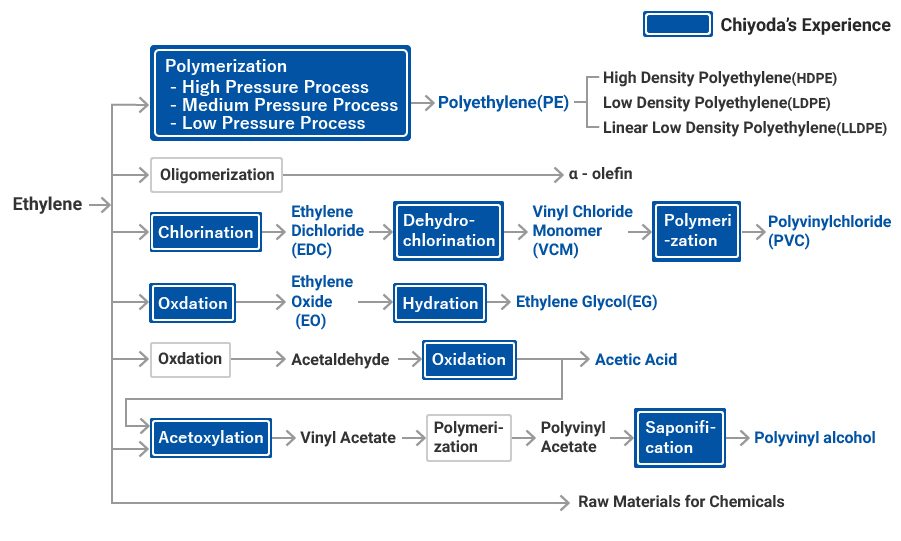
The simplest alkene is also the most widely produced organic compound in the world, with a globabl production of roughly 200 million tons per year. About 60% of that becomes polyethylene (HDPE 28%, LLDPE 18%, LDPE 14%), 18% becomes ethylene oxide, 11% becomes EDC (that's Dutch oil), and 5% becomes ethyl benzene. This flowchart paints a better picture.
All of that ethylene is made in one of three ways—steam cracking ethane and propane, steam cracking naphtha, or catalytically cracking gas oil. The main companies doing the cracking are your huge petrochemical companies like ExxonMobil, Dow Chemical, SABIC, Ineos, and many more.