
| WTI Crude | $52.78/bbl | +1.0% |
| Brent Crude | $55.44/bbl | +0.4% |
| HH Nat Gas | $2.63/MMBtu | +7.3% |
| MB Propane | $0.89/gal | +2.0% |
| 3:2:1 Crack | $12.87/bbl | +2.4% |
Phillips 66 is handed $3 million by the US DOE
US-based petroleum company, Phillips 66, has been awarded a $3 million grant from the DOE to advance the development of high-performance reversible solid oxide fuel cells (RSOFC).
Develop what?
RSOFCs are special fuel cells—they can operate in power generation mode (by combining a fuel with oxygen) or in electrolysis mode (producing syngas from water and CO2). Electrochemical systems like RSOFCs hold the promise of overcoming the typical limitations of catalytic reactors (like relatively low selectivity and high energy consumption).
Diving in:
Phillips 66 has been granted 8 patents and has 22 patents pending in the area of solid oxide fuel cells. The company will take that money and work with Georgia Tech to "demonstrate the commercial feasibility" of this technology in hopes that someday it can serve as an efficient means of low-carbon energy production and low-cost carbon capture.
Read the press release here.
SABIC's new chemical recycling plant is about to be built
Petrochemical giant (the Saudi Aramco subsidiary), SABIC, and chemical recycling company, Plastic Energy, announced that they are about to begin construction of a new chemical recycling plant.
Some context:
It was just two years ago that these two companies got together and signed an MoU. Plastic Energy is looking to have about 20 of these plants set in stone by 2023, so they are working with other companies like INEOS as well.
Plastic Energy's patented process uses thermal anaerobic conversion to produce a pyrolysis oil (they call it TACOIL) from end-of-life plastics (mixed, contaminated, multi-layered, etc.). The plant they will be built on SABIC's Geleen site in the Netherlands so that it can directly supply the petrochemical company with a circular feedstock that can be transformed into plastics.
Read the press release here.
Corbion is going to make a lot more lactic acid
Dutch biochemicals company, Corbion, has announced that it will be increasing its lactic acid production at it's Blair, Nebraska site by 40%.
Why the expansion?
In recent years, the growing demand for lactic acid has been fueled by demand for polylactic acid and ethyl lactate. But that might not be the case here—instead, Corbion quoted "growing demand for natural ingredients in multiple industries", and emphasized how lactic acid and its derivatives can be used in "foods and beverages for safe preservation" and "home and personal care products for effective but gentle disinfection and hygiene".
Anything else?
The company is hoping to demonstrate that the plant expansion can occur without increasing its emissions. To do so, Corbion "will employ technology designed to enable a significant boost in efficiency" that we will surely hear more about at a later date.
Read the press release here.
The Reboiler:
- SpaceX wants to drill for its own natural gas in Boca Chica
- Dow successfully launched shrink films made of 70% recycled plastic
- The API and AFPM commented on Biden's executive orders
- Sulzer came up with a circular system to make sebacic acid
- Ineos Styrolution plans to build a demo ABS plant using recycled feedstock
MOTD: cumene
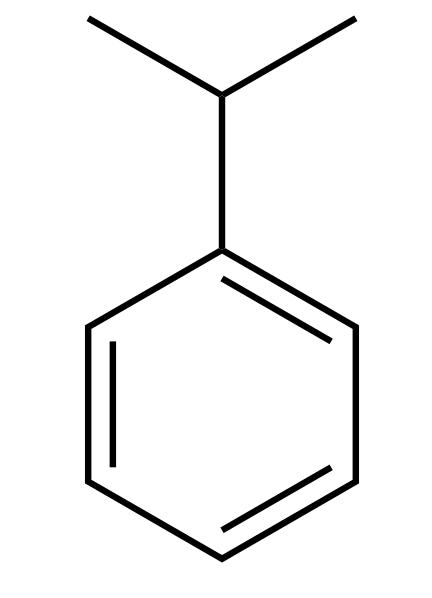
Today's MOTD is the world famous, cumene.
Cumene was just a component of aviation fuel during WWII (crude oil is about 1% wt cumene) before it got its big break in the early 1950s. Shortly after WWII, Hercules Powder figured out how the molecule can be used to produce phenol, making it an attractive molecule for petroleum companies to produce.
As it was done back then, most of cumene produced today is done by the Friedel–Crafts alkylation of benzene with propylene. That process spits out some 16 million tons per year of cumene. Nearly all of it, about 98%, is used to make phenol and acetone and the rest is used in high-octane aviation fuel or as a paint thinner.
Some of the main companies pumping out all the cumene are BASF, Dow Chemical, Tata Chemicals, Ineos, and ExxonMobil.