| WTI Crude | $80.67/bbl | +0.0% |
| Brent Crude | $83.53/bbl | -0.3% |
| HH Nat Gas | $5.56/MMBtu | +1.8% |
| MB Propane | $1.42/gal | -3.4% |
| 3:2:1 Crack | $22.52/bbl | +1.3% |
Exxon is going to depolymerize plastic in Texas
US-based petroleum company, ExxonMobil, has announced plans to build a 33,000 ton per year molecular recycling plant at its site in Baytown, Texas.
Catching you up:
This announcement shouldn't come as a surprise—last December we saw the company buy into Agilyx's plastic waste supplying subsidiary, complete a recycling test two months later, and then announce plans to build a plant like this one in France. We're seeing more and more of these petrochemical players take action every week.
What to watch for:
Petrochemical companies are purchasing pyrolysis oil (that's your depolymerized plastic waste) from start-ups like New Hope Energy and Nexus Circular left and right. It was only a matter of time before the likes of ExxonMobil start supplying themselves. Expect all of these big guys to get in it like ExxonMobil within the next year or two. Exxon is expecting to start up this new plant before the end of next year and intends on building 17x this initial capacity by 2026.
Read the press release here.
Emerson and AspenTech's big merger
Industrial automation giant, Emerson, and process industry software provider, AspenTech, have announced an $11 billion merger.
What is merging exactly?
Last August, Emerson acquired OSI (another software provider for the process industries) for $1.6 billion. Emerson is going to give OSI, another one of its software subsidiaries, and $6 billion to AspenTech in exchange for 55% of the new (bigger) AspenTech. Going forward, AspenTech can now expect annual revenues of about $1 billion (they did $700 million last year, and Emerson's businesses did $300 million).
What next?
According to the Wall Street Journal, the two CEOs seem to think that the combined company "could be better positioned for further acquisitions". Perhaps we'll see smaller software and automation providers like Imubit get snatched up in the coming years. It's safe to say that the merger will have absolutely zero effect on existing software like Aspen Plus (your favorite!).
Read the press release here.
Arkema's bean polymer for 3D printing
French specialty chemicals company, Arkema, has announced plans to build a new polyamide 11 (PA-11) powders plant in China.
More on the molecule:
Arkema's feedstock is the oil pressed from castor beans. The company produces undecylenic acid by the pyrolysis of ricinoleic acid (which is about 90% of the bean oil). Once Arkema has that undecylenic acid it converts it into 11-aminoundecanoic acid and polymerizes it into PA-11.
So, powders?
The company's polymerization plant is expected to start up early next year—that plant will feed this powders plant in China. The PA-11 powders are used for all sorts of things (like coating and electrostatic spraying) but also for powder bed fusion (PBF). Arkema mentioned that the demand for the new plant is largely driven by that PBF demand (we're talking about 3D printing) from the "consumer, industrial, and aerospace markets".
Read the press release here.
The Reboiler:
- Chevron set a new net zero aspiration and GHG intensity target
- Nova Energies is going to try to help Sibur reduce its emissions
- LG Chem is planning to compound more acrylonitrile butadiene styrene in Ohio
- Repsol officially made hydrogen from biomethane for the first time
MOTD: lithiumhydroxide
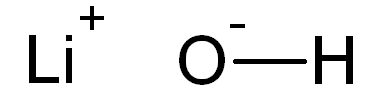
Today's MOTD is the best one yet: lithium hydroxide.
Lithium hydroxide got its big debut during the Cold War as an intermediate in the production of tritium to produce nuclear fusion weapons. The US became the primary producer of lithium hydroxide between 1950s-1980s, but things have changed since then.
Today, most lithium hydroxide is produced from the lithium carbonate that lithium brines give us. It's companies like Ganfeng, Albemarle, SQM, and Livent that are making all of that lithium hydroxide (and doing it primarily in Australia and Chile).
Nearly all of the lithium hydroxide produced is used to make the cathode materials in lithium-ion batteries (such as lithium cobalt oxide and lithium ion phosphate), but the stuff can also be used in a few other ways.