| WTI Crude | $62.18/bbl | +1.4% |
| Brent Crude | $65.75/bbl | +2.7% |
| HH Nat Gas | $2.79/MMBtu | +2.6% |
| MB Propane | $0.76/gal | +0.9% |
| 3:2:1 Crack | $16.89/bbl | +0.5% |
Arkema's bean-based polyamide plant will be ready next year
French specialty chemicals company, Arkema, has announced that its new bio-based polyamide 11 (PA-11) plant in Singapore will start-up in the first half of next year.
What are they making?
Arkema's feedstock is the oil pressed from castor beans. The company produces undecylenic acid by the pyrolysis of ricinoleic acid (which is about 90% of the bean oil). Once Arkema has that undecylenic acid it converts it into 11-aminoundecanoic acid and polymerizes it into PA-11.
Some context:
While bio-based chemicals may be all the rage today, Arkema has been making this polymer from castor beans for over 70 years. But now, growing demand for green materials, a mature production technology, and a plentiful raw material (those beans) is making Arkema's PA-11 much more enticing to produce.
Read the press release here.
INEOS and Trinseo are going to build a pilot plant
Two styrenics companies, INEOS Styrolution and Trinseo, have announced the selection of Recycling Technologies' polystyrene (PS) depolymerization technology for a joint pilot plant.
Some context:
Back in August, we saw INEOS Styrolution sign an agreement with Recycling Technologies to study its technology. Just one month later, INEOS Styrolution and Trinseo announced that they would be comparing Recycling Technologies' solution with a competitor (Agilyx). Today, the companies have decided to move forward with Recycling Technologies.
So, what now?
The three companies will build a pilot plant to gather "information and data related to chemical recycling and operations" for future full-scale facilities. Both INEOS Styrolution and Trinseo have announced plans to build full-scale sites in France and Belgium respectively.
Read the press release here.
DuPont will make more adhesives for cars
Delaware-based chemical company, DuPont, has announced plans to build a $30 million adhesives plant in East China.
Why make more adhesives?
As global trends like automotive electrification and vehicle lightweighting continue, the world is going to need more of these niche materials you probably haven't heard of. Check out how DuPont's polyurethane adhesives are critical to the battery packs in EVs, and how this structural adhesive keeps cars in one piece.
Looking forward:
DuPont recently established another adhesives facility in Japan with the same overall goal—to support demand growth in automotive electrification. The company hopes to start construction later this year and have the plant operational by early 2023. Don't be too surprised if they announce another adhesive expansion before this facility is up and running.
Read the press release here.
The Reboiler:
- Braskem is now a founding member of Cyclyx with ExxonMobil
- Phillips 66 secured some feedstock for its upcoming renewable fuels plant
- Biden is expected to pledge a 50% reduction in greenhouse gases by 2030
- LyondellBasell lifeted its force majeure on ethylene oxide and ethylene glycols
- W.R. Grace & Co. licensed its UNIPOL polypropylene technology to Sinochem
MOTD: pu
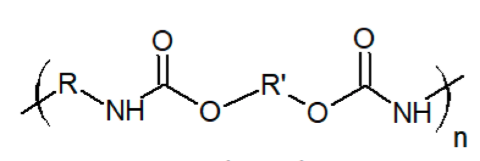
Today's MOTD is the one and only… polyurethane.
Always joined by urethane groups, this molecule is really just a placeholder for hundreds of different possible polyurethanes. Although the first polyurethanes were synthesized by IG Farben in 1937, we didn't start making these polymers commercially until 1954.
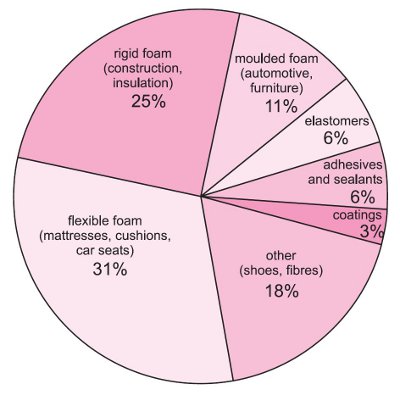
Today, the world produces about 20 million tons of this stuff each year. Most of it is made by reacting an isocyanate (like TDI or MDI) with a polyol (like PO or EO). We use the resulting polyurethanes (whose properties range significantly) for things like flexible and rigid foams, elastomers, adhesives, and sealants. Check out this helpful pie chart to see it for yourself.

The main companies producing these polyurethanes are Covestro, BASF, and Dow Chemical.