
| WTI Crude | $61.55/bbl | -2.6% |
| Brent Crude | $65.86/bbl | -1.5% |
| HH Nat Gas | $2.66/MMBtu | -5.0% |
| MB Propane | $0.95/gal | -3.0% |
| 3:2:1 Crack | $15.63/bbl | -2.8% |
Exxon has successfully tried to recycle plastic
US-based integrated petroleum company, ExxonMobil has completed the first phase of a plant trial to convert plastic waste into feedstock for new polymers.
What did they do?
While Exxon decided not to disclose any details regarding the test, the company is probably cracking pyrolysis oil (made from plastic waste) with its existing equipment. If that's what they are up to then they can join the list of other petrochemical companies trying this solution—recently we've seen CP Chem, Shell, and Neste all doing the same thing.
Taking a step back:
If you've been reading this newsletter for a while you might remember when Exxon announced a new joint venture (JV) back in December. That JV, called Cyclyx, is aiming to become a world leader in the aggregation and pre-processing of plastic waste. That JV is where Exxon will find its supply of usable waste-based feedstock in the future and it's something unique Exxon has going for itself.
Read the press release here.
Covestro has a new rigid foam made from CO2
German chemicals company, Covestro, has announced the successful production of a rigid polyurethane foam made with a novel CO2-based polyol.
A little background:
Polyurethanes (the polymers that become your mattress, seat cushions, and so much more) are produced by reacting polyols with isocyanates. There are countless different combinations possible that yield unique properties and applications. But these useful materials are traditionally produced from entirely petroleum-based chemicals. The company has been looking for sustainable alternatives and found its first in the polycarbonate polyols made from CO2 at its site in Germany.

So what happened?
Covestro has been developing another CO2-based polyol with a few other companies, and this announcement signals an early success. The company has successfully produced a rigid polyurethane foam made from a novel ethylene oxide and CO2-based polyol. Going forward Covestro wants to "manufacture additional prototypes and to enhance the properties" of its new foam for eventual use as in insulation board in the construction industry (which would love a new way to reduce its emissions).
Read the press release here.
Arkema to make more polymers for more batteries
French chemical company, Arkema, has announced that it will be expanding its site in Changshu, China to produce 35% more fluoropolymer.
What are they making?
The most well-known fluoropolymer is Teflon, but Arkema's fluoropolymer of choice is none other than polyvinylidene fluoride (PVDF). This polymer, specifically Arkema's Kynar brand, has found itself most useful as an electrode binder or separator coating in lithium-ion batteries. The company actually has a helpful video you can check out here.
So why the expansion?
Arkema just finished expanding this plant by 50% at the end of last year. As you've probably figured out by now, the company is continuing to expand its PVDF production because of "further strong demand in the lithium-ion battery business". More electric vehicles, cell phones, and other devices mean more batteries and therefore more polymers that bind them together.
Read the press release here.
The Reboiler:
- This survey confirmed that everyone wants a robot to clean oil terminal tanks
- Albemarle has decided to sell its fine chemistry services business for $570 milllion
- Alfa Laval is working on a new heat exchanger with Malta
- Quite a few of Honeywell's technologies will be used at a new petrochemical complex
- Huntsman raised $600,000 to aid the Houston area after the winter storm
- A consortium in Sweden will construct a demo plant for cellulosic textile fibers
- Borealis invested in a new thermal oxidizer to reduce CO2 emissions
MOTD: cyclohexane
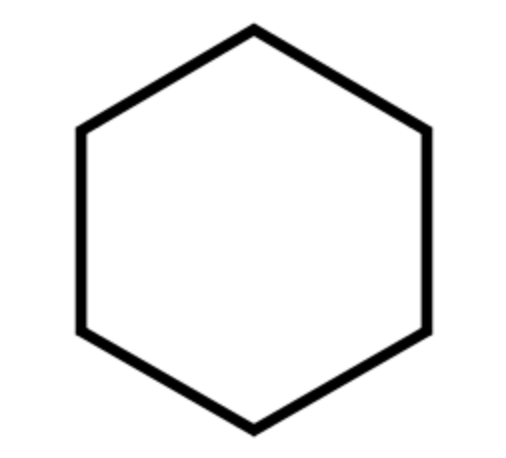
Today's MOTD is the most important one yet: cyclohexane.
This molecule is the one responsible for making you draw that weird chair confirmation thing in organic chemistry. Cyclohexane, unlike its resonant cousin benzene, was first produced by synthesis (as it wasn't found naturally occuring in coal). Today, the world produces cyclohexane by hydrogenating benzene in the presence of the same catalyst Murray Raney used to hydrogenate vegetable oils in the 1920s.
About 10% of the world's benzene is used to make cyclohexane, so annual production of cyclohexane is roughly 6 million tons each year. Virtually all of that cyclohexane is used to make cyclohexanol and cyclohexanone, which, in turn, are mainly used to make caprolactam (45%) and adipic acid (22%). Both adipic acid and caprolactam are primarily used to make nylon.
The cyclohexane market is fairly fragmented—the main producers don't produce much more than the minor producers. In any case, the companies producing cyclohexane are typically those who produce benzene or those nylon precursors. Think of BASF, CP Chem, and ExxonMobil.