
| WTI Crude | $52.81/bbl | +0.1% |
| Brent Crude | $55.07/bbl | -0.7% |
| HH Nat Gas | $2.77/MMBtu | +5.3% |
| MB Propane | $0.91/gal | +2.8% |
| 3:2:1 Crack | $13.05/bbl | +1.4% |
Air Liquide installs the world's largest PEM electrolyzer
French industrial gases company, Air Liquide, has announced that the world's largest proton exchange membrane (PEM) electrolyzer has been installed at its site in Bécancour, Québec.
How big are we talking?
This new 20 MW electrolyzer will produce 9 tons of low-carbon hydrogen each year. Maybe that doesn't sound like much, but at 20 MW this electrolyzer has twice the capacity of the previous record holder. Hydropowered by Hydro-Québec and built with Cummins' technology (we last saw them in August) this electrolyzer avoids the CO2 emissions equivalent to 10,000 cars per year.
Zooming out:
PEM electrolyzers aren't the only option for green hydrogen production—they compete with alkaline (which has been here for a century) and solid oxide (still in development, and seen last time) electrolyzers. Technology differences aside, PEM offers a relatively lower OPEX in exchange for a higher CAPEX. But since PEM manufacturing is ramping up that CAPEX figure is expected to drop. Perhaps that's why Air Liquide now owns 19% of Cummins' hydrogen technology?
Read the press release here.
LyondellBasell and Sinopec finally make it official
Global petrochemical corporation, LyondellBasell, and Chinese petroleum company, Sinopec, have finalized the formation of a 50:50 joint venture (JV) to produce propylene oxide (PO) and styrene monomer (SM) in China.
First, some context:
The production of PO isn't so simple, as virtually all of its production methods come with a co-product. Maybe that sounds nice at first, but what if the demand for the co-product (SM) isn't growing as rapidly as the demand for PO? That's the case here, and that's why you are seeing this plant built in China (demand for styrene is still increasing) and not in the US (where it is to a lesser extent). If you want to dive into this PO problem check this out.
The details:
First announced roughly a year ago, this plant will pump out 275,000 tons of PO and 600,000 tons of SM each year. Most of that PO (let's call it 70%) ends up in polyurethanes, and basically all that styrene monomer is polymerized.
Read the press release here.
CP Chem makes some circular polymer announcements
US-based Chevron and Phillips 66 joint venture, CP Chem, has announced that it's circular polyethylene (PE) has been certified by the ISCC and that it has selected a supplier for its pyrolysis oil.
A little background:
We last saw CP Chem in October when they announced the successful production of circular PE. The process cracks pyrolysis oil (from plastic waste) to produce the ethylene needed to make more PE. But cracking 100% pyrolysis oil isn't a likely first step, and that's why the ISCC certification is important (SABIC did this in October).
What the announcement means:
CP Chem isn't going to produce its own pyrolysis oil, they are going to buy it from Nexus Fuels. For each ton of pyrolysis oil that CP Chem feeds into the process, one ton of the output materials can be classified as circular. The company will sell that circular PE at a higher price (that's a fair assumption) under the "Marlex® Anew™ Circular Polyethylene" brand name.
Read the press release here.
The Reboiler:
- Shell and Mitsubishi Heavy Industries want to build a green hydrogen hub in Germany
- Boeing wants its planes flying on 100% sustainable aviation fuels by 2030
- Reliance Industries finally spins off its oil-to-chemical assets
- Solvay is testing blockchain technology for supply-chain tracing
- Things are looking up for the US chemicals industry
MOTD: lithiumhydroxide
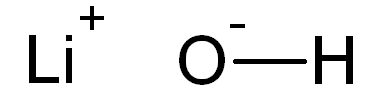
Today's MOTD is the one you've been dreaming about… lithium hydroxide.
Lithium hydroxide got its big debut during the Cold War as an intermediate in the production of tritium to produce nuclear fusion weapons. The US became the primary producer of lithium hydroxide between 1950s-1980s, but things have changed since then.
Today, most lithium hydroxide is produced from the lithium carbonate that lithium brines give us. It's companies like Ganfeng, Albemarle, SQM, and Livent that are making all of that lithium hydroxide (and doing it primarily in Australia and Chile).
Nearly all of the lithium hydroxide produced is used to make the cathode materials in lithium-ion batteries (such as lithium cobalt oxide and lithium ion phosphate), but the stuff can also be used in a few other ways.