
| WTI Crude | $50.45/bbl | +6.3% |
| Brent Crude | $53.80/bbl | +6.8% |
| HH Nat Gas | $2.76/MMBtu | +6.2% |
| MB Propane | $0.80/gal | +7.1% |
| 3:2:1 Crack | $11.74/bbl | +7.9% |
Neste acquires some of a chemical recycler
Finnish oil refiner, Neste, has announced that it has acquired a minority stake in a US-based chemical recycler called Alterra Energy.
Helpful background:
We've seen companies like Shell and CP Chem looking for pyrolysis oil suppliers as this trend in recycling picks up steam. Alterra has one plant out in Akron, Ohio that converts solid plastic waste into 60 tons of pyrolysis oil each day. That oil can then be refined into the same key building blocks used in the chemical process industries.
So what is Neste doing?
Neste's investment is there to support Alterra's expansion—specifically to rollout "Alterra’s liquefaction technology with a strong initial focus on Europe". The agreement will allow the partners to jointly develop and license the technology. Neste, who will focus on refining pyrolysis oil, is hoping to "accelerate the adoption of chemical recycling".
Read the press release here.
Sinopec looking to dabble in photovoltaics
The venture capital arm of the world's largest petroleum company, Sinopec, has announced an investment in a polymer film company that specializes in photovoltaic (PV) film materials.
What are they making?
The film company primarily offers PV module encapsulation materials like the ones you can see here. These polymer films (EVA and POE) keep moisture out of solar cells while providing optical and electrical transmissivity.
Why does Sinopec want in?
The petroleum giant's venture arm is looking to invest in "new energy, new materials, advanced smart manufacturing, energy conservation, and environmental protection". Buying into this PV film producer "creates great synergy with Sinopec as it is downstream extension of petrochemical value chain.".
Read the press release here.
Australia to be home to a huge urea plant
Italian oilfield services company, Sapiem, and Australian EPC company, Clough Group, will be jointly developing a $2.4 billion urea plant on the coastline of Western Australia.
Who are they building it for?
The two companies were contracted by an Australian conglomerate called Perdaman Industries. The plant, when finished in a few years, will produce 2.3 million tons of urea each year. According to Perdaman, "most of the urea produced by the plant will be exported", to serve, "an ever-increasing demand for agricultural food products".
Zooming out:
Today, Australia is one of the world's largest natural gas exporters. Perdaman wants to make use of that abundant natural gas and convert it into a higher value product—a.k.a urea. That's why Perdaman is building an ammonia plant upstream from this urea plant. Natural gas becomes ammonia, ammonia becomes urea, and urea helps food grow.
Read the press release here.
The Reboiler:
- Chart Industries completes another acquisition
- SABIC wants a 12-year limit Clariant's board
- DuPont sells one of its old labs to a real estate developer
- Italian energy company shakes hands with China
- An INEOS subsidiary to decarbonize its solid salt process
MOTD: aceticacid
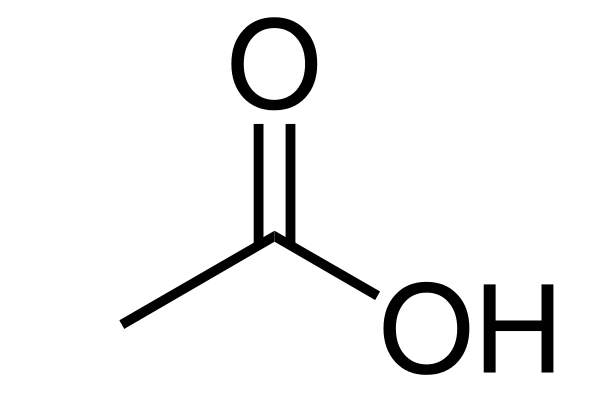
Today's MOTD is the one you've been dreaming about… acetic acid.
You're probably familiar with acetic acid in its diluted form (vinegar), but only a small fraction (less than 10%) of the 22 million tons of acetic acid produced each year actually end up dressing salads and pickling vegetables.
Most acetic acid (roughly 75%) is produced by reacting methanol with carbon monoxide, but it can also by made by oxidizing acetaldehyde or ethylene. Some of the largest producers of acetic acid are Celanese, INEOS, Eastman, and LyondellBasell.
About 30% of acetic acid is used to produce vinyl acetate monomer, 30% to produce acetic anhydride, 20% to produce esters (like ethyl acetate, n-butyl acetate, isobutyl acetate, and propyl acetate), and 20% to produce terephthalic acid.