| WTI Crude | $65.36/bbl | -3.1% |
| Brent Crude | $68.61/bbl | -2.1% |
| HH Nat Gas | $3.86/MMBtu | -1.8% |
| MB Propane | $1.15/gal | +0.8% |
| 3:2:1 Crack | $19.16/bbl | -7.0% |
Oxiteno has officially been sold to Indorama
Thailand-based chemical company, Indorama, has announced the acquisition of Ultrapar's surfactant subsidiary, Oxiteno for $1.3 billion.
Catching you up:
It was just a couple of weeks ago that we talked about this potential acquisition for the first time. Oxiteno is big on ethylene oxide (EO), ethylene glycol (MEG), and the production of their derivatives. The addition of Oxiteno's 11 manufacturing plants to Indorama's portfolio will make Indorama the second largest ethoxylate (surfactant precursor) producer in the world and the largest in the Americas. That's big news for ethyloxylate consumers (surfactant producers) who use surfactants in detergents, surface cleaners, cosmetics, textiles, and paint products.
One more thing:
Thanks to plentiful sugarcane and limited natural gas resources, fermenting sugarcane and dehydrating the resulting ethanol has made economic sense in Brazil. That dehydrated ethanol, known as ethylene, can be used as a biobased replacement on a mass basis at existing petrochemical plants. Oxiteno is based out of Brazil—so now Indorama will have access to biobased EO, MEG, and all of their derivatives.
Read the press release here.
Imubit just raised another $30 million for its AI
Artificial intelligence (AI) process optimizer, Imubit, has announced an additional $30 million investment to bring its technology to a global scale.
Some background:
Imubit has developed software that uses deep learning to automate process control for chemical processes. The start-up sells the software to the refining, gas processing, petrochemical, ammonia, and renewable fuel industries. The AI allows these operating companies to increase their margins by accounting for things like varied crude oil composition, ambient conditions, and volatile product prices.
So, where are they now?
As of today, Imubit has implemented its software for companies such as Chevron, Flint Hills Resources, Phillips 66, and Motiva just to name a few. Phillips 66 even mentioned at a conference that Imubit's software improved their margins by $10 million per year. Happy customers (aka cash flow) and the additional $30 million (they now have raised a total of $50 million) are both good signs—we'll have to see where it leads.
Read the press release here.
Agilyx and ExxonMobil's consortium just got bigger
Petrochemical companies, LyondellBasell and Ineos, have joined Agilyx and ExxonMobil's plastic-waste feedstock management consortium.
Some context:
About a year ago, Agilyx created a subsidiary to focus on the recovery and sorting of plastic waste. In Agilyx's words, the company wants to develop "new supply chains that will aggregate and pre-process larger volumes of post-use plastics than current systems can support.". Then, last December, ExxonMobil bought a fourth of the company for $8 million. Since then, the joint venture has been building a consortium of companies that want to increase the plastic recycling rate.
So, they added 2 more companies?
Yes—LyondellBasell and Ineos are now joining CP Chem, Braskem, and AmSty (all of which just barely beat them to it). These companies are going to pool their resources to develop a supply chain that can make the most of the chemical composition of waste plastic. The waste plastic collected and sorted by Cyclyx can then be sold to companies who want to depolymerize it (such as Nexus Fuels, Brightmark, or Agilyx itself).
The Reboiler:
- ENEOS & Mitsubishi Chemical are going to tackle plastic waste molecular recycling together
- India's Reliance might sell part of itself to Saudi Aramco for $25 billion
- PTT Global is clearing land in Ohio for a potential ethane cracker
- Thanks to power purchase agreements, DSM will be 100% renewable in North America by the end of the year
- The TotalEnergies and Borealis JV (called Baystar) just started up its ethane cracker in Port Arthur
MOTD: ammonia
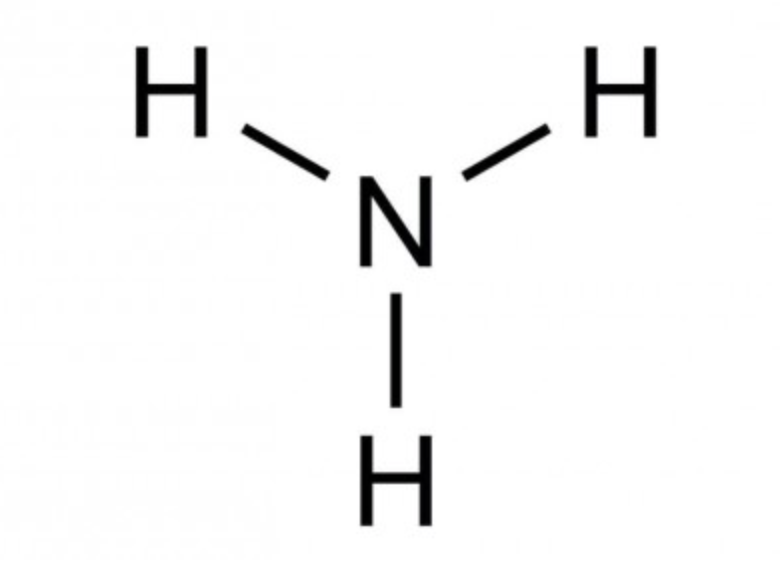
Today's MOTD might be more important than you expect, it's ammonia.
Throughout the classical era, people used an ammonia solution to wash clothes, remove hair from hides, and even remove dust from iron. But that ammonia solution was produced by fermenting urine—a process that is (thankfully) not used widely today. Now, we produce all of our ammonia by using the Haber-Bosch process.
Using that process the world makes over 200 million tons of the molecule each year. About 85% of that ammonia is used to make fertilizers (like urea and ammonium salts). Most of the rest of it is used to make polyamides and nitric acid (5% each). Because of ammonia's ties to fertilizer, it's global production always keeps pace with the increased population and standard of living.
Some of the main producers of ammonia include Yara, CF Industries, and Nutrien.