| WTI Crude | $53.55/bbl | +2.7% |
| Brent Crude | $56.42/bbl | +2.1% |
| HH Nat Gas | $2.88/MMBtu | +7.5% |
| MB Propane | $0.87/gal | +0.2% |
| 3:2:1 Crack | $13.52/bbl | +1.8% |
Brightmark might do some pyrolysis in South Korea
US-based advanced plastics recycling start-up, Brightmark, has announced its intent to form a joint venture (JV) with SK Innovation to build a plastics pyrolysis plant in South Korea.
A little background:
Brightmark is set to achieve full-scale operations at its first advanced recycling plant early this year. The plant shreds waste plastic into pellets, depolymerizes it with pyrolysis, and sells the pyrolysis oil to petrochemical companies to convert it back into plastic. It was just last week that we saw CP Chem announce its first pyrolysis oil supplier—that's what this JV would do for SK Innovation.
Diving in:
Before the companies formally agree to the JV, they need to determine "the most optimal methods to operate, scale, and develop Brightmark’s technology within South Korea". SK Innovation probably needs to confirm that it can utilize the pyrolysis oil provided by Brightmark's technology (they need to see if they can deal with the oil's impurities and try blending it into existing feedstocks).
Read the press release here.
Valero's JV is set to build another renewable fuels plant
San Antonio based refiner, Valero, has announced that its joint venture, Diamond Green Diesel (DGD), has received approval to start construction of a new renewable fuels plant.
Some context:
Valero's JV, DGD, has been producing renewable fuels near Valero's 215,000 barrel per day refinery in Norco, Louisiana since 2013. The company announced its aspiration to build another renewable fuels plant under the JV a little over a year ago, and positive renewable diesel growth made the project more promising.
What are the plans?
DGD plans to convert cooking oil, rendered animal fats, and inedible corn oil into 470 million gallons of renewable diesel each year. Valero is hoping to make the most of its "first mover advantage" as the company expects "low-carbon fuel policies to continue to expand globally and drive demand for renewable fuels".
Read the press release here.
Hungary will be home to another battery plant
The chemical subsidiary of the South Korean conglomerate, SK Group, has announced its plans to construct a lithium-ion battery plant in Hungary.
Why you should care:
Battery plants, like this one, are in the business of assembling the materials (cathode active material, anode material, electrolyte, and separator) into the battery cells found in EVs. Global chemical companies like BASF are the ones producing those materials (at these plants) from raw material producers like Albemarle. More battery plants (downstream) require more chemical plants (upstream).
The details:
The new battery plant will be Europe's largest and the 3rd one built in Hungary (thanks to subsidies). Car companies such as Daimler, Audi, Volkswagen, BMW, Suzuki all have factories in Hungary—so it's not much of a stretch to assume those batteries are being produced for them.
Read the press release here.
The Reboiler:
- Here are the Exxon-Chevron rumors you're looking for
- The US oil industry wants farmers to help them fight Biden's EV agenda
- This is how the US DOE thinks we should fix plastic recycling
- Chevron reports a 4Q 2020 loss and so did Olin
- The Houston area uses its $1M grant from the ACC to install new air monitors
- Some panelists think that the EPA's 50% recycling goal by 2030 is doable
- Trinseo's bio-based styrene gets its official stamp of certification
MOTD: phenol
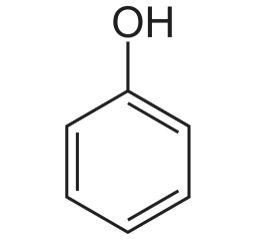
Today's MOTD is the one you've been dreaming about… phenol.
First extracted from coal tar by a German chemist in 1834, the world is now producing nearly 12 million tons of phenol each year. While the molecule got its start as an antiseptic, today it is primarily used to make BPA (about 50%) and phenolic resins (about 30%). The rest becomes alkylphenols, a precursor to nylon, and adipic acid (here's a reference chart).
Pretty much all of the phenol produced is made by the cumene process which conveniently produces the other BPA monomer—acetone. Quite a few different companies produce phenol, but Ineos is responsible for about 1/3 of the world's production. While most of the world's phenol is made in Asia, the largest US producers include , Shell, SABIC, and Olin.