
| WTI Crude | $52.15/bbl | +0.0% |
| Brent Crude | $54.84/bbl | -1.2% |
| HH Nat Gas | $2.71/MMBtu | -2.2% |
| MB Propane | $0.88/gal | +1.7% |
| 3:2:1 Crack | $11.83/bbl | -7.3% |
Albemarle to increase lithium production in Nevada
US-based specialty chemicals company, Albemarle, has announced that it will be investing $30-50 million to double its lithium carbonate production in Silver Peak, Nevada by 2025.
Big picture:
If you haven't noticed, the electric vehicle (EV) market is taking-off—which means we're going to need a lot more lithium for all of those lithium-ion batteries. Currently, the US is only responsible for roughly 5% of the global supply, but don't expect that number to stay the same for long (the US actually led the world in lithium production during the Cold War period).
Diving in:
Albemarle's site in Nevada is taking lithium chloride from brine extracted from the Clayton Valley basin and converting it into lithium carbonate. That lithium carbonate is then converted into lithium hydroxide (that's what battery producers want), but Albemarle is working on a new process that skips the lithium carbonate intermediate. Don't be surprised if that new process is eventually used at this site.
Read the press release here.
Methanex to keep a methanol plant idled indefinitely
Vancouver-based methanol producer, Methanex, has announced that its methanol facility in Trinidad and Tobago will remain idled indefinitely.
Why was it idled to begin with?
Because of COVID-19, Methanex idled a couple of its plants last April in anticipation of reduced methanol demand. The company chose which plants to idle based on which plants had the most flexibility in their natural gas supply agreements (Methanex converts natural gas into methanol).
How long is indefinite?
The company has decided to keep the plant idled because it hasn't been able to reach "an agreement for an economic longer-term natural gas agreement". So it's not that Methanex can't get natural gas to the plant, it's just that it can't get it for the price (or maybe quantity?) that it wants (or needs?). But indefinite doesn't mean forever—in this context it probably just means as long as it takes to get a good deal.
Read the press release here.
Shell takes a 40% stake in a renewable chemicals project
Dutch oil major, Shell, has announced that it has invested in a waste-to-biofuels and chemicals plant in Canada by acquiring 40% of the venture.
More on the plant:
The plant was first announced back in December as a proposed partnership between four companies (Shell was on that list). Together Shell, Enerkem, Suncor, Proman, and Hydro-Québec will spend $700 million on a plant that will convert 220,000 tons of non-recyclable waste into 125 million liters of biofuels and chemicals each year. Shell is going to foot 40% of that bill.
How they are doing it:
Enerkem's proprietary gasification technology converts that non-recyclable waste into syngas. Syngas, the well-known mixture of hydrogen and carbon monoxide, will then be converted into methanol as the intermediate chemical for everything else the plant will produce (more on methanol below).
Read the press release here.
The Reboiler:
- Sulzer won a contract to make some lactide in China
- BayoTech gets a $150M investment to develop on-site H2 production
- Braskem PE plant in Mexico was shut down, but now it's running again
- Veolia to recycle and process more wood in the U.K.
- DSM and Clariter to jointly pursue some chemical recycling
MOTD: lacticacid
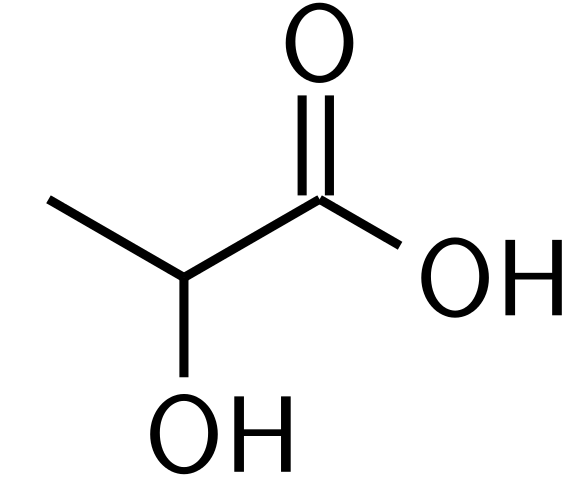
Today's MOTD is a personal favorite… lactic acid.
While you produce lactic acid each time you hit the gym, we leave it to companies like Corbion, Cargill, Henan Jindan, and DuPont to do the real mass production.
First isolated from sour milk in 1780 by a Swedish man, the world now produces nearly 300,000 tons of lactic acid each year. About 90% of it is made by the fermentation of plant sugars (shoutout to corn), but the molecule can also been produced chemically from acetaldehyde (here's a helpful flowchart).

Lactic acid has historically been used in the food industry for preservation by acidulation, but global production has recently ramped up for the production of ethyl lactate (a biobased solvent) and polylactic acid (a biobased plastic).