| WTI Crude | $68.26/bbl | +0.1% |
| Brent Crude | $71.02/bbl | +0.0% |
| HH Nat Gas | $4.21/MMBtu | +0.2% |
| MB Propane | $1.09/gal | -2.9% |
| 3:2:1 Crack | $21.54/bbl | +0.8% |
HollyFrontier just bought most of Sinclair Oil
Dallas-based refiner, HollyFrontier, has acquired Sinclair Oil’s refining, renewable diesel, and logistics assets for $2.6 billion and will be changing its name to HF Sinclair.
What's the deal?
HollyFrontier is buying two refineries in Wyoming (one in Casper and one in Sinclair), about 1,200 miles of pipeline assets, and Sinclair's entire branded marketing business. The acquisition will bump HollyFrontier's refinery count from six to eight and expand its renewable diesel business. In case you haven't heard, the renewable diesel market is rapidly expanding (we're not talking about biodiesel).
Bigger picture:
Sinclair Oil is a strong and old brand in the oil & gas industry—the company has been rocking the same name and dinosaur since 1916. Now that brand will overshadow HollyFrontier's name despite HollyFrontier's greater asset count. Which, by the way, includes a refinery previously owned by Sinclair and the refinery Shell sold just two months ago.
Read the press release here.
CO2-based jet fuel is coming to Wales
Direct air capture company, Carbon Engineering (CE), and US-based CO2 utilizer, LanzaTech, have announced plans to supply an ethanol to jet fuel plant in South Wales.
Who is doing what:
CE is using direct air capture to pull CO2 from the atmosphere. That CO2 will be utilized by LanzaTech to produce ethanol (thanks to some biotechnology—details here). Then, LanzaJet (a LanzaTech spin-off), will dehydrate that ethanol and combine the remaining hydrocarbons into chains via this proprietary process to produce sustainable aviation fuel (SAF).
Zooming out:
Currently, blending SAF with traditional kerosene is the only viable method of reducing emissions associated with aviation. That's why both British Airways and Virgin Atlantic are partners (aka investors) on the project. Because the project utilizes atmospheric CO2, using this SAF "will offer a more than 90% reduction in greenhouse gas emissions compared to conventional fossil jet fuel". That's marginally better than the 80% reduction that Neste's SAF provides.
Read the press release here.
Wood is helping Nexus depolymerize more plastic waste
Molecular plastic recycling company, Nexus Fuels, has announced an agreement with Scotland-based EPC firm, Wood, to expand its plant in Atlanta, GA.
Some context:
As of March this year, Nexus had only sold 1,000 tons worth of waste plastic. But this is just the beginning—over the last year we've seen the company form partnerships with both CP Chem and Shell to sell them their pyrolysis oil. If you need a refresher, Nexus depolymerizes hard-to-recycle plastic waste and sells the product to petrochemical companies as a blendable feedstock for steam crackers.
Looking forward:
Wood is going to help Nexus scale its plant so that it can process 5 million tons of waste plastic each year. After the FEED stage is complete, you'll see a construction timeline announced, and then off-take agreements will follow. You can expect all of that in the next couple of years.
Read the press release here.
The Reboiler:
- Ascend Materials just beat Samsung in this lithium-ion battery additive patent lawsuit
- India's Reliance Industries told everyone that it plans on doubling its PET recycling capacity
- Eni and BASF are working together to develop a bio-based propanol
- Lanxess officially completed the $1.1 billion acquisition we talked about in February
- Yara decided to divest its Brazilian phosphate mining project for $410 million
MOTD: ethane
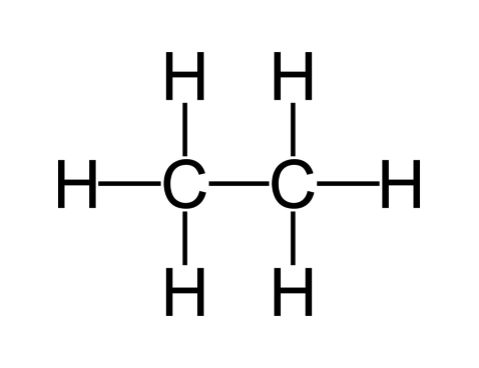
Today's MOTD is a dear friend, ethane.
While Michael Faraday was able to synthesize the molecule back in 1834, it wasn't until this English chemist found it inside Pennsylvanian crude oil that we realized how much of it is out there.
Today, all of the ethane produced is either a component of natural gas or as a byproduct of petroleum refining. All of that ethane (with a few exceptions) is used as a steam cracking feedstock.
The main companies producing all of this ethane are the ones pumping it out of the ground upstream and the natural gas processors who supply the petrochemical companies.