| WTI Crude | $61.09/bbl | +2.7% |
| Brent Crude | $65.02/bbl | +2.3% |
| HH Nat Gas | $23.86/MMBtu | +289.9% |
| MB Propane | $0.98/gal | +9.2% |
| 3:2:1 Crack | $14.38/bbl | +23.0% |
Texas refineries shut down as temperatures plummet
Multiple Texas refineries operated by Motiva, Valero, Total, ExxonMobil, and Citgo have announced plant shutdowns due to a rare deep freeze.
Setting the scene:
Texas is home to 31 refineries and is responsible for producing about 4.6 million barrels of oil per day. To process that oil you need a supply of electricity, water, and natural gas—none of which are guaranteed when pipelines are freezing across the state. Raw materials aside, these plants need their employees (who can't safely drive to work) and ship channels to deliver their products (which are also being shut down).
What this means:
Shocked supply means the price of fossil fuels will rise as a result. The weather has "sent oil prices to near 13-month highs, while front-month gas futures jumped to an over three-month high.". Taking price out the picture, prolonged cold temperatures (it should stay below freezing until Friday) could lead to damaged equipment and fuel shortages on the East Coast (which gets 3/5 of its fuels from the Gulf Coast).
Read more here on Reuters.
A methane pyrolysis start up gets an investment
California-based hydrogen start up, C-Zero, has announced a successful Series A funding round of $11.5 million.
A little context:
C-Zero is working on a technology we've seen before—the pyrolysis of natural gas as a means to produce hydrogen and carbon black. The process is referred to colloquially as "turquoise hydrogen" which is the industry's way of saying it's partially blue hydrogen and partially green hydrogen (here's a helpful chart. All of this hydrogen talk comes as hard-to-electrify industries (such as steel and concrete) look to reduce carbon emissions by swapping natural gas with hydrogen.

Why C-Zero is special:
The start up's big bet is that its technology will be more economical than strapping carbon capture onto a steam methane reformer. The company is reportedly stripping hydrogen molecules from methane with a molten-nickel-based catalyst in a continuous flow process that has no associated emissions (aside from what's required to produce all of that heat). We'll have to see if the $11.5 million can help C-Zero make its technology commercially available.
Read the press release here.
Lanxess drops $1.1B on a benzene-based acquisition
German chemical company, Lanxess, has announced the acquisition of US-based specialty chemical company, Emerald Kalama Chemical, for $1.1 billion.
What are they buying?
Emerald Kalama is one of the world's largest producers of benzoic acid and its derivatives including benzaldehyde, benzyl alcohol, and sodium benzoate. Those chemicals are primarily used as "preservatives for food, household and cosmetic applications, flavors and fragrances as well as products for animal nutrition". Lanxess made the acquisition to "strengthen our Consumer Protection segment" and create synergies with its existing customers in the "food industry and animal health sector".
Zooming out:
We last saw Lanxess when it acquired disinfectant producer last month. The company reportedly has another $2.5 billion sitting around for more acquisitions and is monitoring a list of other potential purchases. Lanxess has found itself in a position where it can buy companies when many companies are struggling financially—there isn't a better time to bolt-on some capacity.
Read the press release here.
The Reboiler:
- Marathon Petroleum laid off 5% of workforce as part of cost-cut plans
- OMV's refinery in Austria will be home to the country's largest green-hydrogen plant
- Mitsubishi Chemical has decided to consolidate its water-treatment membrane ops
- 3M plans to spend $1 billion to become more sustainable
- The American Petroleum Institute welcomed clean energy funding from the US DOE
MOTD: acetylene
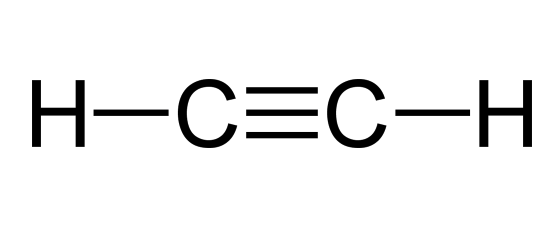
Today's MOTD is the one you've been asking for… acetylene.
This highly reactive molecule's name deviates pretty far from IUPAC's desires (you saw it in organic chemistry as ethyne). When Edmund Davy discovered acetylene back in 1836 he figured it would be "admirably adapted for the purpose of artificial light, if it can be procured at a cheap rate.". It turns out that its useful for quite a bit more than that—the world now produces over 600,000 tons of acetylene each year (production had previously peaked in the mid-1960s).
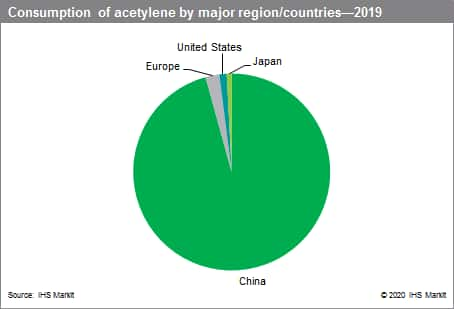
Today, acetylene produced in the US, Western Europe, and Russia is primarily done by the partial oxidation of natural gas or as a steam cracker coproduct. In China, where the vast majority of acetylene is consumed, the molecule is produced by the old calcium carbide process. About 85% of the stuff is used to make vinyl chloride monomer (used to make PVC), vinyl acetate monomer (used to make PVAc, and 1,4-Butanediol (which often becomes spandex).
The main companies churning out all this acetylene are Linde, Air Liquide, Sinopec, Jinhong Gas, and many more.