| WTI Crude | $52.81/bbl | +1.3% |
| Brent Crude | $55.52/bbl | +1.2% |
| HH Nat Gas | $2.82/MMBtu | +4.1% |
| MB Propane | $0.92/gal | +5.1% |
| 3:2:1 Crack | $12.25/bbl | +3.5% |
Eastman shows off thin polymers between glass
US-based chemical company, Eastman Chemical, has announced that it will be demonstrating its latest interlayers for automotive laminated glass at CES 2021.
First, some context:
We've seen Eastman's interlayers before, but a refresher couldn't hurt. When you sandwich a thin interlayer material (like PVB) between two sheets of glass you make what is called laminated glass. That interlayer material can be uniquely tuned for various applications—including "enhanced acoustic, signal-friendly solar films, and augmented reality enabling head-up display advanced interlayers".
But why CES?
CES is the annual event known for showcasing fancy TVs, robots, and other technologies consumers love. Eastman is headed there to show-off how its laminated glass can be used in the automotive industry. This is an opportunity for the chemical company to throw its brand name into the mix as a company that enables the technology of the future.
Read the press release here.
Lanxess acquires a company to protect more livestock
German specialty chemicals company, Lanxess, has announced the acquisition of a disinfection solutions provider for the livestock industry.
The big picture:
As the drive for antibiotic-free meat continues to push forward, producers need to take extra care to prevent diseases among their livestock. That's where disinfectant chemicals enter the scene, and that's why Lanxess is acquiring this company—because it sells to a growing market.
So what's the deal?
In exchange for $85 million in cash, Lanxess will integrate Theseo's 100 employees and sites in France, Germany, Brazil, and the UK into its Material Protection Products business unit. The deal will complement Lanxess' existing portfolio in this market and benefit from "experienced employees, technical and regulatory expertise, well-known brands and an established distribution network.".
Read the press release here.
Total is now the biggest in biogas, in France
French oil major, Total, has acquired a company that designs, builds, and operates anaerobic digestion units in France—making Total the French leader in biogas.
What's up with biogas?
Anaerobic digestion units breakdown organic matter (like animal or food waste) to produce a gaseous mixture of primarily methane (50-75%) and carbon dioxide (50-25%). That mixture can then be processed to yield a nearly pure stream of biobased methane that can be directly injected into natural gas pipelines.
So what is Total up to?
The company is a world-leader in the extraction, production, and transport of liquefied natural gas (a.k.a liquid methane). That gives them expertise and infrastructure advantages for this newer, greener, market for methane. That's why Total is aiming to produce "4 to 6 TWh of biomethane a year" by 2030.
Read the press release here.
The Reboiler:
- A new gas storage project in the UAE
- The Dallas Fed appoints LyondellBasell's CEO to Houston's board
- Texas lawmakers are considering more rules for ammonium nitrate storage
- Air Liquide buys a new turboexpander business
- AFPM makes a statement on those riots at US Capitol
- Evonik starts to market its natural refrigerants
MOTD: adipicacid
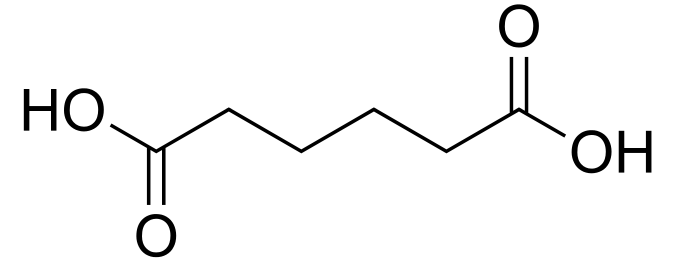
Today's MOTD is a dear friend, adipic acid.
Naturally found in beet juice, adipic acid is something many people come across in the form of a food ingredient—either as flavorant or gelling agent. But of the 4 million tons the world produces each year, very little of it actually ends up in the food industry.
Virtually all of the adipic acid produced is made by oxidizing a mixture of cyclohexanone and cyclohexanol called KA oil with nitric acid. Roughly 90% of all that adipic acid is used to make nylon 6,6. The rest of it is esterified and added to PVC or finds its way into polyurethanes as a polyester polyol.
The main companies producing the world's most important dicarboxylic acid are often the same ones who make nylon—that's BASF, Ascend, Lanxess, and Asahi Kasei.