
| WTI Crude | $41.18/bbl | +2.8% |
| Brent Crude | $42.25/bbl | +3.2% |
| HH Nat Gas | $2.74/MMBtu | +4.2% |
| MB Propane | $0.55/gal | -2.7% |
| 3:2:1 Crack | $9.39/bbl | +4.9% |
Eastman to help save bird lives
US-based chemical company, Eastman Chemical, has recently signed a strategic partnership with a Swiss architecture company, Seen, to develop glass that birds won't fly into.
The problem:
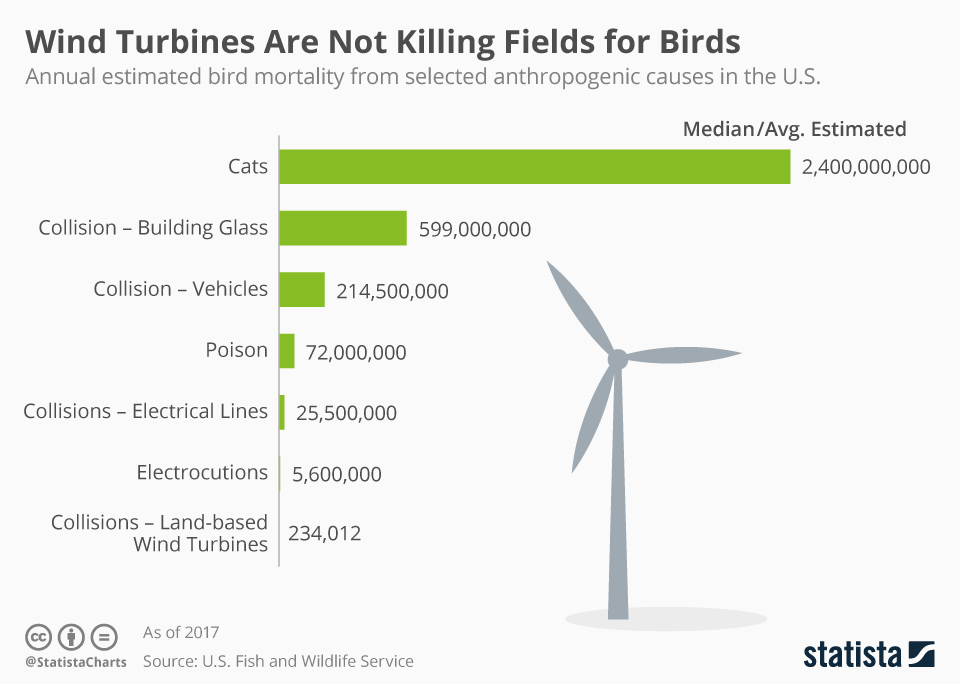
Every single year an estimated 600 million birds are killed by flying into glass buildings (for some perspective, cats kill 2.4 billion and wind turbines kill just 200,000). Companies have tried to solve this problem by producing glass that humans can see through but birds can't, but no widespread success has yet to be seen.
So what's the solution?
Laminated glass is a type of glass with a thin film interlayer material placed between two sheets of glass. Eastman produces one of those films called polyvinyl butyral, and Seen's new version of the material will include small metallic discs that birds can see. While the metallic discs will be visible to the human eye, Eastman and Seen believe that will help buyers tell an ecological story.
Read the press release here.
Sibur develops a new gas reactor model to save some money
Russian petrochemical company, Sibur, has announced the successful use of a new digital model for gas chemical reactions at its site in Tomsk, Russia.
Why is this news?
Sibur's low-density polyethylene (LDPE) reactor at it's Tomsk site operates at extremely high pressures (2,400 atm). Historically, complex models have been produced for academic purposes, but recently the digital technology is being introduced into the industry. The model helped Sibur reduce its additive consumption by 12%, which amounts to about a million dollars per year in cost savings.
Bigger picture:
Many of the chemical plants being operated today were built more than a couple of decades ago. These older plants are always being tweaked to align today's standards, and the ability to do that without a major renovation is an attractive proposition. Digital models like this one, while unique to each unit, can be recreated across Sibur's portfolio to allow for further optimization.
Read the press release here.
Ineos starts a new hydrogen focused business
UK-based chemicals company, Ineos, has announced the launch of a new hydrogen business unit.
The plans:
Ineos currently produces roughly 300,000 tons of hydrogen per year, but most of it is from the steam reforming of methane or as a co-product from its other operations. The new business "aims to build capacity to produce hydrogen across the INEOS network of sites in Europe, in addition to partner sites where hydrogen can accelerate decarbonization of energy.".
What color hydrogen?
While the new business will expand into green hydrogen production by electrolysis, blue hydrogen is "likely to be cheaper than from electrolysis and will be the dominant supply in the medium term". On top of developing both production methods, Ineos will "work closely with European Governments to ensure the necessary infrastructure is put in place to facilitate hydrogen’s major role in the new Green Economy.".
Read the press release here.