
| WTI Crude | $65.36/bbl | -0.4% |
| Brent Crude | $68.78/bbl | -0.1% |
| HH Nat Gas | $2.58/MMBtu | -2.6% |
| MB Propane | $0.92/gal | -1.3% |
| 3:2:1 Crack | $20.32/bbl | -6.1% |
BASF wants to dominate the biosurfactant market
German chemical giant, BASF, has announced two different partnerships that aim to strengthen the company's position in biosurfactants.
Summing it up:
BASF invested in Allied Carbon Solutions (ACS) and became its single largest shareholder. ACS makes a unique sophorolipid that BASF has been marketing as BioToLife (check out the hype video). BASF also signed a JDA with a UK-based start-up to develop biosurfactants that aren't sophorolipids.
A little background:
Surfactants, which you can read more about here, are surface-active molecules that have many different uses. As companies aim to deliver more sustainable products, the demand for surfactants produced via fermentation (instead of as an oil & gas derivative) is starting to heat up. We've seen this most recently when Stepan acquired a fermentation plant for this purpose just a month ago.
Read the press release here.
Nexus Fuels plans on chemical recycling globally
Chemical recycling start-up, Nexus Fuels, has announced that it has secured a major investment from Cox Enterprises to accelerate the company's expansion.
Some context:
We've seen Nexus a couple of times in the past—most recently in its partnerships with CP Chem and Shell. In both of those cases, Nexus is the one responsible for producing pyrolysis oil from plastic waste. Other companies like Nexus (such as Agilyx, Alterra, and Brightmark) are attempting to make hard-to-recycle plastic waste a useful resource instead of garbage.
Why the investment?
Many of these large petrochemical companies have large aspirations. Shell, for example, is aiming to use one million tons of plastic waste per year by 2025. For reference, Nexus has only sold about 1,000 tons worth of waste plastic so far. But after this investment and with Cox's continued support the company says that its business is "poised to grow globally".
Read the press release here.
Clariant's new JV will make some bio-based chemicals
Swiss specialty chemicals company, Clariant, has announced the formation of a joint venture with India Glycols to combine the production and distribution of bio-based ethylene oxide (EO) derivatives.
What that means:
Basically, India Glycols' plant in Kashipur, India will now be jointly owned by Clariant, and Clariant will now help sell what that plant produces. The joint venture will also receive Clariant's Industrial & Consumer Specialties business in India, Sri Lanka, Bangladesh, and Nepal. Together the companies plan on being a leader in the production of bio-based EO derivatives.
What are they making?
Typically, EO is produced from the ethylene that steam crackers make so much of. India Glycols also produces EO using ethylene, but it makes that ethylene by dehydrating ethanol. That ethanol is made by fermenting molasses, so any of the EO produced downstream is considered bio-based. That allows a large company like Clariant to market traditional EO derivatives as green.
Read the press release here.
The Reboiler:
- BASF has been protecting airplane passengers for 15 years
- This Saudi Aramco partnership demonstrated a new crude-to-chemicals technology
- This Dutch chemical company sold its advanced solar backsheets business
- LyondellBasell's new training facility just opened in Pasadena, TX
- An Italian petroleum company found some oil offshore Norway
- BASF has been protecting airplane passengers for 15 years
MOTD: vam
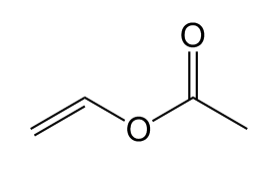
Today's MOTD is the world famous, vinyl acetate.
First produced by a German chemist in 1912, the world now makes nearly 8 million tons of vinyl acetate (often called vinyl acetate monomer—VAM) each year.
As long as that VAM is being produced outside of China you can be confident it's made by reacting ethylene and acetic acid (31% of all acetic acid is used to make VAM). Companies in China produce VAM from acetylene (just like how that German chemist did it a century ago).
We make VAM not because it's super useful on its own, but because of all the things we can produce with it. About a third of all VAM is used to make PVAc (wood glue), another third for (contact lenses), and the rest becomes , EVOH, and VAE.
Aside from China, the main producers of VAM are Celanese, Dow Chemical, and LyondellBasell among others.