| WTI Crude | $56.80/bbl | +2.0% |
| Brent Crude | $59.48/bbl | +1.5% |
| HH Nat Gas | $3.49/MMBtu | +15.9% |
| MB Propane | $0.86/gal | +4.5% |
| 3:2:1 Crack | $12.28/bbl | -9.2% |
Exxon throws $3B into a clean business unit
US-based integrated petroleum company, ExxonMobil, has announced the formation of a new business unit called ExxonMobil Low Carbon Solutions.
What that means:
Companies typically create new business units as a strategic move—giving the business the standalone management it deserves. Exxon has pledged to invest "$3 billion on lower emission energy solutions" by 2025 through the new business unit. Critics have been quick to put that number in perspective (it's roughly 4% of planned capital expenditures), but in any case Exxon is giving low-carbon solutions more attention than ever before.
So what's next?
There are more than a few CCS opportunities being explored, including an plan to store CO2 from the US Gulf Coast "in onshore and offshore geologic formations". Even though it's not clear how Exxon will allocate that $3 billion, it is clear that the company is open to government involvement. The company mentioned that "CCS opportunities can become more commercially attractive through government policy" (like the US's 45Q or the countless policies in Europe).
Read the press release here.
Eastman starts up a new DMAE unit in China
US-based chemical company, Eastman, has announced the successful startup of a new dimethylaminoethanol (DMAE) unit at its site in Nanjing, China.
What are they making?
Eastman is the world's largest producer of DMAE—an intermediate chemical that (through another intermediate) is copolymerized with acrylamide to make polyacrylamides. Polyacrylamides are typically used to flocculate solids in a liquid, so the polymer often finds itself in water treatment processes removing solid particles.
Zooming out:
While the chemical this new unit produces is rather obscure, it plays a critical role in the purification of water. That's why Eastman takes the time to emphasize how the "need for clean water truly affects people's daily lives". It may not seem like much of an announcement, but more DMAE means more clean water.
Read the press release here.
Stepan buys a fermentation plant to make surfactants
Illinois-based specialty chemicals company, Stepan, has announced the acquisition of a fermentation plant located in Lake Providence, Louisiana.
Some context:
If it feels like you just read about Stepan making an acquisition, it's because you did. But that last acquisition wasn't really in the company's wheelhouse (they are known for producing surfactants). This purchase is unique because surfactants are typically produced from synthetic feedstocks derived from oil and gas.
Diving in:
The company is looking to "commercialize next generation surfactants" citing biosurfactants produced by fermentation as its next big thing. While biosurfactants do have some advantageous properties, it's really only worth the investment because "customers across markets seek new sustainability targets for their products.".
Read the press release here.
The Reboiler:
- SUEZ and another company joined arms to produce some green hydrogen
- Ineos Styrolution entered another collaboration to recycle polystyrene
- Eni's chemical subsidiary licensed its LDPE/EVA tech in Uzbekistan
- Albemarle announced a $1.3B stock offering
- Two companies promised to build a biocarbon plant outside of Oslo
- Reliance Industries received its first carbon-neutral oil from Oxy
MOTD: phosgene
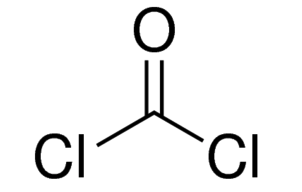
Today's MOTD is the one you've been dreaming about… phosgene.
At low concentrations the smell of phosgene reminds people of freshly cut grass. While that may sound nice, this molecule isn't something to mess with—its use in World War I as a chemical weapon claimed nearly 100,000 lives.
The molecule was named by a Cornish chemist in 1812 when he exposed carbon monoxide and chlorine to sunlight (phos = light and gene = born). Today, the world produces roughly 9 million tons each year primarily by passing carbon monoxide and chlorine gas through a bed of activated carbon.
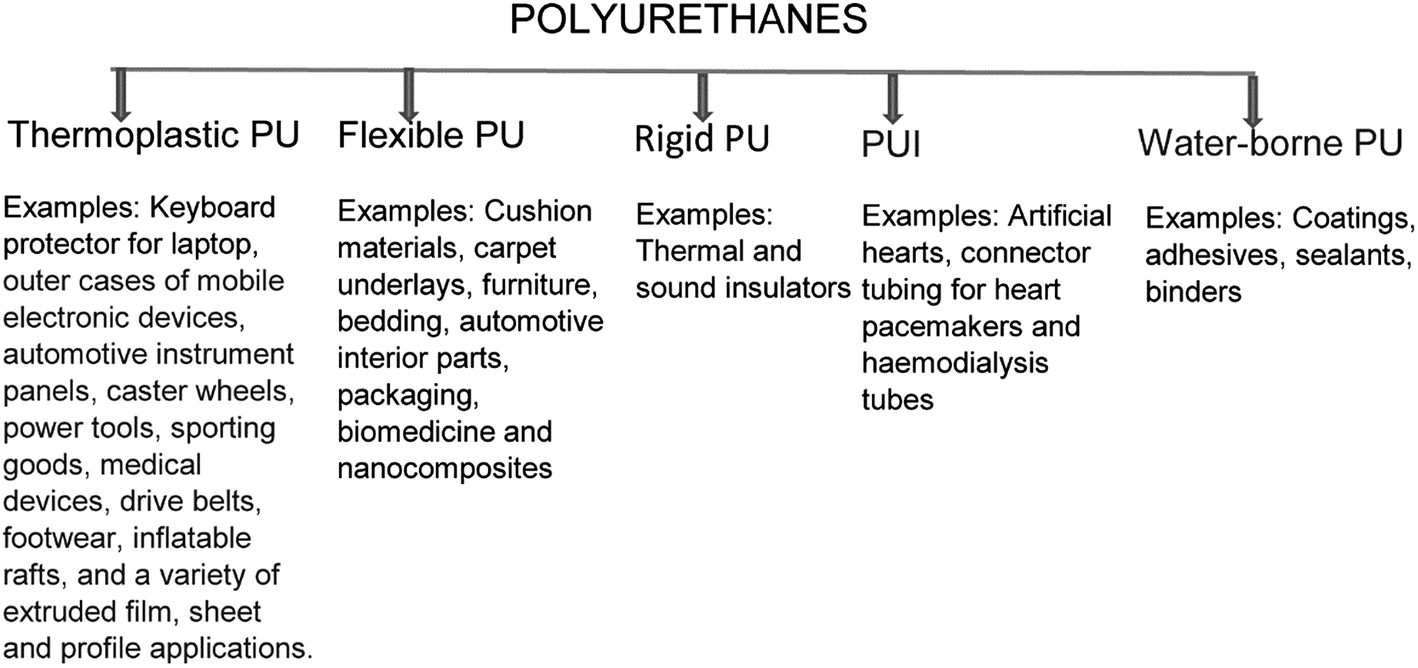
Instead of thinking of its use as a chemical weapon or grassy smell, try to remember phosgene for its critical role in the production of polyurethanes and polycarbonates. About 80% of all phosgene is used to make the isocyanates that become all of these things. Most of the rest of it is reacted with BPA that is used for this stuff.
Some of the main companies producing all of this phosgene are Covestro, BASF, Yantai Wanhua, and Huntsman.