
| WTI Crude | $55.67/bbl | +4.0% |
| Brent Crude | $58.61/bbl | +3.9% |
| HH Nat Gas | $3.01/MMBtu | +4.5% |
| MB Propane | $0.83/gal | -4.8% |
| 3:2:1 Crack | $13.52/bbl | -0.0% |
New molecular recycling plant to be built in Tennessee
US-based chemical company, Eastman, has announced its plan to build a molecular recycling facility at its site in Kingsport, Tennessee.
A little context:
This news shouldn't come as a huge surprise. We've talked about Eastman and its methanolysis technology before—the company has a few decades worth of experience in methanolysis and recently began sending customers some of its trial product. The CEO said that they "have over 100 customer trials going on right now over a wide range of applications.".
So what is the plant going to do?
This plant, unlike the pyrolysis plant announced last time, will convert a stream of waste PET plastic (instead of mixed plastic waste) back into its monomers by methanolysis (instead of thermal decomposition by pyrolysis). Those monomers can then be blended with traditional feedstocks and repolymerized into PET. If you need a primer on chemical recycling this is a pretty solid guide.
Read the press release here.
Some PE firms buy DuPont's cleantech business
A consortium of private equity companies has announced the acquisition of DuPont's Clean Technologies business for $510 million cash.
What are they buying?
Perhaps when you read "clean technologies" you imagined something "greener" than the desulfurization and alkylation technologies this business is known for. But those processes are clean technologies—all of them work to reduce pollution (removing sulfur, scrubbing flue gas, producing higher-octane fuels). The business makes its money by licensing those process technologies to operating companies that don't have their own.
What are they saying?
While still subject to closing conditions and regulatory approvals, the consortium expects the transaction to close by 2Q 2021. The firms involved plan to "build on this strong foundation and further expand the business with the support of management and our strategic partners.". The international nature of the firms involved (there is one from the US, China, and Saudi Arabia) will "act as a strong complement to the global operations of this leading platform".
Read the press release here.
Stepan wants to make more rigid polyurethanes
Illinois-based specialty chemicals company, Stepan, has announced the acquisition of Invista's aromatic polyester polyol business and its associated assets.
What is Invista selling?
Invista is most well known today for producing adiponitrile, hexamethylene diamine, adipic acid, and their derivatives. The (non-core) business it is selling produces aromatic polyester polyols that are most often (65%) converted into rigid polyurethane foams.
Zooming out:
We last saw Stepan when it acquired part of Clariant's surfactant business. This acquisition, like the last one, is best defined as a bolt-on acquisition. The purchase will add 2 polyol production sites to Stepan's existing 5, and "supports the growth of [its] global rigid polyol business". The company believes that Invista's "available spare capacity" and "debottlenecking opportunities" will make growth in the sector capital efficient.
Read the press release here.
The Reboiler:
- Chevron Lummus Global was handed a technology contract to expand a refinery in India
- BP takes billions in losses in 4Q 2020
- Volkswagen began operating its battery-recycling pilot plant
- Lukoil starts-up a new deasphalting plant in southern Russia
MOTD: acetone
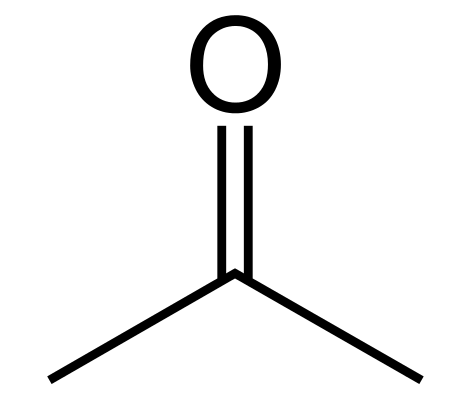
Today's MOTD is the most beautiful molecule of them all, acetone.
First produced by Andreas Libavius in 1606 as he casually distilled lead acetate, this molecule is best known as the main ingredient in nail polish remover and paint thinner.
While acetone may have got its frame from those uses, only about a third of the world's acetone is used as a solvent. A quarter of it used to make BPA, another quarter is used to make the precursor to methyl methacrylate, and about 10% is used to make MIBK.
Virtually all acetone (roughly 7 million tons per year globally) is produced from propylene in some form or fashion. That's either by the cumene process (83%), the Wacker process, or through isopropyl alcohol as an intermediate. Some of the largest producers of the molecule include Ineos, Shell, and Borealis.