| WTI Crude | $72.15/bbl | -0.1% |
| Brent Crude | $74.79/bbl | -0.1% |
| HH Nat Gas | $4.09/MMBtu | -0.5% |
| MB Propane | $1.09/gal | +0.2% |
| 3:2:1 Crack | $20.47/bbl | +6.0% |
Indorama might buy Oxiteno pretty soon
Thailand-based chemical company, Indorama, is still in talks with Brazil's Ultrapar about acquiring its subsidiary, Oxiteno.
Some context:
Indorama's primary business is in polyethylene terephthalate (PET). That stuff is produced by reacting terephthalic acid (PTA) and ethylene glycol (MEG). Over the last decade, Indorama has made various acquisitions in the US that have strengthened its feedstock market position. The company is now looking at Oxiteno's MEG production (and everything else they make) like a snack.
Looking forward:
Should the deal go down, it would make Indorama the largest ethoxylate (surfactant precursor) producer in the Americas. You can expect an update within a month or so given Indorama's hopes of making a quick deal. If the talks fall through Indorama will probably have to build its own assets (which is not the trend for Asian chemical companies).
Read the press release here.
New silicon-carbon anodes are headed to South Korea
Battery materials start-up, Group14 Technologies, has announced the formation of a joint venture with South Korea's SK Group to build a new silicon-carbon anode manufacturing site in South Korea.
Why South Korea?
Last December, SK Group led a $17 million Series B funding round for Group14. The South Korean conglomerate wants to bring Group14's technology back home to serve South Korea's rapidly expanding battery industry. Group14 is on board because the country is home to many of its potential customers, and establishing global production makes the company more resilient to supply chain shocks.
Wait, what are they making?
Typically, lithium-ion batteries use graphite as the anode (made with carbon from companies like Phillips 66) and a lithium metal oxide for the cathode. Graphite is used because it works well—but silicon would work much better if it didn't swell to 4x its size when soaked with lithium ions. Instead of using silicon alone, Group14 has developed a silicon-carbon composite, called SCC55, to replace that graphite anode.
One more thing:
If any of this sounds familiar, that's good, because we've talked about Group14 a couple of times before. Most recently when they started production in the US, and earlier when they struck a deal with a silane gas producer.
Read the press release here.
ChemChina's agrichemical IPO is happening
State-owned Chinese chemical company, ChemChina, has filed for an IPO to sell a 20% stake of its agrichemicals subsidiary Syngenta with the hope of raising $10 billion.
A little history:
Back in 2016, ChemChina acquired Syngenta (a Swiss company at the time) for a mere $43 billion. That purchase ended up giving ChemChina more debt than it could handle, leading to the company's pending merger with Sinochem.
So, what now?
Following the successful IPO, like any company that raises cash, ChemChina will be looking to "expand and renovate its production" and "implement strategic acquisitions". The company has already merged Syngenta with Isreal's ADAMA (last year) and Sinochem's very own fertilizer and seed business. $10 billion, plus a little more debt, could fetch the company quite a few changes.
Read more here on Nikkei Asia.
The Reboiler:
- Si Group decided to sell its industrial resins business to a PE-owned chemical company
- Henkel just bought a French sustainable laundry and home products producer
- BP acquired an AI company that does energy usage optimization
- AkzoNobel is going to reduce its carbon emissions by 42% by 2030
- Air Products just selected Haldor Topsoe’s blue hydrogen technology for this plant in Canada
- PPG jointly announced a new OLED materials manufacturing site in Ireland
MOTD: titaniumdioxide
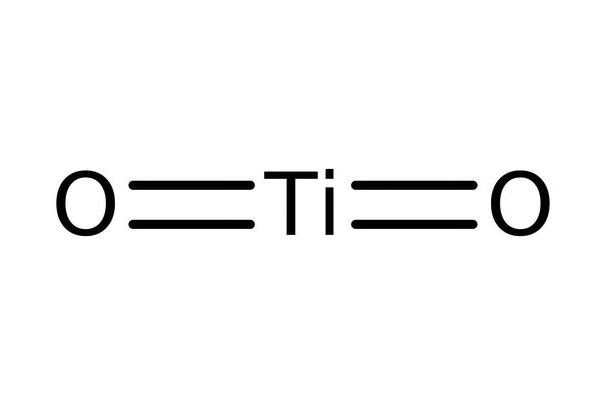
Today's MOTD is worth your attention, it's titanium dioxide.
This molecule was first produced industrially in 1916 when a company outside of Niagara Falls set up shop. Today, most of the 6 million tons we make each year are done by treating titanium ore with carbon and chlorine.
Titanium dioxide is best known for its ability to make white pigment and accounts for about 70% of all pigment production (but there's much more it can do). The solid powder finds itself primarily in paints, plastics, and paper.
The main companies producing all this titanium dioxide includes (but isn't limited to) Chemours, Venator, and Evonik.