
| WTI Crude | $60.54/bbl | -1.6% |
| Brent Crude | $64.56/bbl | -2.0% |
| HH Nat Gas | $2.70/MMBtu | +1.5% |
| MB Propane | $0.96/gal | +1.6% |
| 3:2:1 Crack | $15.56/bbl | -0.4% |
Phillips 66 to help make sodium-ion batteries possible
US-based refiner, Phillips 66, has announced that it will be collaborating with Faradion to develop anode materials for sodium-ion batteries.
A little background:
Typically, the lithium-ion batteries we see most often use anodes made of graphite, but graphite doesn't play well with sodium ions. Instead, sodium-based batteries utilize hard carbon anodes (which are similar in molecular composition but have very different properties).
Why is P66 involved?
Among the many products refineries produce, petroleum coke doesn't seem to get much attention. The carbon-rich solid material, when processed to remove sulfur and metals, is commonly used to make graphite. Faradion is hoping to "leverage Phillips 66’s experience developing specialty carbon materials" to produce a hard carbon anode material for its unique batteries. After all, Phillips 66 is Europe's largest producer of anode-grade coke.
Read the press release here.
Texas will soon be home to ethylene-based MMA
German methacrylate chemicals producer, Röhm, has announced the signing of an MoU with OQ Chemicals to build a new methyl methacrylate (MMA) plant on the US Gulf Coast.
Some context:
These companies are looking to produce more MMA—most of which is used to make PMMA (think of plexiglass or any of these things). But at the end of last year, we saw Mitsubishi Chemical shut down an MMA plant and then later announce its intent to build another MMA plant nearby. Those decisions were based on a desire to start using an ethylene-based process to take advantage of the US Gulf Coast's relatively cheap ethylene.
So, what are Röhm and OQ up to?
These two companies must have similar thoughts in mind as they will "utilize Röhm’s proprietary ethylene-based LiMA technology". The new plant, which is still waiting on a final investment decision, would be integrated into OQ's existing site in Bay City, Texas, and start-up sometime in 2023.
Read the press release here.
Braskem is planning to make even more bio-based PE
Brazilian petrochemical company, Braskem, has announced plans to increase its bio-based polyethylene (PE) capacity by 60,000 tons per year at its site in Trifuno, Brazil.
Bio-based PE?
Similar to how the US produces ethanol almost entirely from corn fermentation, Brazil produces its ethanol from sugarcane fermentation. But unlike the US, Brazil doesn't have vast shale resources that yield cheap ethane. Without cheap ethane from shale, dehydrating ethanol (made from sugarcane) into ethylene makes for a feasible steam cracking alternative. That sugarcane-based ethylene can then be polymerized into PE.
So, why the expansion?
Braskem noted that "demand from society and our partners for sustainable products" has "increased significantly in recent years". This plant expansion comes in response to that demand, and so long as society stops aspiring for sustainable products you can expect similar expansions in the future.
Read the press release here.
The Reboiler:
- OMV makes the switch to LEDs to reduce CO2 emissions
- This chemical contaminated some cannabis and caused a recall
- INEOS and a partner will try a hydrogen-power pilot project in Belgium
- Fracking was permanently banned in the Delaware River watershed
- Chevron is committing $300 million to low-carbon innovation
- TPC Group started up the second phase of its C4 project
MOTD: butadiene
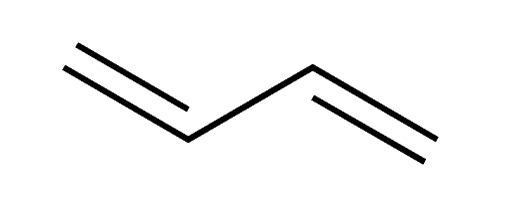
Today's MOTD is the one you've been dreaming about… butadiene.
First isolated by a French chemist in 1863, interest in butadiene took off after this Russian chemist polymerized it into a material with rubber like properties in 1910.
Today, the world produces roughly 18 million tons of the molecule each year. Pretty much all of that butadiene is a byproduct of the steam cracking of naphtha or ethane, although it can be produced by the dehydrogenation of n-butane.
The greatest single use of butadiene is in the production of various co-polymers such as SBR, SB Latex, ABS, and NBR. After those co-polymers, butadiene is mainly used to make polybutadiene (the main component of tires), neoprene, and chloroprene.
In short, butadiene is a critical intermediate to countless different materials we use every day. It's companies like LyondellBasell, Sinopec, BASF, and ExxonMobil that make sure there's enough of it to go around.