
| WTI Crude | $63.33/bbl | +0.3% |
| Brent Crude | $66.54/bbl | +0.8% |
| HH Nat Gas | $2.75/MMBtu | +4.6% |
| MB Propane | $0.78/gal | +0.3% |
| 3:2:1 Crack | $17.88/bbl | -0.6% |
Chemours set some emission-related goals
US-based chemical company, Chemours, has announced plans to reduce all operations-related emissions by 60% by 2030 and to be net-zero by 2050.
Some context:
Chemours will now join a quickly growing list of chemical companies with specific emission reduction goals. Net-zero by 2050 is something we hear quite a lot, for example Dow, BASF, and Shell (just to name a few) all share the same goal. Where Chemours stands out is its 2030 aspirations—a 60% reduction beats Dow's (15%) and BASF's (25%) near-term goals by a significant amount.
A fair comparison?
Chemours believes it can reach its 2030 goal by enhancing its emission control technologies (like we saw Chemours do last month) and implementing renewable energy at its sites (like we saw BASF do). The company (who produces things like Freon and Teflon) doesn't have to deal with the giant energy-intensive steam crackers responsible for about half of Dow, BASF, and Shell's emissions. Try to keep that in mind when comparing emission reduction goals between companies.
Read the press release here.
Group14 is making silicon anodes a reality in Washington
Battery materials start-up, Group14 Technologies, has announced the launch of its new silicon-carbon anode manufacturing site in Woodinville, Washington.
What are they making?
Typically, lithium-ion batteries use graphite as the anode (made with carbon from companies like Phillips 66) and a lithium metal oxide for the cathode. Graphite is used because it works well—but silicon would work much better if it didn't swell to 4x its size when soaked with lithium ions. Instead of using silicon alone, Group14 has developed a silicon-carbon composite, called SCC55, to replace that graphite anode.
So, what's next?
Group14 said that "battery suppliers are in the midst of the validation process" for using the SCC55 produced at this site. The company plans on doubling its production capacity in the coming years at another site nearby (which it hopes to start building this year). The last time we last Group14 was actually last October when that new plant was announced.
Read the press release here.
CP Chem signed another pyrolysis oil agreement
US-based Chevron and Phillips 66 joint venture, CP Chem, has announced the signing of a pyrolysis oil supply agreement with New Hope Energy.
Bringing you up to speed:
Last October, CP Chem told the world that it had successfully produced polyethylene (PE) from mixed-waste plastics. CP Chem's process cracks pyrolysis oil (using an ISCC certified mass-balance approach) to produce the ethylene needed to make more PE. But CP Chem isn't the company collecting, sorting, and producing pyrolysis oil from that waste plastic.
The main takeaway:
While it's possible (and maybe even likely) that CP Chem will eventually produce its own pyrolysis oil, for now it will rely on companies like New Hope Energy to make it for them. This should sound familiar to you as it was just a few months ago that the company signed a similar agreement with Nexus Fuels.
Read the press release here.
The Reboiler:
- Total and Siemens are partnering up to try to make LNG with less emissions
- This tiny airport in Colorado now offers sustainable aviation fuel
- Lanxess has some new yellow pigments for thermoplastics that can handle even more heat
- The ACC submitted some studies to the EPA on formaldehyde
- Waga Energy's landfill-gas upgrading technology will be used in Quebec
- Borealis might build a chemical recycling plant in Sweden
MOTD: pc
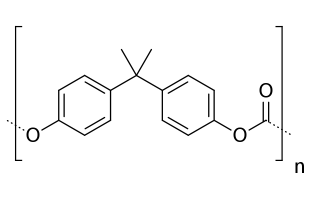
Today's MOTD is the one you've been asking for… polycarbonate.
First discovered in 1898 by the same guy who invented Novocain, we didn't start producing this molecule commercially until both Bayer and General Electric discovered it at basically the same time in the 1950s.
Today, the world produces about 5 million tons of this stuff each year primarily by reacting BPA and phosgene (although that's not the only way). This tough, transparent, and heat resistant polymer is what we use to make CDs, DVDs, and so much more.
The main two companies producing polycarbonates are just pieces of the companies who started it all—Covestro (a spin-off from Bayer) and SABIC (who bought General Electric's plastic business) are responsible for nearly half of all polycarbonate production.