| WTI Crude | $64.45/bbl | -0.9% |
| Brent Crude | $67.53/bbl | -0.7% |
| HH Nat Gas | $2.62/MMBtu | -1.9% |
| MB Propane | $0.94/gal | -0.5% |
| 3:2:1 Crack | $17.70/bbl | +8.7% |
Teflon will now be made with less associated emissions
US-based chemical company, Chemours, has announced a project at its site in Louisville, Kentucky to reduce its fluoroform emissions.
Some context:
Chemours' site in Louisville used to be part of DuPont's operations until DuPont spun-off its titanium dioxide, fluoroproducts, and select other chemical businesses back in 2015. The site in Louisville produces hydrofluorocarbons (HFCs) used as refrigerants and in fluoropolymer manufacturing. By 2022, Chemours' emission-reducing project will capture at least 99% of its fluoroform process emissions.
It's a trade-off:
Aside from the environmental reasons not to emit fluoroform, Chemours has economic reasons as well. The molecule is used as a refrigerant (that isn't ozone-depleting), to etch in the semiconductor industry, and is both a by-product and precursor of Teflon. The company would love to capture all the emissions—but it's cost-prohibitive to do so, and fluoroform is useful stuff worth producing (even when a tiny amount is emitted).
Read the press release here.
DuPont drops $2.3B on a performance materials company
Delaware-based chemical company, DuPont, has announced the acquisition of Laird's Performance Materials business for $2.3 billion in cash.
A little history:
Laird was acquired by a private equity firm less than three years ago. The company was split into 3 main businesses: Connectivity, Performance Materials, and Thermal Systems. The largest of those businesses, Performance Materials, manufactures electromagnetic shields and thermal management materials for the electronics sector.
Bigger picture:
When combined with DuPont's existing Electronics & Industrial business (which we've seen before) the company will be a leader in a rapidly growing electronics industry. Think of "smart/autonomous vehicles, 5G telecommunications, artificial intelligence, internet of things, and high-performance computing" as the main motives behind this purchase.
Read the press release here.
BASF's new plant in China will be powered by renewables
German chemical giant, BASF, has announced plans to power its first plants in Zhanjiang, China with 100% renewable energy.
Feeling déjà vu?
It was only two days ago when we mentioned BASF's site in Zhanjiang (although the focus was on Dow Chemical's new facility). BASF is spending $10 billion to build an enormous integrated complex (which they refer to as Verbund) at this location over the next decade. While the full site won't be complete until 2030, the first plant will be operational next year.
More on the renewables:
BASF and China Resources Power are working together to develop a unique power purchase agreement that will ensure that renewable power is produced somewhere in the region. In case you missed it, the company signed a similar agreement with EDF just last month for its sites in Texas. Expect to see similar agreements like this in the future.
Read the press release here.
The Reboiler:
- LyondellBasell and Dow's CEOs talked about chemical recycling last week
- Daqo signed an agreement to supply polysilicon for solar panels
- DuPont announced a $1.5 billion share buyback
- Suez will be handling wastewater in Siberia
- McDermott takes back some of Lummus after its divestment
MOTD: acrylonitrile
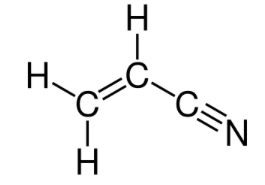
Today's MOTD is a personal favorite… acrylonitrile.
First synthesized by a French chemist in 1893, the world now produces over 6 million tons of acrylonitrile each year.
Prior to 1960, most of the world's acrylonitrile was made by reacting ethylene oxide or acetylene with hydrogen cyanide. But after DuPont introduced Orlon (an acrylic fiber that is no longer produced) in the 1950s demand for the molecule increased rapidly—and a better way to make acrylonitrile arrived. Today, virtually all acrylonitrile is made by the catalytic ammoxidation of propylene.
About a third of the stuff is used to make polyacrylonitrile (which becomes carbon fiber), a third for ABS and SAN resins, and most of the rest to produce acrylamide (which becomes PAM and cleans water).
The main companies making all this acrylonitrile are Ineos, PetroChina, Ascend, and a few more.