
| WTI Crude | $59.50/bbl | +0.0% |
| Brent Crude | $63.58/bbl | +1.8% |
| HH Nat Gas | $6.12/MMBtu | +0.0% |
| MB Propane | $0.90/gal | +0.0% |
| 3:2:1 Crack | $11.69/bbl | +0.0% |
DuPont to make more fancy electronic materials
US-based chemical company, DuPont, has announced that its $220 million expansion in south central Ohio is set for completion in the second half of this year.
What are they making more of?
The site is being expanded to produce more polyimide films and laminates for applications in the "automotive, consumer electronics, telecom, high-performing industrial, and defense market segments". Polyimides are used for things like flexible cables (like the cable connecting your laptop's logic board to the display) and those laminates serve as one of the many layers of printed circuit boards.
Bigger picture:
Companies like DuPont aren't the first to come to mind when we hear about new electronics and technologies—but chemical companies play a critical role in this arena. The materials DuPont is producing are necessary for "innovations in areas such as 5G, automotive, flexible displays, and artificial intelligence". The plant expansion is happening because those technologies are expected to see quite a bit of growth in the coming decade.
Read the press release here.
A couple of BASF's Texas plants to be powered by renewables
German chemical giant, BASF, has announced that its Texas sites in Freeport and Pasadena will be powered by 90% and 70% renewable energy respectively.
The details:
BASF signed an agreement with EDF to supply its site in Freeport with 25 MW of wind power (from west Texas) and 55 MW of solar power (from southeast of Houston). Its site in Pasadena is getting 10 MW of wind power from that same wind farm in west Texas.
Zooming out:
The renewable power supplied to these sites is done through power purchase agreements (PPA) that lock BASF into paying for the power produced at large wind and solar farms. These agreements ensure that the large farms are worth building because at least large chemical companies are willing to pay for whatever renewable energy is produced.
Read the press release here.
Shell lays out its new net-zero strategy
Dutch energy giant, Shell, has announced its new net-zero emissions strategy.
Summing it up:
- Reduce oil production by 1-2% each year going forward
- Reduce production of traditional fuels (gasoline, diesel, etc.) by 55% by 2030
- Increase cash generation from chemicals by $1-2 billion a year by 2030
- Reduce emissions intensity 6-8% by 2023, 20% by 2030, 45% by 2035, and 100% by 2050
How they will do it:
The oil production reduction will be achieved through "divestments and natural decline", and the reduction in traditional fuels production will occur as Shell shifts its production to chemicals. The company reminded us that it will reduce its refinery footprint to just 6 highly integrated sites (it's down to 13 after shutting one down last year). You can expect more investment in chemical production from recycled waste too because Shell is aiming "to annually process 1 million tonnes a year of plastic waste" by 2025.
The Reboiler:
- Evonik to make lipids for the COVID-19 vaccine
- Air Products started up a brand new cryogenic N2 plant
- Spain's main petrochemical company to work on waste-to-ethanol
- Linde started up some ASUs to make more MDI in China
- ExxonMobil shows off its brand new grade of HDPE
MOTD: allylchloride
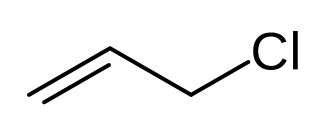
Today's MOTD is the one you've been waiting for… allyl chloride.
First produced by a couple of chemists named August in 1857, the world now produces over 1 million tons of the molecule each year. Shell was the first company to commercialize the technology by reacting propylene and chlorine at their Deer Park, TX site sometime in 1945. Dow Chemical got to it about a decade later in Freeport, TX.
Virtually all allyl chloride is produced by the chlorination of propylene. The vast majority of the stuff is used to make ECH (which ends up epoxy resins), but allyl chloride is also a feedstock for allyl alcohol, , and synthetic mustard oil.
The allyl chloride market is partially consolidated with the main producers including (but not limited to) Solvay, Osaka Soda, an Ineos subsidiary, and Olin.