
| WTI Crude | $65.03/bbl | -1.6% |
| Brent Crude | $68.00/bbl | -2.8% |
| HH Nat Gas | $2.67/MMBtu | -1.8% |
| MB Propane | $0.94/gal | -3.6% |
| 3:2:1 Crack | $16.28/bbl | -1.9% |
OMV to make propanol from a biodiesel byproduct
Austrian refiner, OMV, has announced its plans to produce propanol from glycerin at its refinery in Schwechat, Austria.
A little background:
At the end of last year, OMV announced plans to invest in this refinery so that it can also produce biodiesel (similar to what Phillips 66 is doing). But all of that biodiesel production comes with an unwanted bonus—each 100 pounds of biodiesel produced comes with about 10 pounds of glycerin.
So what are they doing?
We've actually seen other companies look to make use of that glycerin in the past (last fall Solvay began using glycerin to make solvents). Instead of doing that, OMV is looking to convert it into propanol (for use as a bio-based gasoline additive) after "more than five years of research". The project will begin as a small pilot plant, but the company hopes to eventually produce 125 million liters of propanol each year.
Read the press release here.
Dow Chemical is also coming to Donghai Island
US-based chemical company, Dow Chemical, has signed a (non-binding) agreement with one of China's development zones to build a combined 250,000 ton per year specialty polyurethane and alkoxylate manufacturing site.
Some context:
The potential facility, located in Zhanjiang, would be built alongside other large projects in the area (like BASF's $10 billion site under construction). You can read more about the enormous chemical park here if you're interested.
Why build the new plant?
The Asia-Pacific region is the world's largest chemicals market, and the demand in the area is rapidly "evolving towards high-value, specialty chemicals". By building a large site in the area Dow will be able to improve its "supply reliability" and "responsiveness to market needs and customized innovation".
Read the press release here.
Solvay's original business might find a new owner
Belgian chemical company, Solvay, has begun carving out its soda ash and derivatives business into a separate legal structure.
Why would they do that?
Typically, a company carves out part of its overall business so that it can optimize the unit's cash flow and readily sell it to another company. Solvay is looking to do this because "the business doesn’t really fit" the company's plans to focus on specialty materials. Such a large divestment would provide Solvay with plenty of cash to invest in that strategic direction.
Why you should care:
Not only is Solvay the world's largest producer of soda ash, but it was also the first to figure out how to make it cheaply and without the hydrogen chloride gaseous byproduct. If Solvay divests this part of its business it won't have much left in common with its beginnings in 1863 (which helped make glass, soap, and paper—19th-century essentials).
Read more here on IHS Chemical Week.
The Reboiler:
- This explosion in Saudi Arabia is partly why oil is up
- BASF's plastic sorting subsidiary can now separate polyamides
- Nouryon just introduced fluorescent monomers for advanced water treatment
- Air Liquide formed a joint venture in Kazakhstan to make hydrogen and nitrogen
- Westlake will now offer caustic soda with a reduced CO2 footprint
- These companies are working together to make the interior of your car
- DuPont is working on subsea water desalination with a partner
MOTD: butanol
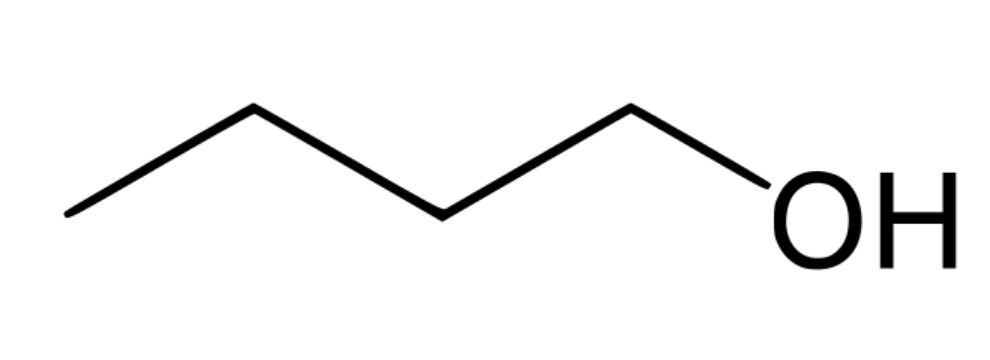
Today's MOTD is the one you've been asking for… butanol.
Butanol is one of those molecules with many cousins (read about its important isomers here), but we're going to focus on the n-butanol pictured above. The world produces and consumes about 4 million tons of this molecule each year.
Prior to the 1950s, the Weizmann Organism was responsibile for the industrial production of butanol (via fermentation). After we found that the oxo reaction of propylene could produce butanol from petroleum sources that fermentation route was phased out.
About 40%) of the molecule is used to produce butyl acrylates (which become paints & coatings) and the rest becomes butyl acetate (a synthetic fruit flavoring), glycol ethers, or is used as a direct solvent. If you're dying for more detail check this out.
The main companies producing all this n-butanol are BASF, Dow Chemical, OQ, and quite a few others.