
| WTI Crude | $58.73/bbl | -4.4% |
| Brent Crude | $63.85/bbl | +0.0% |
| HH Nat Gas | $2.43/MMBtu | -3.6% |
| MB Propane | $0.98/gal | +7.3% |
| 3:2:1 Crack | $18.33/bbl | +2.1% |
Sumitomo Chemical and Accenture form a digitalization JV
Japanese chemical company, Sumitomo Chemical, and consulting firm, Accenture, have announced the formation of a new joint venture focused on digitalization.
A little context:
The last time we saw Accenture it was helping Phillips 66) test a private 5G network at one of its refineries. Now, the consulting firm is making sure that Sumitomo can reach its goal of "exponential improvement of productivity with digital innovation". To do so, Sumitomo is fully absorbing its IT subsidiary and divesting 20% of it to Accenture.
So, what are they doing?
The consulting firm's expertise in "state-of-the-art artificial intelligence (AI), analytics, and automation" will "optimize [Sumitomo's] supply chain and promote intelligent automation in its operations". Aside from Accenture's consulting services, the firm will provide Sumitomo with a training program to help develop talent internally.
Read the press release here.
Covestro's acquisition last year finally went through
German chemical and materials company, Covestro, has announced that it has successfully acquired DSM's Resins & Functional Materials businesses.
Feeling déjà vu?
If you are, it's because the companies agreed on this transaction back in October. But just because these companies agreed to sell parts of themselves to one another doesn't mean it's a done deal. Mergers and acquisitions are always subject to regulatory approvals such as antitrust clearance.
A quick refresher:
This $1.9B deal gave Covestro customers in solar panels (coatings), 5G networks (optical fiber coatings), and 3D printing (other polymers). DSM took the cash because it wants to focus on the nutrition and health fields (think vitamins, enzymes, yeast extracts, and flavorings). It's probably not a coincidence that DSM acquired Amyris' flavor and fragrance business shortly after this deal closed last week.
Read the press release here.
Two of China's chemical companies are merging
State-owned Chinese chemical companies, Sinochem and ChemChina, have received approval from the Chinese government to merge.
A little history:
ChemChina's $46 billion acquisition of Syngenta a few years ago seemed like a great idea (for China). But the big purchase hasn't paid off and now ChemChina has found itself with more debt than it can handle. There have been rumors about a merger with Sinochem since 2016 as a means to make that debt more bearable.
So, what now?
There are still plenty of hoops to jump through before the deal is done (which includes keeping an eye on the US's security concerns). But if all goes well for China, the two companies will form a chemical giant with revenues topping $150 billion each year—roughly the size of BASF, Dow, and DuPont combined and half the size of China's very own Sinopec.
Read more here on the Wall Street Journal.
The Reboiler:
- The world's largest chemical recycling plant will be built with a modular design
- The US's recycling partnership gave out some grants to increase PP recycling
- Chart Industries bought a tiny piece of a company that converts natural gas into acetylene and H2
- This chemical company just received a buyout offer of $4.6B
- BMW and Daimler got together with BP to talk about charging stations
- Puma Energy launched a new bitumen terminal in India
MOTD: pe
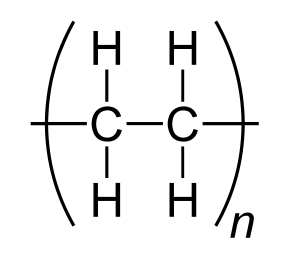
Today's MOTD is the one you've been asking for… polyethylene.
First synthesized accidentally in 1898 by this German chemist and then again at ICI in 1935, this (very long) molecule is now the most widely produced polymer in the world (about a third of all plastics are PE).
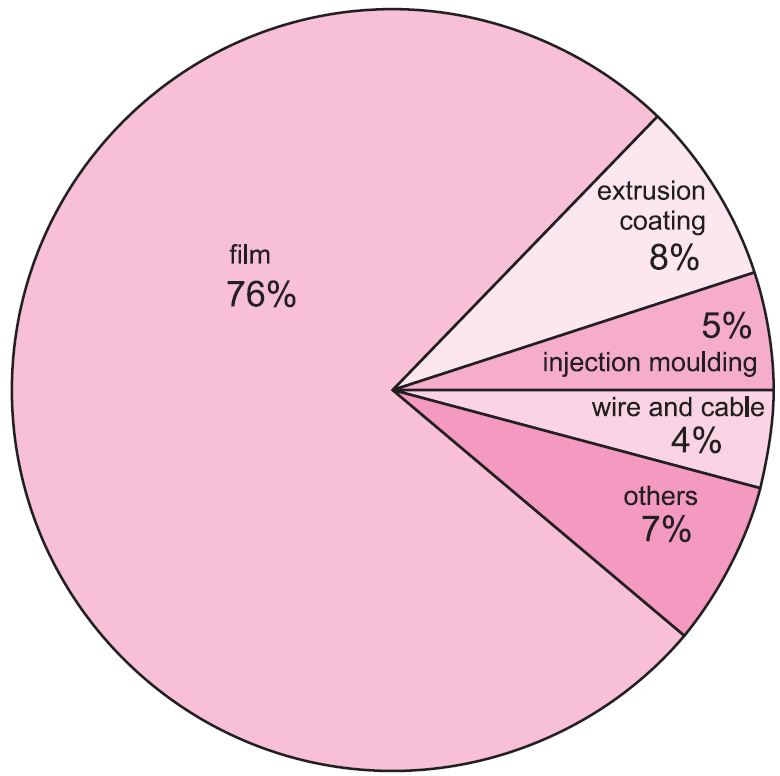
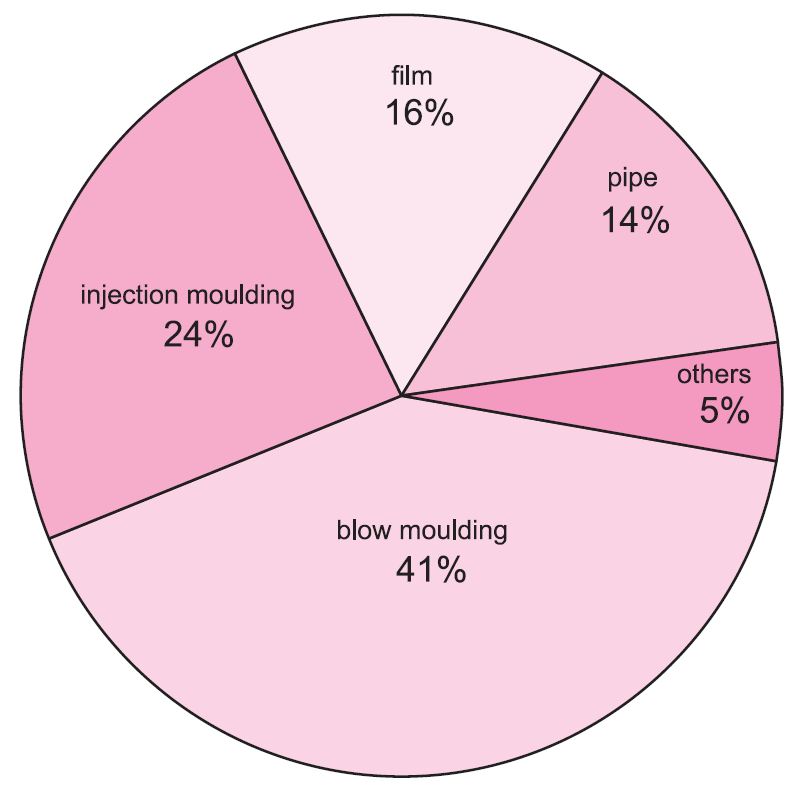
We produce more than 100 million tons of this stuff every year in 3 varieties by polymerizing ethylene—that's HDPE (47%), LDPE (23%, LLDPE (30%). Each version of the molecule has its own special applications, but as a general rule LDPE and LLDPE are mostly used to produce thin films (here's a chart) while HDPE is used in injection and blow molding (here's another chart).
The main companies producing all of this polyethylene (in no particular order) are Dow Chemical, ExxonMobil, LyondellBasell, Sinopec, and SABIC.