| WTI Crude | $70.54/bbl | +1.0% |
| Brent Crude | $72.97/bbl | +0.7% |
| HH Nat Gas | $5.21/MMBtu | +1.6% |
| MB Propane | $1.23/gal | +3.4% |
| 3:2:1 Crack | $21.83/bbl | -3.0% |
Braskem wants to dehydrate ethanol in Thailand
Brazilian petrochemical producer, Braskem, signed an agreement with Thailand's SGC Chemicals to study a potential biobased ethylene joint venture.
Some context:
Ethylene is traditionally produced by naphtha and ethane steam crackers (both of those feedstocks come from fossil fuels). But back in 2010, Braskem started up a huge ethanol dehydration plant—that site in Brazil produces about 200,000 tons of ethylene per year. Ethanol is a big deal in Brazil because of the country's plentiful sugarcane crops and use in gasoline.
Bigger picture:
Much like Brazil, Thailand is home to a (relatively) large sugarcane industry and few natural gas reserves. A little bit of fermentation can turn that sugarcane into ethanol that's ready for dehydration.
The price of that resulting biobased ethylene is more on par with the fossil-based ethylene in the region than if you were in the US (because of the US's abundant natural gas supply). That's why Braskem is looking to build another ethanol dehydration plant in Thailand.
Read the press release here.
Shell just bought into molecular plastic recycling
Dutch petroleum giant, Shell, has announced plans to form a joint venture with molecular plastic recycler, BlueAlp, to build up to four new plants.
Bringing you up to speed:
Back in February, Shell made a big announcement about its intent to become more sustainable. Among many ambitions, the company decided to make plastic recycling a top priority. Shell is hoping to recycle over 1 million tons of waste plastic each year by 2025. Up until this announcement, Shell's plastic recycling efforts have been limited to tests in Louisiana and Moerdijk.
More on the agreement:
Shell acquired about a quarter of BlueAlp and intends on using its technology to convert waste plastic into pyrolysis oil (by depolymerization) that can be fed to Shell's steam crackers. The first two new units will supply their pyrolysis oil to Shell's Moerdijk and Rhineland facilities, and the other two units will supply Shell's site in Singapore.
On top of pyrolysis oil production, Shell announced its intent to remove impurities from that oil using its own technology. We talked about that impurity issue back in June.
Read the press release here.
More vanadium production is coming to Arkansas
US-based vanadium chemical producer, US Vanadium (USV), has acquired a plant in Arkansas from Saint-Gobain to increase its global capacity.
What's going on here?
The site USV bought will be used to grind and roast vanadium-containing feedstock. It's not spelled out anywhere, but USV emphasized that it's in the business of "recovering contained vanadium from a variety of post-industrial waste streams". Since vanadium is widely used as a catalyst in the chemical industry, it's reasonable to assume that this site in Arkansas will probably grind and roast at least some spent catalyst.
Why are they increasing capacity?
The push to make more vanadium-containing chemicals is coming from an Austrian company that is making vanadium-based redox flow batteries. Those batteries are most useful for grid-scale solutions because of their nearly unlimited energy storage capacity, high efficiency, zero emissions, very long cycle lives, and relatively low cost of available electricity on a lifecycle basis". Grid-scale energy storage solutions are often touted as our only means to an energy system based on renewables.
Read the press release here.
The Reboiler:
- ICIS just posted their annual top 100 chemical company ranking
- Borealis is trying to use renewable feedstocks in a steam cracker in Sweden
- The CFO of Dow Chemical talked to McKinsey & Co. about the DowDuPont merger
- Linde is going to build a PEM electrolyzer plant in Niagra Falls to make green H2
- Gevo is planning to build an alcohol-to-hydrocarbon plant in Minnesota
MOTD: acrylicacid
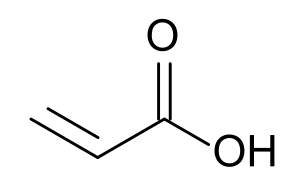
Today's MOTD is the most beautiful molecule of them all, acrylic acid.
Owing its name to the smell of burnt fat (glycerol in the fat thermally degrades into acrolein—which smells acrid), acrylic acid is commonly produced by oxidizing propylene to acrolein and then oxidizing that acrolein.
Today, the world produces over 6 million tons of acrylic acid each year. The largest portion of it (about half) is used to make acrylates and about 30% is used to make superabsorbent polymer (mainly for use in diapers). Those acrylates and other monomers are typically combined to make polyacrylic acid and other polymers that become plastics, coatings, adhesives, and elastomers.
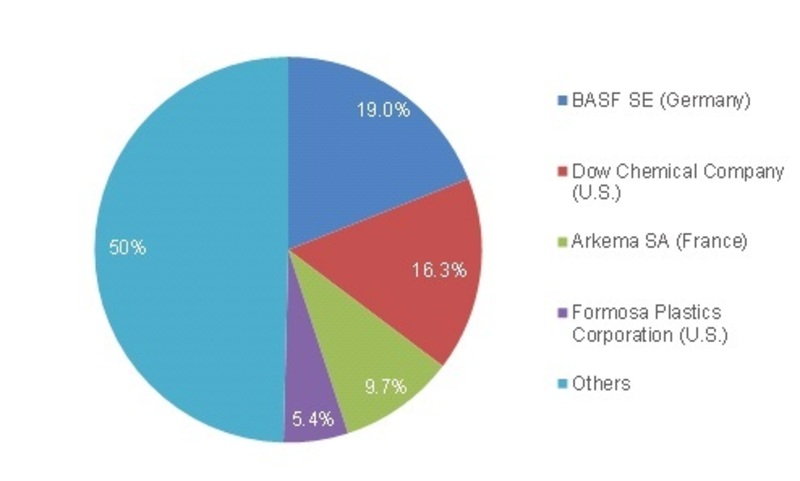
The acrylic acid market is fairly consolidated with BASF, Dow Chemical, Arkema, and Formosa making up about half of global production.