
| WTI Crude | $82.39/bbl | +2.1% |
| Brent Crude | $84.67/bbl | +1.4% |
| HH Nat Gas | $5.44/MMBtu | -2.2% |
| MB Propane | $1.48/gal | +4.2% |
| 3:2:1 Crack | $23.77/bbl | +5.5% |
Now Gevo wants to use ethanol too
Renewable chemicals company, Gevo, has signed an agreement with process technology company, Axens, to commercialize Axens' ethanol to jet fuel process.
Wait, what about isobutanol?
The oligomerization of dehydrated isobutanol (isobutylene) to C8-C12 hydrocarbons (aka gasoline and jet fuel) yields a slightly different final composition than the oligomerization of dehydrated ethanol (ethylene). While producing isobutanol by corn fermentation is what Gevo is known for (they own a full patent suite), the company wants to get into the ethanol conversion game as well. They plan to partner with existing ethanol producers, deploy Axens' technology, and then blend that ethanol-based product with what it can make from isobutanol.
Zooming out:
The US is pushing hard for sustainable aviation fuel (SAF) by any means. Don't forget that we're seeing the big guys (like Valero and Phillips 66) approach the issue from the other direction by converting vegetable oils into SAF. There are also companies looking to make it happen from CO2.
Read the press release here.
Ingevity to make more caprolactone
South Carolina based specialty chemical company, Ingevity, has announced plans to add caprolactone capacity to its site in the UK located between Liverpool and Manchester.
What are they making?
Caprolactone has seen better days—the molecule was once the most economical route to caprolactam (which later becomes Nylon 6). Today, Ingevity takes caprolactone, opens the ring, and then converts the resulting PCL monomer into a polyol. Then that polyol is reacted with an isocyanate to make polyurethanes like mattresses, your shoe soles, or rollerblade wheels.
Putting it into context:
Ingevity has only been at this site in the UK since its $650 million acquisition in 2019. Since then, the company has been pouring more money into the business by expanding its caprolactone polyol site in Louisiana so that it can expand deeper into the US. It's not clear whether they plan to ship caprolactone to that US-based site, but they did repeatedly mention their "customers across the globe" in the announcement.
Read the press release here.
BASF's JV plans to make more 2-EHA
German chemical company, BASF, and Malaysian refiner, Petronas, have announced plans to double the production of 2-ethylhexanoic acid (2-EHA) at their joint venture site in Kuantan, Malaysia.
What's 2-EHA?
We make 2-EHA through a series of reactions starting with the hydroformylation of propylene (which is mostly made by steam cracking hydrocarbons). 2-EHA ends up being used in paint dryers, PVC stabilizers, PVB film stabilizers, synthetic lubricants, and wood preservatives. Sometimes this stuff is used as a catalyst to produce PLA (a pseudo-biodegradable bio-based polymer).
Why the expansion?
Despite the huge PLA projects being built out in Southeast Asia, these two companies insist that it's the PVB film stabilizers (for safety glass) and the synthetic lubricants (for the white goods industry) driving demand. And while doubling capacity may sound like a lot, we're really only talking about an extra 33,000 tons per year. That's nothing compared to the 230 million tons of ethylene we make each year.
Read the press release here.
The Reboiler:
- Haldor Topsoe started up its demo plant that makes methanol from biomethane
- BP is going to supply Lanxess with sustainable cyclohexane
- Dow Chemical and Ralph Lauren are partnering to make cotton dyeing more sustainable
- Monolith Materials and SK agreed to form a JV in South Korea to make turquoise H2
MOTD: formaldehyde
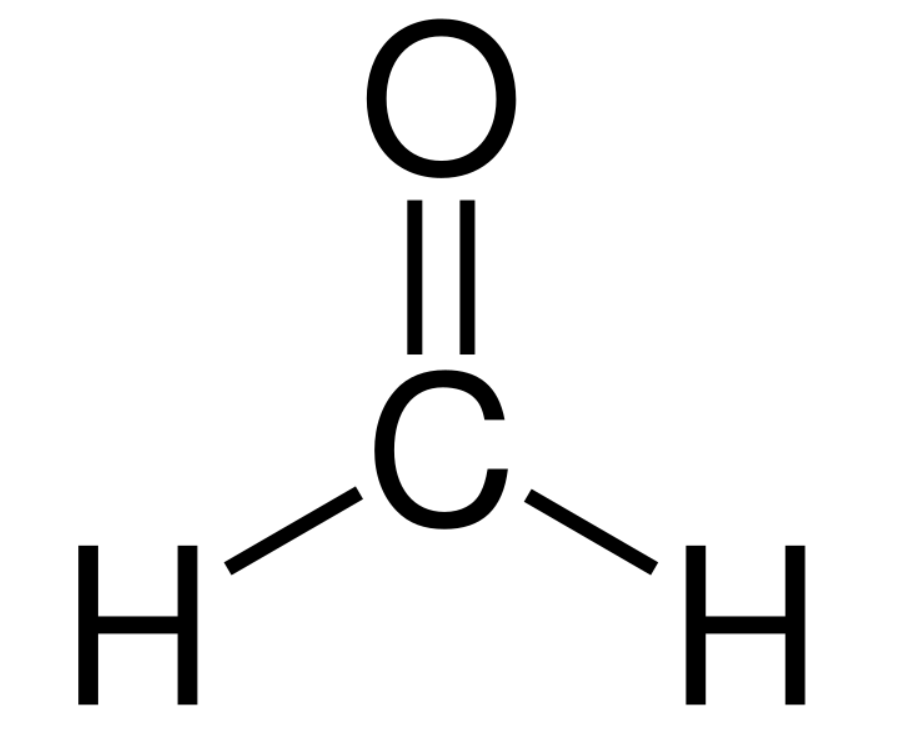
Today's MOTD is the one and only… formaldehyde.
You probably came across formaldehyde for the first time when dissecting a frog in middle school (does this give you any flashbacks?). Today, the world produces some 45 million tons of the molecule each year. Most of all that production is done in the same way, at least in principle, that August Wilhelm von Hofmann came up with in the late 19th century.

Typically, formaldehyde is produce by the catalytic oxidation of methanol in the Formox process. Nearly 70% of all formaldehyde production is used to make urea-, phenol-, and melamine-formaldehyde resins (aka UF, PF, and MF). The remaining 30% is most notably used to produce BDO (which becomes Spandex) and MDI (which becomes rigid foams).
Some of the world's largest formaldehyde producers are Georgia-Pacific, Hexion, Dynea, BASF, and Huntsman. While the production of formaldeyde is relatively simple, it's costly to transport, so most formaldehyde is consumed where it is produced.