| WTI Crude | $61.67/bbl | +4.3% |
| Brent Crude | $64.73/bbl | +3.0% |
| HH Nat Gas | $3.16/MMBtu | -36.3% |
| MB Propane | $0.94/gal | -1.4% |
| 3:2:1 Crack | $14.95/bbl | -2.2% |
DuPont gets its foot in the door on lithium
Delaware-based chemical company, DuPont, has announced that it will be collaborating with Vulcan Energy to produce lithium hydroxide with a net-zero carbon footprint.
Here's that context:
The demand for EVs (and therefore batteries and their raw materials) is rising dramatically. That means that older chemical companies (like Albemarle and SQM) and start-ups (like Li-Cycle and Vulcan) are scrambling to produce more lithium hydroxide. But the production of lithium hydroxide has associated emissions—which is where Vulcan brings something unique to the table. The company aims to use geothermal energy to power its lithium extraction process.
What are they doing together?
DuPont has a technology portfolio of products like "lithium selective sorbent, nanofiltration, reverse osmosis, ion exchange resins, ultrafiltration, and close circuit reverse osmosis". Vulcan believes that DuPont's technologies are "likely to be well-suited to sustainably extract the lithium from the brine" and is pleased that the 200-year-old company can already produce those products at scale.
Ingevity wants to make more polyols in Louisiana
South Carolina based specialty chemical company, Ingevity, has announced plans to add caprolactone polyol production to its site in DeRidder, Louisiana.
What are they making?
Ingevity has developed a process that converts caprolactone (not to be confused with the nylon monomer) into a polyol. That polyol can then be used to produce the polyurethanes that become things like your mattress, your shoe soles, or rollerblade wheels. Caprolactone polyols are supposedly a good balance between the properties of ester and ether polyols.
What are Ingevity's plans?
The company is looking to increase its production capacity by 40% to "better meet demand and more effectively serve its customers.". The construction (starting this summer) will not only let Ingevity produce more of its special polyol, but also allow them to store more of it and "enable bulk shipments to US customers".
Read the press release here.
CO2-to-methanol plant in China starts construction
Icelandic renewable chemical technology company, Carbon Recycling International (CRI), has announced the completion of the process design package for its first Emissions-to-Liquids (ETL) plant in Anyang, China.
What's the technology?
While the specifics of CRI's technology are not publicly known, we do know that the company is producing methanol from hydrogen with carbon dioxide (it seems similar to the Fischer-Tropsch process used at GTL plants).
Zooming out:
In any case, this new plant follows the successful operations of CRI's first (4000 ton per year) site in Svartsengi, Iceland. Now that "ground preparations and foundation work [are] already underway", the project is expected to be complete "before the end of this year.". Once operational CRI will be responsible for recycling over 160,000 tons of CO2 per year (equivalent to the emissions of 60,000 cars).
Read the press release here.
The Reboiler:
- This battery recycling company is about to go public
- That winter storm impacted nearly 6 million bpd of refining capacity
- Poland's main refiner just invested in agricultural biogas production plants
- The US is officially back into the Paris climate accord
- The Senate is planning to hold a hearing about Texas power issues
- Italy's main petroleum company bought 140MW of solar power
- Dow is looking to sell $1B worth of infrastructure assets in Germany
MOTD: acrylicacid
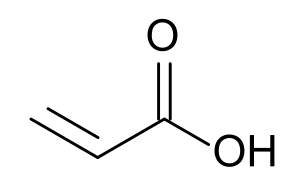
Today's MOTD is the most interesting one of all: acrylic acid.
Owing its name to the smell of burnt fat (glycerol in the fat thermally degrades into acrolein—which smells acrid), acrylic acid is commonly produced by oxidizing propylene to acrolein and then oxidizing that acrolein.
Today, the world produces over 6 million tons of acrylic acid each year. The largest portion of it (about half) is used to make acrylates and about 30% is used to make superabsorbent polymer (mainly for use in diapers). Those acrylates and other monomers are typically combined to make polyacrylic acid and other polymers that become plastics, coatings, adhesives, and elastomers.
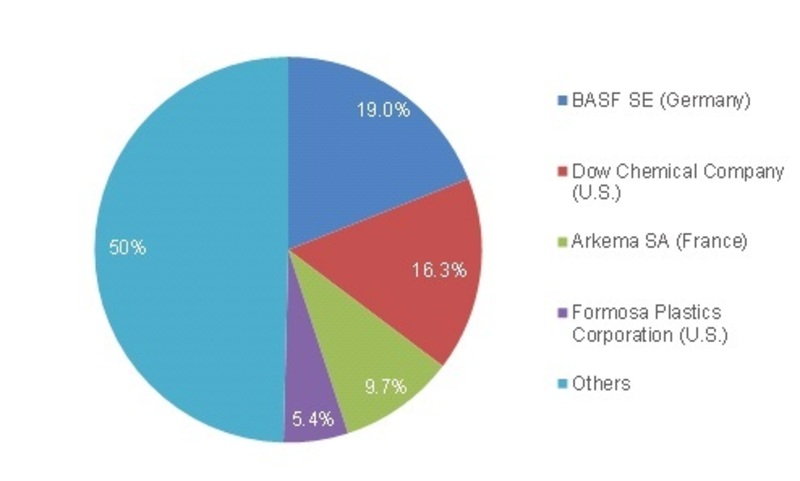
The acrylic acid market is fairly consolidated with BASF, Dow Chemical, Arkema, and Formosa making up about half of global production.