| WTI Crude | $68.36/bbl | -1.4% |
| Brent Crude | $70.90/bbl | -1.5% |
| HH Nat Gas | $3.95/MMBtu | -2.9% |
| MB Propane | $1.14/gal | +0.6% |
| 3:2:1 Crack | $21.09/bbl | -6.2% |
Li-Cycle went public this week via SPAC
Lithium-ion battery recycling start-up, Li-Cycle, has completed its merger with Peridot Acquisition this week and is now being publicly traded on the NYSE.
Bringing you up to speed:
The last time we talked about Li-Cycle was when the company announced plans to build a spoke (a collection and mechanical processing site) in Arizona. Before that, we saw Li-Cycle's plans to build a hub (a hydrometallurgical refinery) in New York. Broadly speaking, the recycling of lithium-ion batteries (LIBs) addresses their sustainability. By using an above-ground resource (aka "the urban mine" the supply of raw materials for LIBs becomes regional (more sustainable) and reduces waste (more sustainable). Even BASF is getting in on this.
So, they went public?
Yes—Li-Cycle was able to raise $580 million in cash by merging with a special purpose acquisition company (SPAC). Now that the company is done ringing the bell, Li-Cycle will have "the funding to capitalize on significant growth opportunities, advance our breakthrough commercial technology, and build lithium-ion recycling facilities across the globe".
Read the press release here.
Eneos is transporting hydrogen with methylcyclohexane
Japanese refiner, Eneos, has announced plans to test the use of methylcyclohexane to transport hydrogen to existing refineries in Japan.
The issue at hand:
Hydrogen is an energy-dense molecule and a real pain to liquefy and transport. As a result, most hydrogen is produced where it is intended to be consumed (at refineries with hydrotreaters). While refineries do produce some hydrogen via catalytic reforming, the amount isn't enough for those hydrotreaters. So, we use the steam reforming of methane to fill the void (here are some numbers). Unfortunately for Japan, the country is only home to 0.011% of proven gas reserves and is the world's largest importer of LNG as a result.
So, methylcyclohexane?
This isn't the first time we've talked about a liquid organic hydrogen carrier (LOHC)—last month we saw Eastman getting in on it too. Basically, Eneos is going to import hydrogenated toluene (aka methylcyclohexane, the LOHC) and then dehydrogenate it on-site. Then, Eneos will ship that toluene back for reuse as an LOHC and claim that the hydrogen it contained is "CO2-free" (because they weren't the ones steam reforming that methane).
Read the press release here.
PTT and Cargill's new PLA plant in Thailand
Subsidiary of Thailand's PTT Global Chemical and the US's Cargill, NatureWorks, has been given the go-ahead to start construction of its new polylactic acid (PLA) plant in Thailand.
What does that mean?
A couple of months ago we saw an extremely similar announcement—the only real news here is that the shareholders have aligned on a price tag and timeline. NatureWorks is going to drop $600 million on the world's first integrated lactic acid, lactide, and PLA facility at the start of Q2 2022.
In case you're still interested:
The new facility will convert dextrose (local Thai sugarcane farmers) into lactic acid, turn that into lactide, and then polymerize it into a biobased and biodegradable plastic. NatureWorks' new plant (which will produce 75,000 tons of PLA each year) will be joining Total Corbion's plant nearby (which has the same capacity but isn't integrated).
Read the press release here.
The Reboiler:
- Henkel decided to invest in a Chinese material science focused fund for its adhesive tech business
- Plug Power began building its new green H2 plant in Georgia
- Honeywell UOP's Oleflex on-purpose propylene tech is going to be used out in western Siberia
- This US senator wants an excise tax on plastic to increase plastic recycling
- Eastman Chemical talked to Jim Cramer on Mad Money about molecular recycling
MOTD: pe
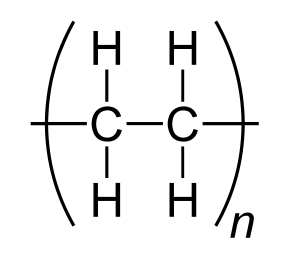
Today's MOTD is the most important one yet: polyethylene.
First synthesized accidentally in 1898 by this German chemist and then again at ICI in 1935, this (very long) molecule is now the most widely produced polymer in the world (about a third of all plastics are PE).
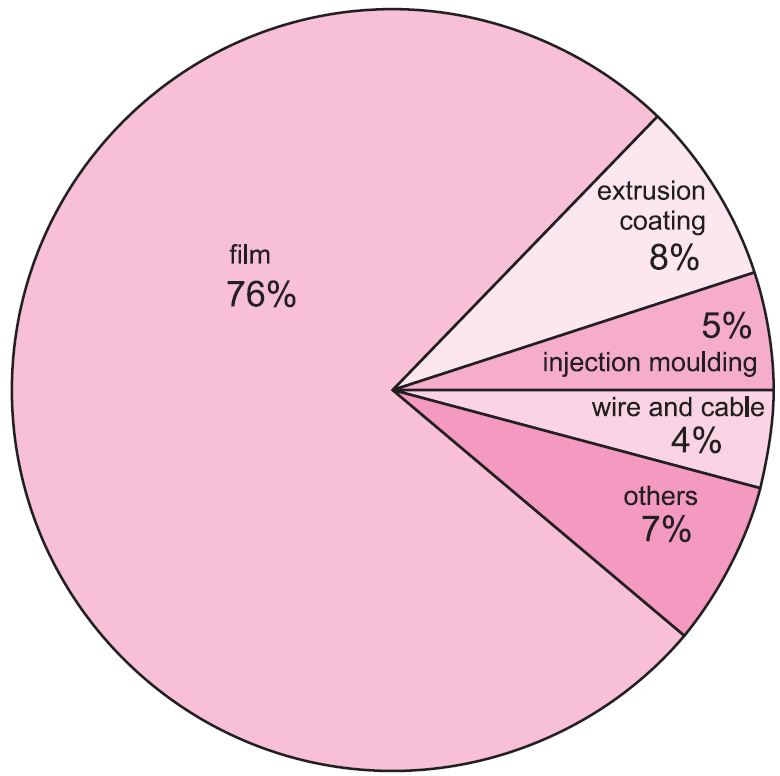
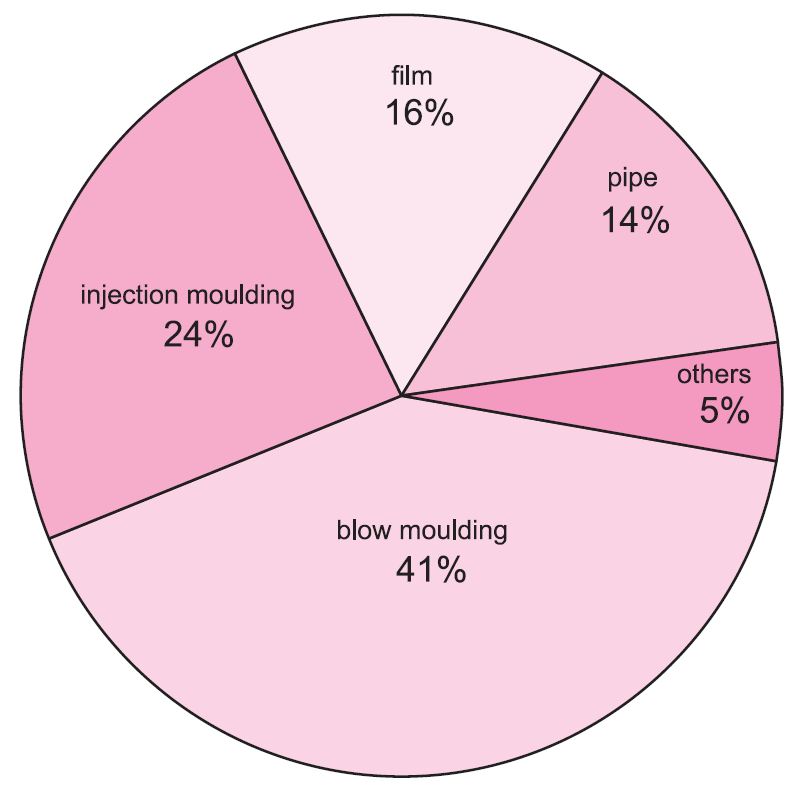
We produce more than 100 million tons of this stuff every year in 3 varieties by polymerizing ethylene—that's HDPE (47%), LDPE (23%, LLDPE (30%). Each version of the molecule has its own special applications, but as a general rule LDPE and LLDPE are mostly used to produce thin films (here's a chart) while HDPE is used in injection and blow molding (here's another chart).
The main companies producing all of this polyethylene (in no particular order) are Dow Chemical, ExxonMobil, LyondellBasell, Sinopec, and SABIC.