| WTI Crude | $66.45/bbl | -7.4% |
| Brent Crude | $69.33/bbl | -6.9% |
| HH Nat Gas | $3.75/MMBtu | +1.4% |
| MB Propane | $1.05/gal | -5.0% |
| 3:2:1 Crack | $18.03/bbl | -0.1% |
Eastman's special fluid will transport hydrogen
US-based chemical company, Eastman Chemical, has announced a new partnership with Hydrogenious to produce a liquid organic hydrogen carrier (LOHC) to make the storage and transport of hydrogen easy and affordable.
Some context:
Hydrogen is often touted as the fuel of the future—but the energy-dense molecule is a real pain to liquefy, transport, and store. That's why Hydrogenious wants to use an LOHC to carry hydrogen from one place to another. LOHCs are typically unsaturated aromatic compounds (in this case, benzyltoluene) that can readily be hydrogenated and dehydrogenated. This technology is already in use for this over in Japan.
So, what's the partnership?
Hydrogenious wants to bring the product to the market, but Eastman is the one producing the benzyltoluene. The two companies have been jointly developing the unique LOHC so that it can be reprocessed at Eastman's facilities once the LOHC can't be used anymore. Currently, the LOHC can hydrogenated and dehydrogenated several hundred times before needing to be reprocessed.
Read the press release here.
J&J found too much benzene in its suncscreen
Consumer products company, Johnson & Johnson, has issued a recall for several of its Neutrogena and Aveeno aerosol sunscreens.
What's going on here?
This past June, an independent analytical lab discovered that 78 sunscreens sold in the US contained unsafe levels of benzene. This came as a surprise to sunscreen manufacturers (like J&J) because benzene isn't used in the process—the molecule must be coming from somewhere upstream.
So, what's upstream?
C&EN proposed that the source could be coming from "the ethanol used in some aerosols" or polyacrylic acid (which the industry likes to call carbomer). Other sunscreen ingredient producers, such as BASF and DSM (they make avobenzone and homosalate), haven't responded to C&EN for comments yet.
Read more here on C&EN.
Chevron and Cummins want H2 to be huge
US petroleum corporation, Chevron, and heavy equipment manufacturer, Cummins, have announced a new strategic collaboration to advance the hydrogen (H2) economy.
What they want to do:
The two companies want to work together on four things:
- Promote H2's usage through public policy
- Create market demand for H2
- Develop the H2 infrastructure
- Use Cummins green H2 tech at Chevron's refineries
Bigger picture:
We talk about green hydrogen quite a bit—but that's just because oil, gas, and petrochemical companies are throwing a lot of money at it. Because of that money, you can expect to see hydrogen as part of your future energy mix. Whether or not that's a good idea is a conversation for another day. If you're interested in this (rather complicated) issue check out this Bloomberg article or this more technical article.
Read the press release here.
The Reboiler:
- Trinseo just released its 11th annual sustainability report
- Phillips 66 also decided to release its very own sustainability report
- This chemical distribution company bought a South Korean chemical distribution company
- Linde started up a new liquid hydrogen plant in La Porte, Texas
- Preem and Vattenfall are considering building a 50-MW electrolysis plant at a refinery
MOTD: acrylonitrile
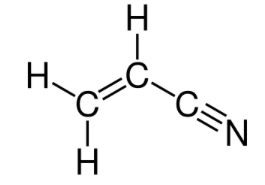
Today's MOTD is the one and only… acrylonitrile.
First synthesized by a French chemist in 1893, the world now produces over 6 million tons of acrylonitrile each year.
Prior to 1960, most of the world's acrylonitrile was made by reacting ethylene oxide or acetylene with hydrogen cyanide. But after DuPont introduced Orlon (an acrylic fiber that is no longer produced) in the 1950s demand for the molecule increased rapidly—and a better way to make acrylonitrile arrived. Today, virtually all acrylonitrile is made by the catalytic ammoxidation of propylene.
About a third of the stuff is used to make polyacrylonitrile (which becomes carbon fiber), a third for ABS and SAN resins, and most of the rest to produce acrylamide (which becomes PAM and cleans water).
The main companies making all this acrylonitrile are Ineos, PetroChina, Ascend, and a few more.