| WTI Crude | $69.21/bbl | -0.5% |
| Brent Crude | $70.89/bbl | -0.6% |
| HH Nat Gas | $2.98/MMBtu | -1.0% |
| MB Propane | $0.91/gal | -0.5% |
| 3:2:1 Crack | $17.65/bbl | +0.7% |
Monolith just got more money for green H2
Clean hydrogen and chemicals producer, Monolith Materials, has announced that it has received an investment from South Korean conglomerate, SK Group, to support its green hydrogen production technology.
What's that technology?
Monolith is using methane pyrolysis to split natural gas into hydrogen and solid carbon (carbon black). The majority of that carbon black (70%) is used to pigment and reinforce tires, and most of the remainder is used in food packaging and inks. The hydrogen produced can then be used as energy storage or as a feedstock for chemicals (like ammonia).
Why the investment?
SK Group's investment follows a $1.5 billion investment in Plug Power (a leading hydrogen player in the US). The last time we saw a major investment in Monolith was when Mitsubishi threw money at the company with the hope that hydrogen will eventually power its new turbines. Similarly, SK Group's investment reflects the companies interest in hydrogen usage further downstream.
Read the press release here.
NatureWorks is cleared to build a new PLA plant
Biopolymer producer, NatureWorks, has announced that the Thailand Board of Investment has approved the front-end engineering design for its upcoming polylactic acid (PLA) plant in Thailand.
Some context:
Back in 2011, Cargill decided to accept a $150 million investment from PTT Chemical. That investment explains why NatureWorks is building this plant in Thailand (PTT is a Thai state-owned company).
What makes this plant special:
The plant, which is scheduled for completion in 2024, will be "the world’s first polylactide facility designed to be fully integrated". That means that the site will convert dextrose (from corn or another crop) into lactic acid, turn that into lactide, and then polymerize it into a bio-based plastic that resembles classic thermoplastics like PE and PP.
Read the press release here.
Sibur and Linde are making good use of CO2
Russian petrochemical company, Sibur, has announced a joint project with industrial gases company, Linde, to purify and market the CO2 by-product of ethylene oxide (EO) synthesis.
Where that CO2 is coming from:
CO2 emissions from the chemical industry come from two sources—when hydrocarbons are burned to produce heat or when CO2 is produced by a reaction in the process. For example, we produce olefins (valuable, reactive molecules) by cracking (adding heat from burned hydrocarbons) to stable molecules like ethane. Once we have a reactive molecule, like ethylene, heat is sparingly required and the CO2 emissions are a product of the oxidation reaction that makes EO.
So what's the plan?
Linde plans to build a pipeline from Sibur's ethylene oxide operations and "a gas treatment unit to process it into a commercial-grade product usable in the food industry". That means that the CO2 produced by this petrochemical process will be used for freezing food, carbonating beverages, and for modified atmosphere packaging. The project should be complete by the end of next year and is in line with Sibur's goal of reducing "GHG emission intensity by 35% by 2028".
Read the press release here.
The Reboiler:
- Oil prices just hit a 2-year high based because of OPEC+ and positive sentiment
- This fire at a refinery in Tehran led to 11 injuries
- Dow Chemical's CEO is pushing for more nuclear power to decarbonize ethane crackers
- Indorama is expanding its PET recycling facility in Alabama with $50 million
- Air Liquide is going to help Lukoil and TotalEnergies capture CO2
- Maire Tecnimont was selected to design TotalEnergies' new SAF plant
MOTD: lithiumhydroxide
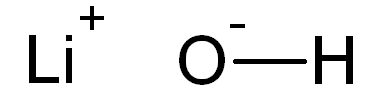
Today's MOTD is the one you've been waiting for… lithium hydroxide.
Lithium hydroxide got its big debut during the Cold War as an intermediate in the production of tritium to produce nuclear fusion weapons. The US became the primary producer of lithium hydroxide between 1950s-1980s, but things have changed since then.
Today, most lithium hydroxide is produced from the lithium carbonate that lithium brines give us. It's companies like Ganfeng, Albemarle, SQM, and Livent that are making all of that lithium hydroxide (and doing it primarily in Australia and Chile).
Nearly all of the lithium hydroxide produced is used to make the cathode materials in lithium-ion batteries (such as lithium cobalt oxide and lithium ion phosphate), but the stuff can also be used in a few other ways.