
| WTI Crude | $73.52/bbl | +0.7% |
| Brent Crude | $76.94/bbl | +2.9% |
| HH Nat Gas | $3.79/MMBtu | +4.7% |
| MB Propane | $1.04/gal | +0.8% |
| 3:2:1 Crack | $15.44/bbl | +3.5% |
BASF is getting in on battery recycling
German chemical giant, BASF, announced plans to build a battery recycling pilot plant at its upcoming complex in Schwarzheide, Germany.
Catching you up:
This isn't the first time we've talked about BASF entering the battery market—the company began construction of its first cathode materials plant back in August. That plant's feedstock will be the precursor metal oxide powders BASF plans to make in Finland. Now, the company is looking to produce some of those raw materials from spent batteries instead of from the mining industry.
The bigger picture:
As noted by ICIS, it was just 3 years ago that BASF's ex-CEO claimed combustion engines would dominate through 2030. Today, BASF is the only mainstream chemical company bothering to diversify into cathode material production. Their intent to build a battery recycling facility should remind you of Li-Cycle and their recent efforts.
Read the press release here.
The UAE is about to have way more PVC
The UAE's largest oil company, ADNOC, and Indian conglomerate, Reliance, have announced plans to build an integrated chlor-alkali, EDC, and PVC complex in Ruwais, UAE.
Wait, what are they making?
First, the two companies will produce 940,000 tons per year of chlorine and sodium hydroxide from brine. Then, the chlorine will be reacted with ethylene to produce 1.1 million tons per year of EDC. Finally, the EDC will be thermally decomposed into VCM so it can be polymerized into 360,000 tons per year of PVC.
Why build all of this?
Most PVC is used to produce pipes, but that probably doesn't surprise you. It's safe to say that most of this PVC will be used to do just that—the developing economies in the region (much of Asia and Africa) need access to clean water, and PVC piping is the best way to transport it. Although, some folks would argue that PEX puts up a good fight.
Read the press release here.
Baker Hughes invested in a microorganism that eats CO2
US-based oil and gas services company, Baker Hughes, has announced an investment in a synthetic natural gas start-up called Electrochaea.
What Electrochaea is doing:
The start-up is reacting CO2 (from an industrial source) with hydrogen (produced via water electrolysis) with the help of a hydrogenotrophic methanogen to produce methane. The company selectively evolved the microorganism for industrial use—which basically means that it can better withstand contaminants like oxygen and hydrogen sulfide.
Why the investment?
Last November, we saw Baker Hughes acquire a CO2-capture start-up called 3C. Baker Hughes is expanding its portfolio of CO2-capture and utilization technologies so that it can tailor solutions for its wide range of industrial customers. As they said last time, "we believe there will be strong growth potential of carbon capture for both industrial applications and oil and gas projects".
Read the press release here.
The Reboiler:
- The founder of Nexus Fuels was interviewed about their chemical recycling technology
- This refinery in Spain is testing 5G augmented-reality
- Mitsubishi Chemical licensed its patent for biomass-based PET to Kuraray
- SK Global Chemical acquired 10% of this PET chemical recycler last week
- Saipem agreed to promote Versalis' woody biomass to ethanol technology
- Air Liquide is going to build a $100 million plant in Wuhan, China to make more chips
MOTD: hydrogenperoxide
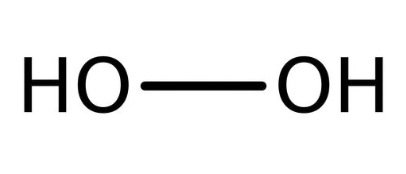
Today's MOTD is the one you've been asking for… hydrogen peroxide.
First described by a French chemist as "eau oxygénée" (oxygenated water) in 1818, it took nearly a century for us to figure out how to purify the molecule. At the start of the 20th century the world produced about 2,000 tons of hydrogen peroxide—now we pump out roughly 5 million tons each year.
After BASF developed the anthraquinone process in 1939, alternative production methods quickly became obsolete. Now virtually every hydrogen peroxide molecule made on earth is produced by this method. About 85% of that hydrogen peroxide is used for bleaches, with most of the remainder being used to purify water.
.jpg)
The main companies making all that H2O2 are Solvay, Evonik, and Arkema (among many others).