
| WTI Crude | $36.97/bbl | -4.1% |
| Brent Crude | $38.08/bbl | -3.5% |
| HH Nat Gas | $2.67/MMBtu | -0.7% |
| MB Propane | $0.56/gal | -0.9% |
| 3:2:1 Crack | $9.30/bbl | +5.8% |
Baker Hughes buys a carbon capture start-up
US-based oil and gas services company, Baker Hughes, has announced that it will be acquiring a technology start-up called Compact Carbon Capture (3C).
So what does 3C do?
First granted a patent in 1999, 3C has been developing its unique technology for the past 20 years under the guidance of Equinor and Fjell Technology Group. The company's technology uses "rotating beds instead of static columns" to distribute the solvent that captures the CO2 emissions. That rotating bed technology "enhances the carbon capture process resulting in up to 75% smaller footprint and lower capital expenditures".
What's going to happen now?
Part of the acquisition agreement is a promise, on behalf of Baker Hughes, to accelerate the technology's development and to take it to market. The acquisition aligns with the 100-year-old oil field services company's plan to invest in the energy transition. In its own words, "we believe there will be strong growth potential of carbon capture for both industrial applications and oil and gas projects".
Read the press release here.
Neste trades $305 million for its neighbor's refinery
Finnish refiner and the world's largest producer of renewable diesel, Neste, has announced that it has acquired Bunge's biorefinery in Rotterdam, the Netherlands for $305 million.
Why did they buy the plant?
Neste is charging ahead with investments as demand for renewable diesel, sustainable aviation fuel, and feedstock for chemicals continues to grow. This site is next door to one of Neste's existing biorefineries and already has a pipeline connection built. The new plant will act as a pretreatment facility and terminal for the production and storage of the feedstock for Neste's growing biorefinery capacity.
Pretreatment facility?
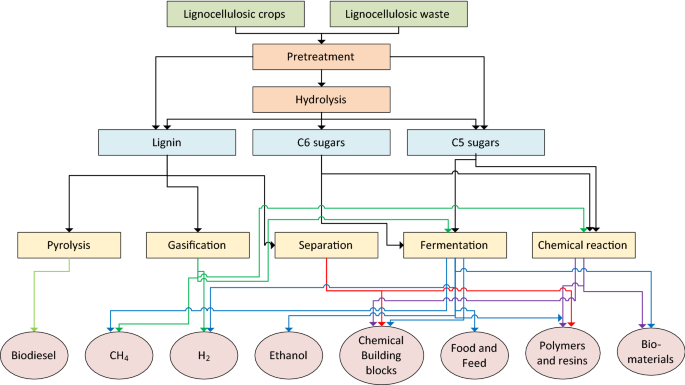
Before you can start producing those fuels and chemicals you need to get that bio-based waste into a usable form. Pretreatment usually involves some sort of mechanical processing (think shredding and grinding), energy densification, pelletization, fractionation, and more. Check out this oversimplified process flow diagram to get an overall idea of pretreatment's part of the big picture.
Read the press release here.
BP announces the closure of a refinery down under
UK-based oil and gas major, BP, has announced that it will be closing its refinery near Perth, Australia, and converting it into an import terminal.
A little history:
The refinery out in West Australia has provided fuels for the continent for the last 65 years. The facility "helped underpin the early development of the surrounding community and key industries" during that time and BP's "decision to cease refining [was] a difficult one".
Some context:
BP recently announced its detailed plan to become net-zero by 2050 and warned us that it would need to reduce its refining capacity. The company must close the most expensive refineries first, and "regional oversupply and sustained low refining margins mean the [refinery] is no longer economically viable.".
Read the press release here.