
| WTI Crude | $63.16/bbl | +0.0% |
| Brent Crude | $65.98/bbl | -0.2% |
| HH Nat Gas | $2.63/MMBtu | -0.8% |
| MB Propane | $0.78/gal | +0.5% |
| 3:2:1 Crack | $18.00/bbl | +2.6% |
Chevron and Honeywell are making alky with liquid salt
American oil & gas giant, Chevron, and petroleum process technology company, Honeywell UOP, have announced the successful start-up of the world's first ionic liquids alkylation unit.
Here's some context:
Over half of the world's refineries utilize alkylation units to convert isobutane and light alkenes into a mixture of mostly isoheptane and isooctane. Refiners install this expensive unit to produce more high-octane gasoline instead of selling more LPG only when it makes economic sense.
So, what's special about this new technology?
Until now, all alkylation units used either sulfuric acid or hydrofluoric acid to catalyze the reaction. This new technology catalyzes the reaction with an ionic liquid (think of it like liquid table salt—except only at 100°C). That has quite a few benefits including, but not limited to, "simpler handling procedures" thanks to the low vapor pressure of ionic liquids relative to those strong acids.
Read the press release here.
Li-Cycle plans to recycle lithium-ion batteries in Arizona
Canadian-based battery recycling start-up, Li-Cycle, has announced that it will be building a new lithium-ion battery recycling facility near Pheonix, AZ.
What that facility is doing:
Li-Cycle is tackling battery recycling by building decentralized "spokes" that will feed centralized "hubs". This new plant is a spoke—which means that it mechanically shreds used lithium-ion batteries to produce a mixture of lithium, manganese, cobalt, and nickel. That mixture is then sent to a hub to refine all of the materials for reuse (a hub in New York is coming soon).
Bigger picture:
This will be the companies third spoke, doubling its total recycling capacity in North America to a total of 22,000 tons per year. Eventually, Li-Cycle will need to build a hub out in the western US to convert that shredded mixture into the lithium carbonate, cobalt sulfate, and nickel sulfate needed to make more batteries. Perhaps that will be announced shortly after the company goes public later this year.
Read the press release here.
Phillips 66 inches closer to renewing one of its refineries
US-based refiner, Phillips 66, has awarded EPC firm, Worley, with a front-end engineering design (FEED) services contract to convert one of its refineries into a renewable fuels complex.
Bringing you up to speed:
It was last August when Phillips 66 told the world that it's planning on renewing its refinery near San Francisco, CA. Since then, we've seen the company increase its renewable production in the U.K. and other refiners (like Valero) make similar announcements.
The details:
Phillips 66 is looking to produce up to 650 million gallons per year of renewable fuels at this site from "used cooking oils, fats, greases, and vegetable oils". To make that happen, Worley will be performing all the detailed engineering that comes with new pre-treatment units, repurposed hydrocracking units, and everything in between. The plant is expected to be up and running here in a few years.
Read the press release here.
The Reboiler:
- Air Products acquired the rest of its coal-to-liquid JV in China
- Tidewater chose Haldor Topsoe's technology to make renewable diesel in Canada
- Shell and CNOOC started-up a new POSM and polyol unit in China
- CP Chem signed an agreement with New Hope Energy to provide them with pyrolysis oil from plastic waste
- Vulcan Energy started-up its direct lithium extraction pilot plant
- This US-based start-up announced two new zero-emission gas power plants
MOTD: tnt
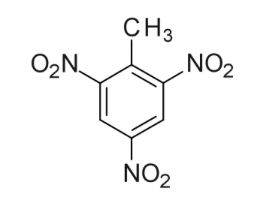
Today's MOTD is the one and only… trinitrotoluene.
Known colloquially as TNT, this explosive molecule is a yellow solid at standard conditions and has been around ever since this German chemist figured out how to use it as a yellow dye in 1863.
Due to its explosive nature, only military arsenals can produce the molecule in the US—so it's not exactly clear how much of it is made each year. We do know that it's "still widely used" by the military today and that we made enormous quantities of it during the world wars.
In any case, when we make it, we make it by nitrating toluene three times. Generally speaking, it's large refiners who produce toluene, so perhaps they sell (relatively) small quantities of that feedstock to the government?