| WTI Crude | $75.54/bbl | +1.8% |
| Brent Crude | $78.85/bbl | +1.8% |
| HH Nat Gas | $5.53/MMBtu | +8.4% |
| MB Propane | $1.37/gal | +2.2% |
| 3:2:1 Crack | $18.79/bbl | -1.5% |
Dow wants to depolymerize your mattress
US-based chemical company, Dow Chemical, has announced the startup of its new polyurethane (PU) molecular recycling plant.
Some context:
Dow is one of the market leaders when it comes to reacting polyols and isocyanates to make PU. The material (which has so many other applications) is widely used as the foam that makes up your mattress. But mattresses don't last forever, so companies like BASF and Covestro have been developing ways to recover polyols from that PU.
So, what are they doing?
Dow and four other companies (who have other roles in the supply chain) have created a system to collect, dismantle, depolymerize foam mattresses, and recover the polyols (which will be marketed as Renuva). The plant is capable of processing 200,000 foam mattresses per year. That's obviously a lot of mattresses—but it pales in comparison to the 18 million thrown away each year by the US alone. The likes of Dow, BASF, and Covestro are just getting started.
Read the press release here.
BASF is getting even deeper into battery materials
German chemical company, BASF, has announced a new partnership with a leading Chinese battery producer to recycle batteries and produce cathodes.
Catching you up:
In the last 6 months alone we've seen a lot from BASF regarding batteries—most recently, the company announced a new JV to make cathodes and a plan to build a battery recycling pilot plant. All of this (and more) comes just 3 years after BASF's ex-CEO brushed off the possibility that vehicle electrification was coming soon. Today, BASF is the only large chemical company getting into the battery game. They are planning to compete with other battery raw materials producers like LiCycle and Redwood Materials.
Connecting the dots:
Speaking of Redwood Materials, that company just signed a deal to provide Ford with a supply of cathode materials. Ford likes that idea because it shortens the supply chain for battery production in the US. Battery producers in Europe want the same thing. This partnership between BASF and CATL will give BASF expertise and give CATL access to BASF's "strong position in the CAM market" (CAM is cathode active materials).
Read the press release here.
Gevo just bought its competitors patents
Colorado-based renewable chemicals company, Gevo, has announced its acquisition of Butamax's entire isobutanol related patent portfolio.
Wait, what does Gevo do?
Gevo developed a new strain of yeast that produces isobutanol instead of ethanol when it consumes plant sugars. The company's technology could open up a whole new market for companies (like POET and ADM) who produce ethanol from corn. That's because isobutanol can be dehydrated to isobutylene and oligomerized to olefins with an 8 to 12 carbon backbone which represents the main component of gasoline and jet fuel respectively.
Zooming out:
Butamax was formed as a joint venture between BP and DuPont back in 2011. Gevo and Butamax have fought (and worked together) for years on their often overlapping isobutanol-related technologies. Now, Gevo owns all of the patents in question and will be able to expand (by licensing) its technology without stepping on the toes of their competitor. Maybe Chevron had a feeling this would happen—it was just a couple of weeks ago that Gevo signed an agreement with the company to build some new plants.
Read the press release here.
The Reboiler:
- Celanese decided to update its list of products on force majeure
- Ineos is trying to be net zero by 2045
- These two huge Russian petrochemical companies have officially merged
- Trinseo basically promised to buy half of the molecularly recycled styrene that Indaver makes
- Honeywell and Wood launched some technologies for making sustainable aviation fuel
MOTD: lacticacid
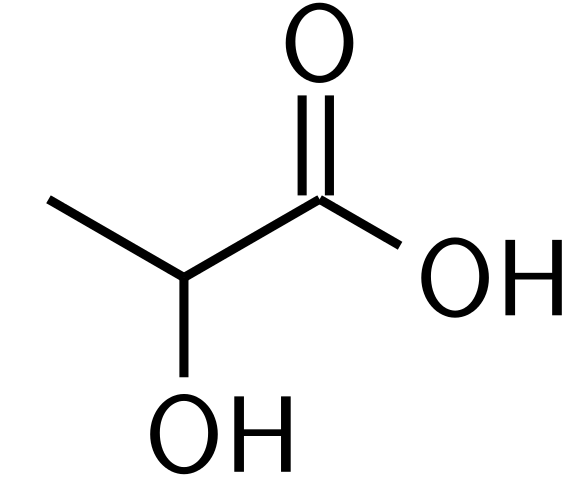
Today's MOTD isn't even that interesting, it's just lactic acid.
While you produce lactic acid each time you hit the gym, we leave it to companies like Corbion, Cargill, Henan Jindan, and DuPont to do the real mass production.
First isolated from sour milk in 1780 by a Swedish man, the world now produces nearly 300,000 tons of lactic acid each year. About 90% of it is made by the fermentation of plant sugars (shoutout to corn), but the molecule can also been produced chemically from acetaldehyde (here's a helpful flowchart).

Lactic acid has historically been used in the food industry for preservation by acidulation, but global production has recently ramped up for the production of ethyl lactate (a biobased solvent) and polylactic acid (a biobased plastic).