
| WTI Crude | $59.19/bbl | -3.7% |
| Brent Crude | $63.52/bbl | -0.8% |
| HH Nat Gas | $2.52/MMBtu | -2.3% |
| MB Propane | $0.85/gal | -5.3% |
| 3:2:1 Crack | $17.77/bbl | +7.6% |
Covestro might be recycling your mattress soon
German chemical company, Covestro, has announced that its new polyurethane (PU) chemical recycling pilot plant is now in operation.
Some context:
Covestro is the world leader when it comes to reacting polyols and isocyanates to make PU. The material (which has so many other applications) is widely used as the foam that makes up your mattress. But mattresses don't last forever, so companies like BASF and Dow have been developing ways to recover polyols from that PU.
So, what are they doing?
Covestro's new process is unique because it recovers both raw materials—polyols and the precursor to TDI. The company's pilot plant is currently producing both materials but is only built to recover the polyols so far. The ability to recover that precursor will be added sometime this summer.
Read the press release here.
Celanese wants to separate so many batteries
Irving-based chemical company, Celanese, has announced that it will be expanding its ultra-high molecular weight polyethylene (UHMW-PE) production capacity in Europe.
What are they making?
UHMW-PE is known for its extremely long chains that create a very tough material (the highest impact strength of any thermoplastic). That makes it useful as body armor and as a separator in lithium-ion batteries.
So why make more of it?
Celanese has been expanding its UHMW-PE production for years—the company completed an expansion in 2019 and announced an expansion in Texas just last fall. Celanese is making more of this stuff because the demand for electric vehicles (and therefore batteries and battery separators) is rising rapidly, not because body armor is flying off the shelves.
Read the press release here.
BASF will start selling circular styrene to Trinseo
German chemical giant, BASF, and polystyrene producer, Trinseo, have announced plans to work together to produce circular styrene.
Who is doing what?
BASF will be producing two forms (discussed below) of circular styrene and selling it to Trinseo. Trinseo will be taking that styrene and producing S-SBR (for tires) and polystyrene (for so many things).
Zooming out:
BASF says that it will supply Trinseo with styrene produced by a bio-mass balanced approach and with a pyrolysis approach. This isn't the first time we're seeing BASF or Trinseo talk about styrene from pyrolysis.
Read the press release here.
The Reboiler:
- A refinery in Indonesia caught fire on Monday
- Baker Hughes licensed a mixed-salt technology for carbon capture
- Petrobras just sold a refinery in Brazil for $1.7 billion
- These two companies made a JV focused on carbon capture and liquefaction
- The Suez Canal isn't blocked anymore but the impact will still be felt
- Maire Tecnimont's bio-waste recycling pilot plant was inaugurated
MOTD: butane
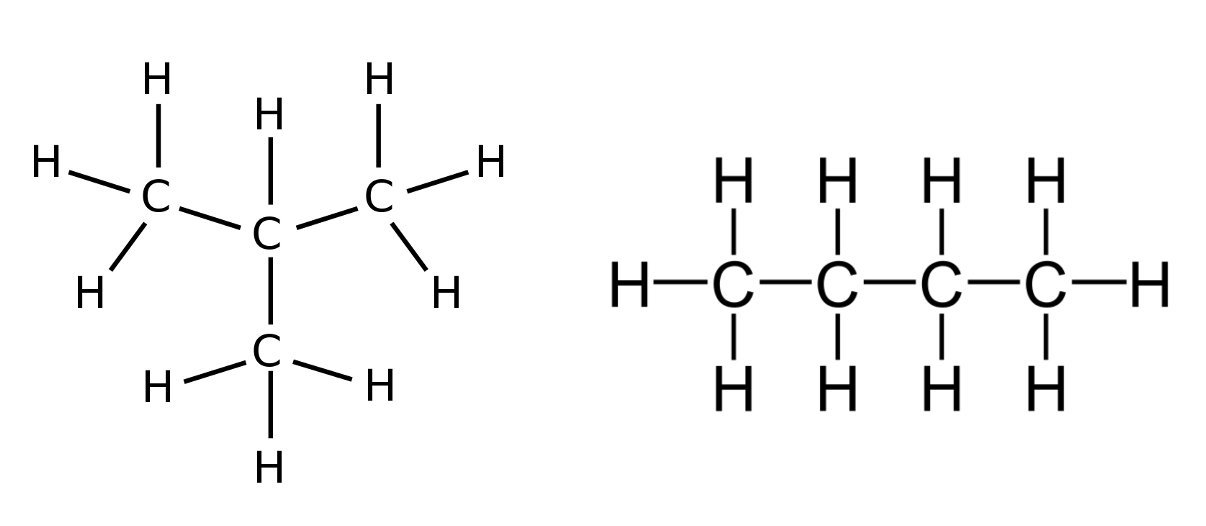
Today's MOTD is the best one yet: butane.
Perhaps known most colloquially for its use in lighters, butane was first discovered in crude oil in 1864 by Edmund Ronalds.
Butane comes in two forms—that’s isobutane and n-butane. Both of those molecules are byproducts of oil and gas production and refining, but sometimes the latter is converted into the former.
Isobutane is typically used to produce isobutene, which is a precursor for MTBE, ETBE, isooctane, and butyl rubber. Two thirds of its cousin, n-butane, is used to produce LPG. The remaining n-butane is used to make butadiene which finds itself being used to make polybutadiene (tires and golfballs) and ABS (legos).
The main companies making all of this butane are often the ones helping to pull it out of the ground or those with steam crackers—think of companies like ExxonMobil, CP Chem, Shell, and .