| WTI Crude | $74.18/bbl | +2.5% |
| Brent Crude | $77.42/bbl | +2.5% |
| HH Nat Gas | $5.10/MMBtu | +3.7% |
| MB Propane | $1.34/gal | +0.5% |
| 3:2:1 Crack | $19.07/bbl | +1.8% |
Danimer Scientific might use CP Chem's loop reactors
Biopolymer producer, Danimer Scientific, and petrochemical producer, Chevron Phillips Chemical (CP Chem), are working together to explore a loop slurry reactor to produce one of Danimer’s polyhydroxyalkanoates (PHA).
A little history:
Back in 1961, Phillips Petroleum introduced a loop slurry process to produce high-density polyethylene (HDPE). When Phillips Petroleum and Chevron formed CP Chem in 2000 that loop slurry technology was passed along. Now, CP Chem’s loop slurry process is used at 80 HDPE plants worldwide.
Okay, so biopolymers?
Remember when Danimer bought Novomer a couple of months ago? Well, Novomer’s groundbreaking PHA (they call it Rinnovo) was successfully produced at scale for the first time back in March. Now, Danimer is exploring the chance that it can make its ring-opening polymerization happen inside CP Chem’s iconic reactors. The companies are hoping this will increase the utilization of future plants and reduce overall costs.
Read the press release here.
Natural gas prices are being passed to MDI
American chemicals producer, Huntsman, has announced that it will be increasing the price of its methylene diphenyl diisocyanate (MDI) due to high natural gas prices.
Breaking it down:
Remember last time when we talked about Yara's response to rising natural gas prices? Yara decided to cut back its ammonia production by 40% instead of passing the additional production cost down the value chain. Huntsman made the call to add a surcharge of €125 (which is roughly a 10% price increase) to its MDI production.
The decision to cut production or increase prices has to do with current storage levels and whether the end market is willing to pay the price. Ammonia is used to make fertilizers and MDI is used to make polyurethanes. Apparently, polyurethane consumers can eat the margin.
Wait, natural gas prices are high?
Take a look at the price at the top of the newsletter (HH stands for Henry Hub—a nickname owed to pipeline nexus in Louisiana). It's twice as high as normal here in the US, but even higher in regions that rely on oil & gas imports (cough cough Europe). Give Wednesday's newsletter a read if you're interested in what's causing the spike.
Read the press release here.
Shell exits West Texas for a whole lotta cash
Dutch petroleum giant, Shell, has announced the sale of its Permian basin shale assets to ConocoPhillips for $9.5 billion.
Some context:
We saw Shell make its big renewable announcement back in February when the company decided to reduce its emissions by 55% by 2030. That emission reduction target is for absolute emissions. ConocoPhillips on the other hand is planning to reduce its emissions intensity by 40-50% by 2050. That's because ConocoPhillips, like ExxonMobil, is going with the "last man pumping" strategy when it comes to oil & gas production.
Bigger picture:
Just because Shell is clearly reducing its oil & gas footprint (and pouring its cash proceeds into its shareholder's pockets) doesn't mean the industry is reducing its overall footprint (although it might eventually). If the earlier story on natural gas didn't make it clear—we still need products like natural gas. That's why ConocoPhillips and ExxonMobil talk about emissions intensity. The last companies pumping out oil plan to pump it out with 50% fewer emissions, per barrel, than they do today. We're still projecting more barrels needed in the future.
Read the press release here.
The Reboiler:
- This glycol producer just bought 100% worth of its electricity from renewables
- Lummus' technology was selected for a new diphenyl carbonate plant in China
- Repsol is officially using an electrolyzer at a refinery to make hydrogen
- There have been a bunch of plant closures in Japan
- This battery materials recycler and Ford are planning to work together
MOTD: terephthalicacid
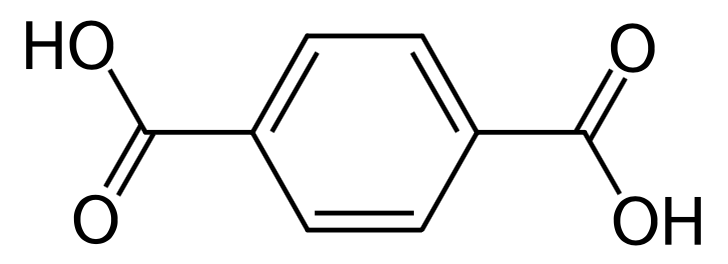
Today's MOTD is the most important one yet: terephthalic acid.
First isolated from turpentine by a French chemist in 1846, the world now produces about 80 million tons of terephthalic acid (aka PTA—for purified terephthalic acid) per year. Almost all of that PTA produced is made by the catalytic oxidation of p-xylene (known as the Amoco process).
The majority (about 80%) of that global production occurs in Asia, with the main producers being Yisheng, Heng Li, INEOS, Reliance, and Indorama. Virtually all of the PTA the world makes is used to produce polyethylene terephthalate (PET) which becomes things like coke bottles and polyester fiber.