| WTI Crude | $71.31/bbl | -3.5% |
| Brent Crude | $73.91/bbl | -4.9% |
| HH Nat Gas | $4.02/MMBtu | +2.0% |
| MB Propane | $1.09/gal | -2.5% |
| 3:2:1 Crack | $20.36/bbl | -0.9% |
Danimer is buying Novomer to make polymers
US-based biopolymer producer, Danimer Scientific, has announced the acquisition of Novomer for $152 million.
The context you need:
Both Danimer and Novomer are looking to produce large quantities of a class of biodegradable polymers called polyhydroxyalkanoates (PHAs). Danimer makes a specific PHA called poly (3-hydroyxbutyrate-co-3-hydroxyhexanoate) with a fermentation process, and Novomer makes another PHA called poly(3-hydroxypropionate) with a chemical process.
Zooming out:
Danimer thinks that the two PHAs are complementary and could be extremely valuable as a combined resin. That's why Danimer is reducing the number of fermenters headed for its new plant (which we talked about in April) and expanding Novomer's production capacity. In any case, the acquisition increases Danimer's offerings to include a cheaper PHA that has better barrier properties.
Read the press release here.
PureCycle is going to recycle PP in Georgia
Polypropylene (PP) recycler, PureCycle, has announced plans to build a $440 million plant in Augusta, Georgia.
The problem:
Currently, the world only recycles about 1% of the PP we produce. One reason that number is low is because PP consumers (mainly bottle producers) want clear or white PP so that they can add pigment/dye to make their plastic-bottled-product stand out on the shelf. But when you chop up, melt, and reprocess a waste plastic rainbow you end up with dark grey product that nobody really wants.
So, what's going on here?
PureCycle is using a chemical process developed and licensed by Proctor & Gamble that dissolves the dyes, pigments, and fragrances that usually devalue waste plastic. PureCycle's new plant in Georgia will be the company's second facility and will eventually process 65,000 tons of waste PP annually. While that's a step in the right direction, it's nothing compared to the 70 million tons of fresh PP produced each year.
Read the press release here.
Dow and Siemens are building a techy demo
US chemical company, Dow Chemical, and German industrial giant, Siemens, are partnering up to build a chemical process industry testbed at MxD in Chicago.
Wait, what are they building?
MxD (that's Manufacturing x Digital) is an organization built in partnership with the US Department of Defense that tests and demonstrates future digitalization technologies. They have a 22,000 square foot facility for that sole purpose. Basically, a new section of that facility will be used to demonstrate how the chemical process can be digitalized. We're talking digital twins, augmented reality glasses, and various other IoT stuff.
What's the point of the demo?
By building out and testing a digital concept for the chemical process industries, companies can test their usefulness and viability before trying to bring this stuff to the market. The demonstration unit will serve as an example for the industry, and will likely be used by Siemens to sell its solutions to other chemical companies.
Read the press release here.
The Reboiler:
- Agilyx says that it can now recycle brominated flame retardant-laden polystyrene too
- Nouryon is licensing its PVC polymerization initiator to Beiyuan in China
- Lummus Technology and Chevron Lummus Global are licensing their tech for a new petrochemical plant in China
- TotalEnergies is going to provide Amazon with renewable energy through PPAs
- Johnson Matthey bought some assets that will help it scale its green H2 business
MOTD: pp
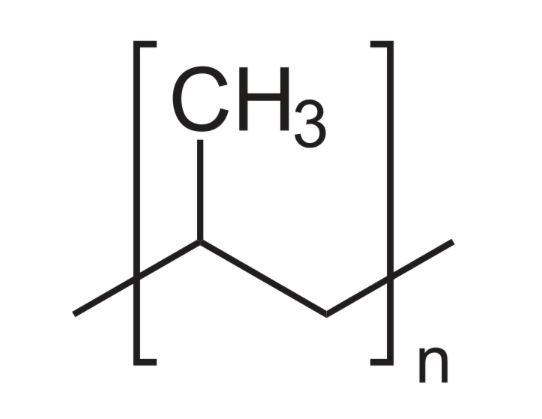
Today's MOTD is the one you've been asking for… polypropylene.
While it's true that two chemists at Phillps Petroleum discovered polypropylene (PP), it wasn't until Ziegler and Natta developed a fancy catalyst that the world started making massive amounts of PP.
Today, over 97% of the roughly 80 million tons produced each year are made by polymerizing propylene with Ziegler-Natta catalysts. It's worth noting that only about 60% of that PP are homopolymers—the rest are these copolymers that introduce ethylene and rubber.
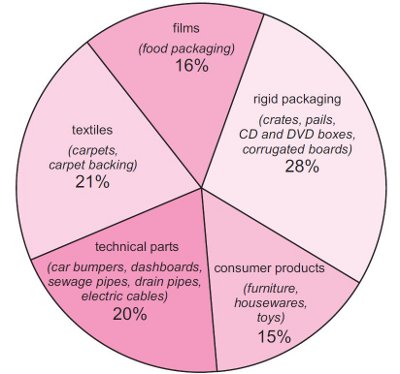
If you know what you're looking for, you'll find PP everywhere you look. Here is a handy pie chart if you want some examples.
There are plenty of PP producers around the world, but LyondellBasell and Sinopec are the most notable of the main players.