
| WTI Crude | $59.29/bbl | -0.8% |
| Brent Crude | $61.89/bbl | +0.0% |
| HH Nat Gas | $2.48/MMBtu | +2.1% |
| MB Propane | $0.85/gal | -3.4% |
| 3:2:1 Crack | $18.65/bbl | +6.8% |
Danimer is going to produce lots of PHAs in Georgia
US-based biopolymer producer, Danimer Scientific, has announced a $700 million polyhydroxyalkanoate (PHA) expansion at its site in Bainbridge, GA.
First, a little context:
Danimer is looking to produce large quantities of PHAs—a family of biodegradable polyesters that can be produced through bacterial fermentation. The company actually acquired its PHA technology from Proctor & Gamble way back in 2007. Today, the company uses that technology to produce PHAs at its pilot plant in Bainbridge, GA.
So, they are expanding?
After locking up a deal to make biodegradable Skittles wrappers and recently going public, Danimer is now prepared to drop $700 million on a full-scale PHA plant. The new site will produce biopolymers that can be used as "additives, aqueous coatings, fibers, filaments, films, hot-melt adhesives, and injection-molded articles.".
Read the press release here.
Agilyx and AmSty are going to recycle in Louisiana
Chemical recycling start-up, Agilyx, and styrene producer, AmSty, have announced plans to constructing an advanced polystyrene recycling facility at AmSty's site in St. James, LA.
Here's some history:
These two companies decided to work together back in 2018 and have been operating a 10-ton-per-day site in Tigard, OR. Since then, that site has been depolymerizing waste polystyrene and sending the resulting styrene monomer all the way to AmSty's site in Louisiana (to be polymerized again). AmSty is also planning to build another one of these chemical recycling sites outside of Chicago with Ineos Styrolution.
Zooming out:
To AmSty, the plastic waste problem presents an opportunity to make polystyrene a sustainable material. The company, who is using Agilyx's technology, told us that the depolymerization of polystyrene consumes 40% less energy than other common polymers. On top of that, materials like a polystyrene foam cup use very little material (because those cups are 95% air).
Read the press release here.
Total is converting waste cooking oil into jet fuel
French oil & gas giant, Total, has announced that it is begun producing sustainable aviation fuel (SAF) at its site in Le Havre, France.
The details:
The company is making this synthetic paraffinic kerosene by hydrotreating used cooking oils—one of the 6 approved production methods. Total wants to use strictly "animal fat, used cooking oil, and other waste and residue" as feedstocks for its process (because waste utilization is more sustainable than using vegetable oil). As a reminder, the company we saw last time, LanzaJet, is producing SAF from ethanol instead of oils.
So, what now?
Recently, new French legislation began requiring that all aircraft in the country use "1% biojet fuel by 2022, 2% by 2025 and 5% by 2030.". In response to that, Total will start producing a lot more SAF in the coming years. On top of this site, the company's upcoming zero-crude facility in Grandpuits will help fill the SAF demand created by the government. The SAF from this facility will find itself in aircraft later this month.
Read the press release here.
The Reboiler:
- BASF made the cathode that powers NASA's Mars Rover
- LyondellBasell got a new sustainability certificate for its European polymer sites
- Technip Energies received a huge contract to expand an Indian refinery
- Linde Engineering is working on this trendsetting green hydrogen project
- Sulzer Chemtech and Borealis developed a way to produced expanded PP
- SK Global Chemical is launching biodegradable PBAT plastic
MOTD: ammonia
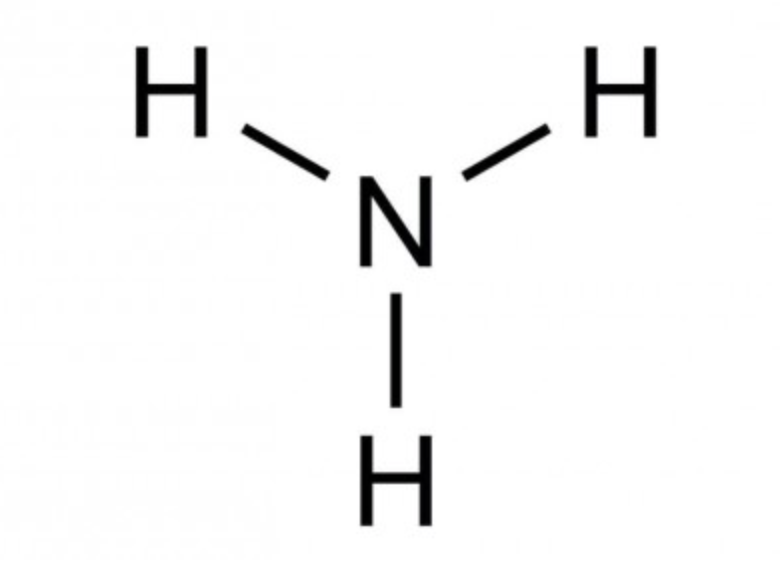
Today's MOTD is the most beautiful molecule of them all, ammonia.
Throughout the classical era, people used an ammonia solution to wash clothes, remove hair from hides, and even remove dust from iron. But that ammonia solution was produced by fermenting urine—a process that is (thankfully) not used widely today. Now, we produce all of our ammonia by using the Haber-Bosch process.
Using that process the world makes over 200 million tons of the molecule each year. About 85% of that ammonia is used to make fertilizers (like urea and ammonium salts). Most of the rest of it is used to make polyamides and nitric acid (5% each). Because of ammonia's ties to fertilizer, it's global production always keeps pace with the increased population and standard of living.
Some of the main producers of ammonia include Yara, CF Industries, and Nutrien.