
| WTI Crude | $59.77/bbl | +1.8% |
| Brent Crude | $61.86/bbl | -3.1% |
| HH Nat Gas | $2.43/MMBtu | +0.0% |
| MB Propane | $0.88/gal | -10.4% |
| 3:2:1 Crack | $17.47/bbl | -4.7% |
This company raised more money to make chemicals with light
Houston-based start-up, Syzygy Plasmonics, has raised an additional $23 million in a Series B funding round that included Norwegian oil & gas company, Equinor, among many others.
Here's the background you need:
Two professors at Rice University spent two decades developing a photocatalyst to reduce the amount of energy required for chemical production. The technology (known as the Antenna-Reactor) is licensed and commercialized by Syzygy. This Series B round will fund "product development, hiring, and the commercialization" of the company's unique reactor.
The potential it holds:
Because this photocatalytic technology "replaces heat with light" to trigger chemical reactions, the amount of energy (and associated emissions) is drastically reduced. The company aims to tackle hydrogen production first (as an alternative to green hydrogen production by electrolysis). If all goes well, the company will move on other reactions that have also been demonstrated.
Read the press release here.
Occidental will help make banana genes produce ethylene
Houston-based start-up, Cemvita Factory, and the venture capital arm of Occidental Petroleum have jointly announced plans to build a bio-ethylene pilot plant.
How they are doing it:
Cemvita has genetically engineered a microorganism capable of producing ethylene from CO2, water, and light. The company did this by taking "a gene from a banana" and incorporating it into an existing microorganism. That's because bananas, like all fruits, produce ethylene as they ripen (which is why we use the gas to rapidly ripen fruit).
Zooming out:
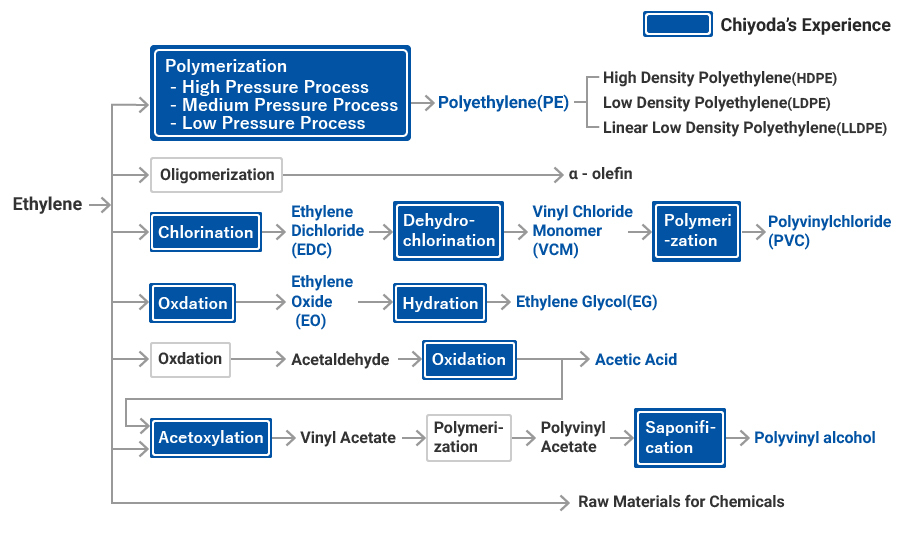
Occidental decided to invest in Cemvita because the proposed technology, assuming it is economical, would have profound implications for the chemical industry. Today, virtually all of our ethylene (a.k.a. the world's most important chemical) is produced by steam crackers. It's the same energy-intensive problem we're seeing BASF, SABIC, and Linde try to solve with an electric steam cracker.
Read the press release here.
Shell's investment will help convert ethanol into jet fuel
Sustainable jet fuel producer, LanzaJet, has announced that it has secured an investment from Shell.
What does LanzaJet do?
This start-up will be using bio-based ethanol to produce what the industry calls sustainable aviation fuel (SAF). The company is doing this by dehydrating ethanol and combining the remaining hydrocarbon molecules into chains (thanks to this proprietary process).
The bigger picture:
Currently, blending this bio-based SAF with traditional kerosene is the only viable method of reducing emissions associated with aviation. While LanzaJet isn't the only company producing SAF (Neste has been making it for a decade), the company's process "is uniquely able to produce up to 90% of its fuels as SAF, with the remaining 10% as renewable diesel.". LanzaJet's first plant in Soperton, Georgia should start pumping out 10 million gallons of the stuff each year starting in 2022.
Read the press release here.
The Reboiler:
- A bunch of Axens’ technology were selected for this refinery in Iraq
- Baker Hughes, Plug Power, Chart Industries are investing in a big green hydrogen fund
- The chemical safety board is adding staff and revamping its board order
- Mura Technology's chemical recycling plant just started construction
- The Canadian government gave Inter Pipeline $408 million to build a petrochemical complex
MOTD: mea
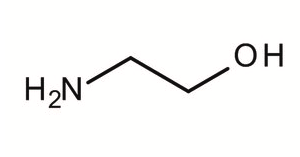
Today's MOTD is the world famous, monoethanolamine.
It's hard to say much about this molecule without mentioning its siblings. We can't make monoethanolamine (MEA) without making DEA and TEA too. Today, the world produces just under 2 million tons of these three molecules each year and about a third of each.
We make this stuff by reacting ethylene oxide with aqueous ammonia. It's mostly used to scrub flue gas emissions and produce detergents, emulsifiers, polishes, and pharmaceuticals.
The main companies producing all of these ethanolamines are Huntsman, Dow Chemical, and BASF (among quite a few others).