
| WTI Crude | $72.37/bbl | +2.8% |
| Brent Crude | $75.50/bbl | +2.6% |
| HH Nat Gas | $4.92/MMBtu | -6.3% |
| MB Propane | $1.33/gal | +0.7% |
| 3:2:1 Crack | $18.74/bbl | -7.1% |
That natural gas price is too high for Yara
Norwegian fertilizer producer, Yara, has announced plans to reduce its production of ammonia by 40% due to record-high natural gas prices in Europe.
What's up with the gas price?
If you've been paying attention to that HH Natural Gas price at the top of this newsletter you've probably wondered why it's more than twice as high as normal. It comes down to tight supply and a return to normal demand. In the US it's events like Hurricane Ida causing short supply, and in Europe it mostly boils down to last year's cold winter (which used more gas than we expected). Now, we have super low amounts of natural gas in storage which is causing fears for the winter.
Okay, so, ammonia?
We produce ammonia by reacting nitrogen (from the air) with methane (which is basically natural gas). Most of that ammonia goes on to become fertilizer—but when the cost of your natural gas feedstock jumps 250% profits go out the window. Once fertilizer customers run out of supply it's possible we'll see Yara resume production and pass the cost down the value chain.
Read the press release here.
Huntsman is expanding into the semiconductor game
American chemicals producer, Huntsman, has announced it will be expanding its specialty amine production in Conroe, Texas.
Feeling déjà vu?
That's probably because Huntsman made a similar announcement for its plant in Hungary a couple of weeks ago—but these amines are special for a different reason. This time Huntsman is planning to make quaternary amines (commonly called quats) for the semiconductor industry. We use molecules like TMAH to dissolve the photoresist used in the critical photolithography step (it's how the design gets printed onto the chip).
Why the expansion?
It's not spelled out anywhere, but this announcement comes weeks after Samsung announced plans to build a $17 billion site outside of Austin, TX (which is just a couple of hours from Huntsman). Not only that but Intel and TSMC also are planning multi-billion semiconductors sites in Arizona. The bottom line is that more semiconductors mean more chemicals required to make them.
Read the press release here.
SABIC and ExxonMobil are starting up soon
Saudi Arabian chemical giant, SABIC, has announced that it is preparing to start up its joint venture (JV) project with ExxonMobil in Corpus Christi, TX.
Catching you up:
Just 3 years ago, ExxonMobil and SABIC finalized their plans to form a joint venture for this $10 billion petrochemical project. The project consists of what will be the world's largest ethane cracker (2 million tons per year), an ethylene glycol (MEG) unit, and two polyethylene units (likely HDPE, LDPE, and LLDPE). Construction on the project got started in mid-2019 and wrapped up at the end of July.
The details:
When the plant starts operating it will use that ethylene (from the cracker) to produce 1.2 million tons of MEG and 1.4 million tons of polyethylene each year. Most of that MEG is used to make antifreeze and PTA for PET. There are seemingly infinite uses for the polyethylene.
Read more here on Reuters.
The Reboiler:
- One of Shell's off-shore platforms was heavily damaged by Hurricane Ida
- Plug Power is planning to build a big green H2 plant in Fresno, California
- Toray Plastics decided to sell its plant in Rhode Island
MOTD: aceticacid
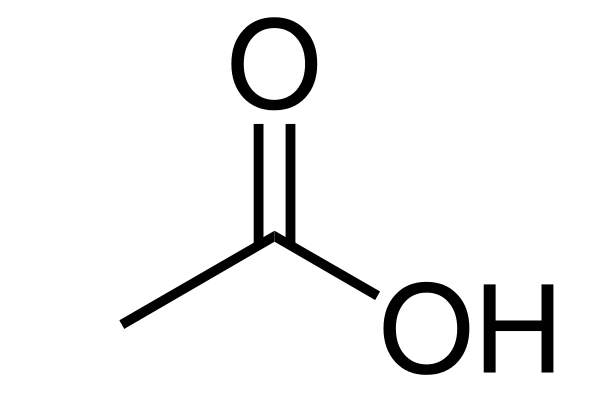
Today's MOTD is the one you've been waiting for… acetic acid.
You're probably familiar with acetic acid in its diluted form (vinegar), but only a small fraction (less than 10%) of the 22 million tons of acetic acid produced each year actually end up dressing salads and pickling vegetables.
Most acetic acid (roughly 75%) is produced by reacting methanol with carbon monoxide, but it can also by made by oxidizing acetaldehyde or ethylene. Some of the largest producers of acetic acid are Celanese, INEOS, Eastman, and LyondellBasell.
About 30% of acetic acid is used to produce vinyl acetate monomer, 30% to produce acetic anhydride, 20% to produce esters (like ethyl acetate, n-butyl acetate, isobutyl acetate, and propyl acetate), and 20% to produce terephthalic acid.