| WTI Crude | $69.34/bbl | +1.0% |
| Brent Crude | $73.07/bbl | +1.5% |
| HH Nat Gas | $4.77/MMBtu | +7.2% |
| MB Propane | $1.19/gal | +1.5% |
| 3:2:1 Crack | $24.11/bbl | +4.1% |
Huntsman to make more PU catalysts
American chemicals producer, Huntsman, has announced that it will be expanding its specialty amine production in Petfurdo, Hungary.
Okay, special amines for what?
Huntsman is expanding its site to produce more of the amines in their JEFFCAT family of products. That (very long) list is mostly tertiary amines (such as DABCO) that are used as a catalyst in the production of polyurethanes (PU).
So, why build the new site?
Demand for these catalysts tracks the demand for polyurethanes—which is seeing relatively high growth for the chemical industry (5% CAGR from 2020 to 2026). This growth is fueled by the polyurethane foams that become "automobile seats, mattresses, and energy-efficient spray foam insulation for buildings". Huntsman (and other polyurethane and polyurethane catalyst producers) can thank the rising middle class of Asia for that.
Read the press release here.
LanzaTech and Twelve are going to work together
US-based CO2 utilization companies, LanzaTech and Twelve, are partnering up to produce polypropylene (PP) from CO2.
First, some context:
We've talked about LanzaTech a lot in the past. They are using biotechnology to produce chemicals by feeding microorganisms a mixture of carbon monoxide, CO2, and hydrogen. Twelve came up for the first time back in July when they wrapped up a Series A funding round. They are using electrolysis (with the help of a proprietary catalyst) to reduce CO2 to produce chemicals (like methane).
Okay, so what's going on here?
Both of these companies are looking to utilize CO2 through very different means—at first glance, their technologies appear to compete. In any case, this (extremely vague) announcement tells us that they intend to work together. And since neither company has expertise in propylene or PP production they will probably just be responsible for making methanol or propane from CO2. Then those molecules will be converted to propylene (via MTO or PDH, respectively) and polymerized by other companies.
Read the press release here.
ExxonMobil is getting in on renewable diesel
American petroleum corporation, ExxonMobil, has launched its very own process technology for renewable diesel production.
First, the big picture:
Thanks to the push for sustainability and fuel credit programs in the US, we're seeing a ton of recent investment in renewable diesel production. The US is predicted to be making 6x as much of the stuff in 2024 as it was making in 2020. More capacity means more technology being licensed—and it looks like Exxon wants in.
How they stack up:
Exxon's process hydrogenates the vegetable oil inputs like everyone else (we're looking at you Haldor Topsoe and Axens). What makes Exxon's technology different is the isomerization and dewaxing it does afterward. Haldor Topsoe actually does a really great job explaining this whole dewaxing situation.
Read the press release here.
The Reboiler:
- Neste increased its use of renewable electricity at its Porvoo refinery (again)
- The Mississippi River is pretty clogged with chemical barges thanks to that hurricane
- Eneos is planning to produce even more polyethylene so it can insulate more power cables
- Yara (the fertilizer company) just bought a recycled-fertilizer manufacturer called Ecolan
MOTD: ps
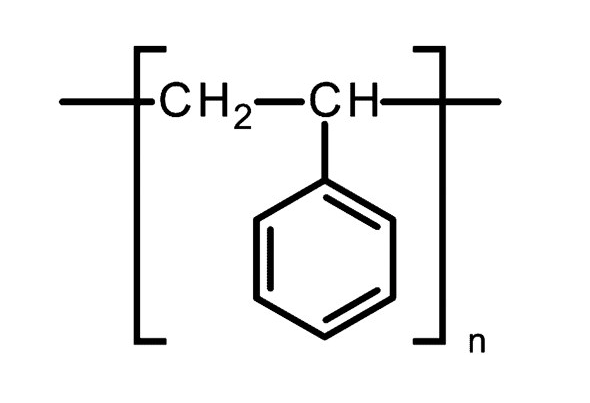
Today's MOTD is the most interesting one of all: polystyrene.
First discovered by this apothecary from the resin (known as storax) of this sweetgum tree in 1839, we didn't start making this molecule commerically until I.G. Farben started us off in 1931.
Today, the world produces about 17 million tons of this stuff each year. Most of it is made by the free radical polymerization of styrene (which is made from either ethylbenzene or coproduced with propylene oxide). Of course, we use polystyrene to make polymeric foams (looking at you, Styrofoam), molded plastics (like CD cases), and various copolymers (including the rubber in tires).
The big guys making of all this polystyrene are Ineos, Trinseo, and Total just to name of few of the many.