
| WTI Crude | $70.94/bbl | -0.1% |
| Brent Crude | $72.27/bbl | +0.3% |
| HH Nat Gas | $3.36/MMBtu | +4.0% |
| MB Propane | $0.96/gal | +1.0% |
| 3:2:1 Crack | $15.31/bbl | -1.0% |
Dow is moving its isocyanate production further south
US-based chemical company, Dow Chemical, has announced plans to build a methylene diphenyl diisocyanate (MDI) distillation and prepolymers facility at its site in Freeport, Texas.
A little context:
Since the mid-1980s, Dow has been producing MDI at its site in La Porte, Texas, and transporting it 80 miles south to Freeport to use it. That MDI is typically reacted with a polyol (such as ethylene glycol) to produce what industry calls a "prepolymer". Those prepolymers are used to make the polyurethanes that end up becoming foams, coatings, adhesives, sealants, and elastomers.
So, what now?
The company is planning to shut down its polyurethane assets in La Porte and rebuild them (bigger and better) down in Freeport. The new unit will have a 30% larger capacity, be completely heat integrated, reduce its water usage, and eliminate the need to transport MDI. The site is expected to start up sometime in 2023.
Read the press release here.
Axens' renewable diesel technology is headed to California
Chemical process technology firm, Axens, has signed a license agreement for its renewable hydroprocessing technology with Aemetis for its upcoming low-carbon fuels project in Riverbank, California.
What's the technology?
Axens' technology hydrotreats and isomerizes a renewable feedstock, such as non-edible corn oil, into renewable diesel and sustainable aviation fuel (SAF). That technology, which Axens has named Vegan, will be integrated with the rest of Aemetis' project that provides a renewable hydrogen source (gasified wood waste).
Renewable diesel and SAF?
As the push for sustainability continues to accelerate, you're going to continue to see more bio-based fuel news in the future. With that in mind, it's important to distinguish the difference between renewable diesel and biodiesel—that's why The Column partnered with Matt Anderson to explain it for us with this video.
Read the press release here.
AMG is going to purify lithium hydroxide in Germany
German process technology firm, GEA, has announced that it will be providing its lithium hydroxide purification technology to AMG for its upcoming plant in Germany.
What's going on here?
AMG is producing technical-grade lithium hydroxide from spodumene deposits in Brazil and shipping it to Germany for further purification to battery-grade lithium hydroxide. Typically, lithium-producing companies like Albemarle and SQM produce battery-grade lithium where the lithium is mined. AMG's unconventional approach avoids the difficulties associated with shipping battery-grade lithium hydroxide.
Who wants lithium hydroxide?
Cathode producers, such as Umicore and Johnson Matthey in Europe, use lithium hydroxide to produce the cathodes that end up in lithium-ion batteries. As the demand for electric vehicles continues to rise we'll continue to see more lithium hydroxide capacity being built.
Read the press release here.
The Reboiler:
- Brazil is seeing a lot of M&A right now
- This plant in the Netherlands will convert non-recyclable waste into methanol
- Kuraray decided to sell its ultraviolet water-treatment business to De Nora
- Plug Power is planning to build a green hydrogen plant in Georgia
- India's TCL Specialties is building a plant that will make maleic anhydride, malic acid and fumaric acid
MOTD: acetone
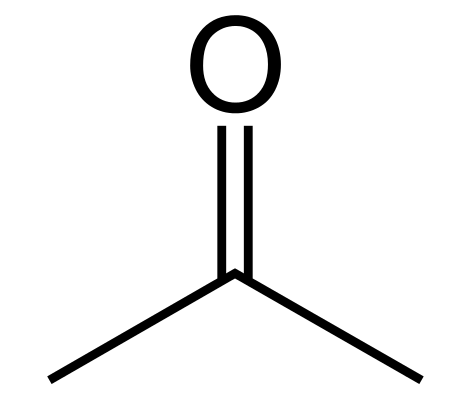
Today's MOTD is the most important one yet: acetone.
First produced by Andreas Libavius in 1606 as he casually distilled lead acetate, this molecule is best known as the main ingredient in nail polish remover and paint thinner.
While acetone may have got its frame from those uses, only about a third of the world's acetone is used as a solvent. A quarter of it used to make BPA, another quarter is used to make the precursor to methyl methacrylate, and about 10% is used to make MIBK.
Virtually all acetone (roughly 7 million tons per year globally) is produced from propylene in some form or fashion. That's either by the cumene process (83%), the Wacker process, or through isopropyl alcohol as an intermediate. Some of the largest producers of the molecule include Ineos, Shell, and Borealis.