| WTI Crude | $69.28/bbl | +0.6% |
| Brent Crude | $72.26/bbl | +0.0% |
| HH Nat Gas | $4.25/MMBtu | -2.3% |
| MB Propane | $1.14/gal | +0.0% |
| 3:2:1 Crack | $23.16/bbl | +4.5% |
Hurricane Ida made landfall yesterday afternoon
Petrochemical producers, such as BASF, Dow Chemical, and ExxonMobil, prepared for the worst alongside Louisiana residents as Hurricane Ida made landfall Sunday afternoon.
How they prepared:
Before Ida made landfall some 50 miles South of New Orleans, plants in the area (including those owned by BASF, Dow Chemical, ExxonMobil, Phillips 66, Shell, Norco, and Cornerstone) were idled. Nearly all shipments passing to, through, or from the region (via rail, river, or sea) were suspended on Sunday as well. Citizens were encouraged to evacuate and those who opted out were encouraged to stay indoors.
Potential industry impact:
We'll hear about the impact of the storm early this week, but for now, we only know what's at stake. This region, known colloquially as Cancer Alley, producers enormous quantities of the chemical building blocks that feed every other industry. Some molecules, like MDI, melamine, propylene, and PVC were already seeing record high prices due to short supply. That price impact can trickle its way down to the consumer if the storm is bad enough.
Read more here on ICIS.
LyondellBasell shuts down ethylene-based ethanol
Global petrochemical corporation, LyondellBasell, has announced that it will be closing its synthetic ethanol plant in Tuscola, Illinois, and a denatured ethanol plant in Newark, New Jersey.
A little history:
When these plants started operation in 1953, only 43% of the industrial ethanol market was biobased. As of today, it's fair to say that share is basically 100%. This drastic market shift is a result of the Renewable Fuel Standard (RFS) established by the EPA in 2005 that mandated the blending of fermentation-based ethanol into gasoline.
The news isn't surprising:
We talked about the ethanol market just one month ago when POET (the largest ethanol producer in the US) built a new plant. Hydrating ethylene to make high-purity ethanol has worked for LyondellBasell, but now companies like POET are starting to purify their fermentation-based ethanol and branch out of the fuels market. That's largely because of the ethanol oversupply—supply-induced low prices have caused fermentation-based suppliers to seek higher margins (like LyondellBasell's previous customers in the pharmaceutical industry).
Read more here on C&EN.
The green spin on Fischer-Tropsch
British sustainable fuels technology company, Velocys, has announced that its Fischer Tropsch (FT) technology has been selected for a demonstration project in Japan.
More on the technology:
Velocys has developed a proprietary catalyst and reactor for the well-known Fischer–Tropsch (FT) process. The company's technology converts syngas (which can be made from natural gas, coal, waste, or biological sources) into liquid hydrocarbons. That being said, the FT process isn't new—it's been widely commercialized over the years in regions that don't have an abundant supply of liquid fuels (looking at you, South Africa).
So, what's the deal here?
It's not Velocys technology that's unique, it's the companies marketing strategy. Velocys sees their syngas-to-liquids technology as a net-zero bridge between gasified anything (listed above) into products like jet fuel and naphtha. Toyo, Velocys' EPC partner, and five other companies are going to test the viability of Velocys' proposal by building this demonstration plant.
Read the press release here.
The Reboiler:
- Shell Catalysts & Technologies commercialized its latest catalyst for converting ethylbenzene
- SIKA divested its European coatings business to Sherwin-Williams
- The University of Missouri and Dow Chemical are trying to put plastic in the road pavement
- Sumitomo Chemical is going to pilot a hydrogen project at an Australian alumina refinery
MOTD: mpg
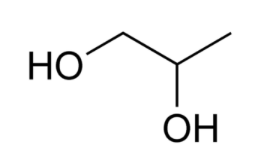
Today's MOTD is the most important one yet: propylene glycol.
First produced by this French chemist in 1859, we didn't start making this molecule (reffered to as MPG) commercially until the Carbide and Carbon Chemicals Corporation set up shop in 1931.
Today, the world produces roughly 2 million tons of this stuff each year primarily by the noncatalytic hydrolysis of propylene oxide. A lot of it (about 45%) is used to make thermosets and polyurethanes. The rest of it ends up in things like coffee-based drinks, pharmaceuticals, deodorant, and vape juice just to name a few.
The main companies producing all of this MPG (in the US) are Shell, Dow Chemical, LyondellBasell, and Huntsman.