| WTI Crude | $58.69/bbl | +1.3% |
| Brent Crude | $61.17/bbl | +1.7% |
| HH Nat Gas | $3.76/MMBtu | +10.6% |
| MB Propane | $0.86/gal | -2.5% |
| 3:2:1 Crack | $10.81/bbl | -12.9% |
Covestro wants to make more PUDs
German chemical company, Covestro, has announced plans to increase production capacity of polyurethane dispersions at its site in Shanghai, China.
What are they making?
Polyurethane dispersions (PUDs) are urethane polymers finely dispersed in water. Those polymers are typically addition copolymers—with polyester, polycarbonate, or polyethers making up about half of the polymer by weight. PUDs are widely used as paints, inks, coatings, and adhesives (and are a great way to reduce VOC emissions).
Making more of it:
Covestro is planning on building a new line for polyester resins (to be used to make PUDs) and a new PUD plant next door. While those plants won't be completed until 2024, the company is taking action now to prepare for "the continued growth in demand for these products". So long as customers continue to replace solvent-based products with water-based PUDs, Covestro will continue to expand production.
Read the press release here.
Fischer-Tropsch is still here and it wants your waste
British sustainable fuels technology company, Velocys, has formed a partnership with Japanese EPC firm, Toyo Engineering, to commercialize Velocys' technology.
What's that technology?
Velocys has developed a proprietary catalyst and reactor for the well-known Fischer–Tropsch (FT) process. The company's technology converts syngas (which can come from natural gas, coal, waste, or biological sources) into liquid hydrocarbons. Velocys' potential to convert waste into jet fuel is what the future of the company rests on.
So what's the agreement?
Following the successful demonstration of the technology last year Toyo wants in on more. This agreement basically makes Toyo the go-to partner for the technical engineering, construction, and delivery of any future project involving Velocys' technology in Japan.
Read the press release here.
Michelin wants to start recycling tires in Chile
French tire manufacturer, Michelin, has announced a new tire recycling plant that utilizes Enviro's technology.
A little context:
Tires are complicated—the rolling devices are made of natural rubber, synthetic polymers, antioxidants, antiozonants, fillers, textiles, and even some (12%) steel. Virtually all of those ingredients are derivatives of the oil and gas industry. The push for sustainability has made manufacturers look at waste like an alternative resource, and this isn't the first time we've seen a company try to make that waste useful.
So what are they doing?
Enviro's technology uses a semi-batch pyrolysis process to produce pyrolysis oil, carbon black, steel, and gas from end-of-life tires. While this first plant will be built in Chile (with a capacity of 30,000 tons per year), we're likely to see similar announcements in the future. Michelin has signed a license agreement "that extends through 2035 and which entitles Michelin to establish its own recycling plants based on Enviro’s technology.".
Read the press release here.
The Reboiler:
- Elon Musk pledges $100 million for carbon removal technology
- Bp tested an autonomous vehicle at its German refinery
- Air Liquide to provide gases for BASF's battery materials plant
- Akzo Nobel throws in the towel and stops trying to buy Tikkurila
- Lummus will provide the FCC technology for a refinery in India
MOTD: ethylene
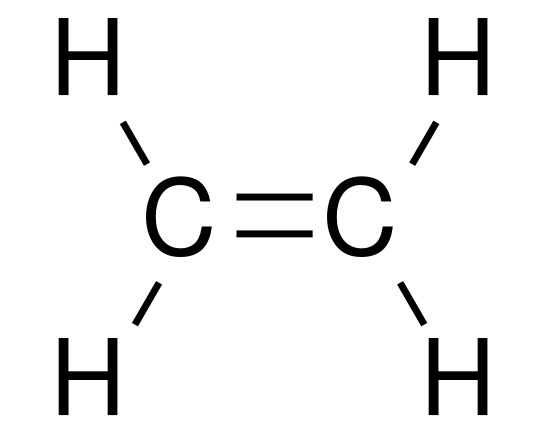
Today's MOTD is a personal favorite… ethylene.
First discovered by this man in 1669, chemists have been playing with this molecule for quite some time. The term, olefin, has it's origin story in the fact that when ethylene is combined with chlorine it produces Dutch oil (which made ethylene an oil-making gas—or as they called it: olefiant gas).
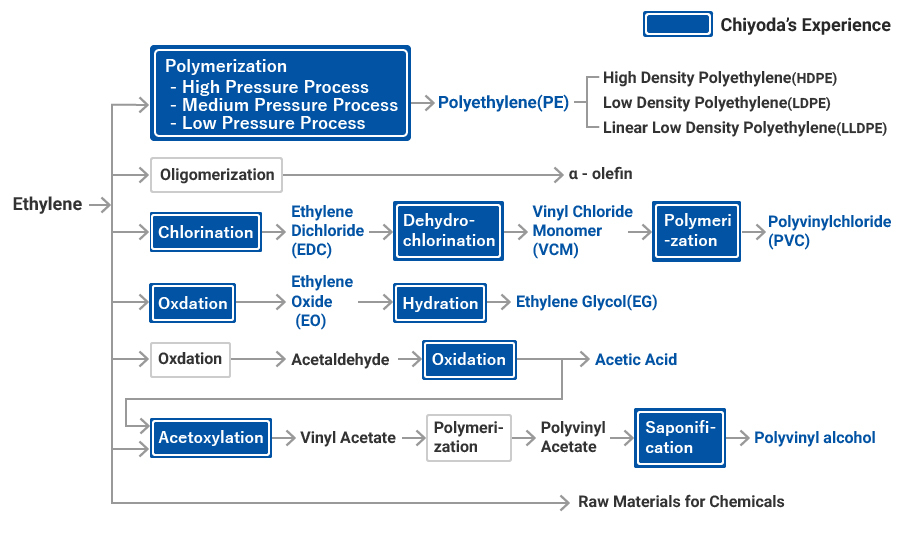
The simplest alkene is also the most widely produced organic compound in the world, with a globabl production of roughly 200 million tons per year. About 60% of that becomes polyethylene (HDPE 28%, LLDPE 18%, LDPE 14%), 18% becomes ethylene oxide, 11% becomes EDC (that's Dutch oil), and 5% becomes ethyl benzene. This flowchart paints a better picture.
All of that ethylene is made in one of three ways—steam cracking ethane and propane, steam cracking naphtha, or catalytically cracking gas oil. The main companies doing the cracking are your huge petrochemical companies like ExxonMobil, Dow Chemical, SABIC, Ineos, and many more.