
| WTI Crude | $72.09/bbl | -0.7% |
| Brent Crude | $74.64/bbl | -0.3% |
| HH Nat Gas | $5.32/MMBtu | -6.0% |
| MB Propane | $1.34/gal | +2.7% |
| 3:2:1 Crack | $20.67/bbl | -1.3% |
Houston has a lot of CO2 to capture
Eleven large companies, including Dow Chemical, Ineos, LyondellBasell, and ExxonMobil, have announced their joint support for a wide-scale carbon capture and storage (CCS) system for the Houston, TX area.
Catching you up:
Back in April, we saw ExxonMobil make a "Texas-sized call to action" by asking for support from the government and private industry. The company proposed an extensive carbon capture network with a pipeline that leads deep underground in the Gulf of Mexico. The company touted the expensive project's potential ability to store 100 million tons of CO2 annually in a 500 billion ton sink under the Gulf.

The big picture:
The Houston area is home to hundreds of industrial manufacturing sites that produce the raw materials our society demands. But the matter of fact is that a consortium of major industrial players can probably build this CCS system as fast as go-getters like Origin Materials and Solugen can produce chemicals without the CO2. So while true innovation is happening, huge CCS projects will certainly be built concurrently (as a reminder, less innovative doesn't mean less useful). Can you imagine a future where enormous CCS systems look like the outdated, hard-to-shutdown, coal-fired power plants that we have today?
Read the press release here.
Solvay makes soda ash and white beaches
Belgian chemical company, Solvay, has an activist investor looking to have the company's current CEO, Ilham Kadri, replaced because of how the company discharges waste from a sodium carbonate (aka soda ash) plant in Italy.
What's going on here?
Sodium carbonate is produced from sodium chloride (in the form of brine) and calcium carbonate (from limestone) via the Solvay process. Some of the limestone isn't utilized by Solvay and is discharged into the Mediterranean Sea as a powder. That limestone powder is deposited into the beaches nearby giving name to "the white beaches of Rosignano".
So, is that a bad thing?
In short, not really—there is nothing toxic about tiny limestone particles. Since that's a matter of fact, it's fair to say that the active investor who wants Solvay's CEO deposed simply has an issue with what isn't natural. The rest of Solvay's board is in full support of the current discharge process, so it's unlikely that anything will come of this (for now).
Read more here on Nasdaq.
Jacobs finally split off from Worley
Dallas-based EPC firm, Jacobs, has sold its remaining 10% stake in Australian EPC firm, Worley for $500 million.
A little history:
Back in 2018, Jacobs sold WorleyParsons its energy, chemicals, and resources division for a cool $3.2 billion. That deal inspired WorleyParsons to drop the Parsons and rebrand as a leader in—you guessed it—energy, chemicals, and resources. Part of the deal allowed Jacobs to take a 10% share of Worley, and that's the part they just sold off.
What do these guys do anyway?
We see a lot of plant announcements from operating companies in this newsletter. Guys like Worley are the ones that handle the engineering, procurement, and construction (aka EPC) of those plants. For example, Worley is the one spearheading Phillips 66's new renewable fuels complex and Origin Materials' first two plants.
Read more here on AFR.
The Reboiler:
- Shell just decided to build one of Europe's largest biofuels sites
- Axalta (the coatings company) completed the acquisition of U-POL a couple of days ago
- Siemens and Porsche just broke ground on a green H2 and methanol-to-gasoline plant in Chile
- Italy's Eni signed an agreement with Rome's airport to develop sustainable avaition fuel
MOTD: urea
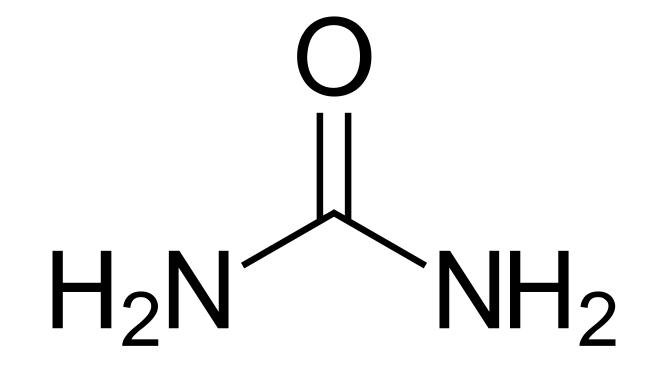
Today's MOTD is a personal favorite… urea.
First discovered in urine by a Dutch scientist in 1727, the world now produces roughly 250 million tons of urea each year. Nearly all of that urea is made by reacting ammonia with carbon dioxide, so it is primarily ammonia producers who make urea (companies like Nutrien and Yara).
While over 90% of urea produced is used as a fertilizer, it can also be used to produce urea-formaldehyde resins, melamine, diesel exhaust fluids (DEF), and livestock feeds. Urea is even used in some adhesives and paints, laminates, molding compounds, paper, and textiles.