
| WTI Crude | $63.81/bbl | +2.6% |
| Brent Crude | $67.08/bbl | +2.0% |
| HH Nat Gas | $2.98/MMBtu | +6.8% |
| MB Propane | $0.90/gal | +19.2% |
| 3:2:1 Crack | $17.96/bbl | +6.3% |
Exxon proposed a $100B carbon capture network for Houston
US-based integrated petroleum company, ExxonMobil, has proposed a federally-funded $100 billion carbon capture and storage network for the Houston, Texas area.
Summing it up:
Basically, Exxon wishes that there was an extensive pipeline system along the Houston Ship Channel that ended deep underground in the Gulf of Mexico. If a carbon capture and sequestration (CCS) network of this size existed, it would "effectively capture all the CO2 emissions from the petrochemical, manufacturing, and power generation facilities" located in the region. The company projected that the project could bury 100 million tons of CO2 each year (10x the total amount captured by the US today).

Zooming out:
Such a project would likely make Exxon's CCS business a ton of money—it's easy to imagine the company selling its leading carbon capture technology to the various refining, chemicals, cement, and steel plants in the Houston area. With "enhanced regulatory and legal frameworks that enable investment and innovation" as well as both government and private-sector funding, such a large project (of some variation) might actually be possible. We're already seeing it happen in Europe and the trend of spending money to avert emissions is unlikely to reverse.
Read the press release here.
Dow just signed a chemical recycling agreement
US-based chemical company, Dow Chemical, has announced that it is partnering with process technology company, Mura Technology, to help scale its chemical recycling process.
Some context:
We last saw Mura earlier this year when the company signed an agreement with an EPC firm to help it deploy its technology globally. The company's first plant is expected to be operational by 2022 and begin processing over 20,000 tons of end-of-life mixed waste plastic each year. If you want to read more about how the company is depolymerizing plastic check out this presentation or this YouTube video.
So, what's the agreement?
Dow has agreed to provide its "materials science capabilities, global scale, and financial resources" in exchange for access to the hydrocarbons produced at Mura's upcoming site in the United Kingdom. Dow will then use that feedstock to develop new virgin-quality plastic closing the loop on plastic production.
Read the press release here.
Louisiana might be home to (another) huge biofuels plant
Project development company, Strategic Biofuels, has jointly announced plans with the Governor of Louisiana to build a renewable diesel refinery near Monroe, LA.
Feeling déjà vu?
This isn't the first time we're seeing a potential renewable fuels plant come to Louisiana—Grön Fuels (who we last saw in November) is getting closer to building a $9.2 billion site near Baton Rouge. While not in Louisiana, we're also seeing well-known refiners like Phillips 66 and Valero are building more renewable fuels capacity.
The details:
We often see renewable fuel refineries looking to process used cooking oil, oils from crops like soybeans, or even rendered animal fats. This proposed site (which won't be operational until 2025 at the earliest) would use the plentiful forestry residues and wood waste in the region as a feedstock. That being said, we probably won't know if the proposed plans will become a reality until late next year.
Read the press release here.
The Reboiler:
- Kumho Mitsui Chemicals wants to make more MDI in South Korea
- Honeywell UOP's OLEFLEX propane dehydrogenation technology was selected for this plant in Egypt
- Kraton got the okay from the EPA to sell its COVID-killing polymer
- These two Russian petrochemical companies decided to merge
- Lonza is going to drop $200M on a new small-molecule manufacturing site
- This industrial conglomerate just bought chemical giant W.R. Grace for $7 billion
MOTD: vcm
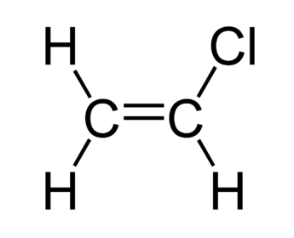
Today's MOTD is the best one yet: vinyl chloride.
Despite its sweet odor, this molecule is a highly toxic and carcinogenic intermediate that serves one single purpose—to produce polyvinyl chloride (that's PVC). Today, we produce about 60 million tons of vinyl chloride (commonly referred to as VCM) each year to do just that.
While the molecule was first synthesized in 1835, it wasn't until Waldo Semon figured out how to make PVC less brittle that we started make tons of this stuff. About half of the world's VCM is made by thermally cracking EDC (which is made by the direct chlorination of ethylene), and the other half is made by reacting acetylene with hydrogen chloride. The acetylene half of production is done almost entirely in China thanks to the region's vast coal and lime resources that make acetylene relatively cheap.
The main producers of VCM are the same ones who make PVC—think of Westlake Chemical, OxyChem, Shintech, and Formosa.