| WTI Crude | $65.63/bbl | +1.8% |
| Brent Crude | $69.71/bbl | +2.9% |
| HH Nat Gas | $2.99/MMBtu | +1.0% |
| MB Propane | $0.81/gal | +0.2% |
| 3:2:1 Crack | $19.52/bbl | +3.0% |
Unilever's version of Tide Pods are made from emissions in China
Consumer goods company, Unilever, has announced the launch of a laundry capsule made with industrial carbon emissions thanks to carbon recycling start-up, LanzaTech, and India Glycols.
Spelling it out for you:
LanzaTech converted emissions from a steel mill in China into ethanol by fermenting syngas. That ethanol was then converted into ethylene oxide (EO) by India Glycols. That EO was then added to some fatty alcohols by ethoxylation to produce a surfactant. That emission-based surfactant is the part of detergent that creates foam in your washing machine (allowing dirt to be washed away).
Zooming out:
EO is typically produced oxidizing ethylene (from the oil & gas industry). But if consumer goods companies want to offer sustainable laundry solutions, they are going to need a lot of these special surfactants. Perhaps that's why a couple of months ago we saw India Glycols for a JV with Clariant to expand its ethanol-based EO production.
Read the press release here.
Trinseo officially acquired Arkema's plexiglass business
US-based styrenics producer, Trinseo, has completed the acquisition of Arkema's MMA and PMMA businesses for $1.24 billion.
A little background:
Trinseo announced that it would be acquiring this business back in December. The acquisition is important to Trinseo as the company attempts to transform its portfolio away from cyclical low-margin businesses (like its synthetic rubber business we talked about on Monday). On the other hand, Arkema is looking to become a specialty materials company that focuses on adhesives, coatings, and other advanced materials (of which PMMA does not belong).
Wait, what's MMA and PMMA?
Pretty much everyone is familiar with PMMA (polymethyl methacrylate)—the transparent rigid plastic commonly referred to by the brand name "plexiglass". But if you want to make PMMA you need to make MMA (methyl methacrylate) first. Trinseo is purchasing Arkema's seven integrated production sites that do just that.
Read the press release here.
Phillips 66 is even closer to renewing its refinery
US-based refiner, Phillips 66, announced the completion of its first diesel hydrotreater conversion at its refinery outside of San Francisco, CA.
Some context:
It was last August when Phillips 66 told the world that it's planning on renewing its refinery near San Francisco, CA. Since then, we've seen the company increase its renewable production in the U.K. and other refiners (like Valero) make similar announcements. Today's announcement tells us that Phillips 66 is now producing 16% of what it plans to by 2024.
Bigger picture:
There is a lot of talk about biofuels in this newsletter because for two main reasons:
- Renewable diesel capacity in the US is expected by a factor of 6 through 2024
- Press releases about sustainability are no-brainers for any company
But putting those changes in perspective is important—so check out this graphic that visualizes how much renewable fuel capacity will grow relative to petroleum.
Read the press release here.
The Reboiler:
- BASF joined this initiative to make digital watermarks on packaging to improve recycling
- BASF also announced that it plans to make more enzymes
- W.R. Grace decided to accept Standard Industries takeover offer of $7 billion
- Hexion completed the sale of its phenolic resins, hexamine, and forest products businesses
- UNICAT acquired a catalyst producer who can make more hydrogen from SMR
MOTD: urea
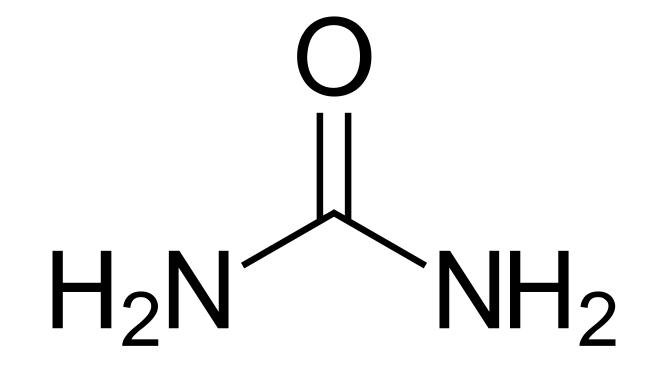
Today's MOTD is the one you've been waiting for… urea.
First discovered in urine by a Dutch scientist in 1727, the world now produces roughly 250 million tons of urea each year. Nearly all of that urea is made by reacting ammonia with carbon dioxide, so it is primarily ammonia producers who make urea (companies like Nutrien and Yara).
While over 90% of urea produced is used as a fertilizer, it can also be used to produce urea-formaldehyde resins, melamine, diesel exhaust fluids (DEF), and livestock feeds. Urea is even used in some adhesives and paints, laminates, molding compounds, paper, and textiles.