| WTI Crude | $64.46/bbl | +1.5% |
| Brent Crude | $67.73/bbl | +0.0% |
| HH Nat Gas | $2.96/MMBtu | +3.5% |
| MB Propane | $0.80/gal | -6.6% |
| 3:2:1 Crack | $18.95/bbl | +2.9% |
Cleaning your pool with chlorine got more expensive
US-based pool chemical producers, such as OxyChem and Clearon, are producing as much trichloroisocyanuric acid (TCCA) as possible to make up for lost production and increased demand.
What are they making?
Pretty much everyone is familiar with the fact that we add chlorine to our pools to keep them sanitary. But the solid material we add to our pools isn't chlorine—it's typically a solid chlorinated isocyanurate that releases cyanuric acid and hypochlorous acid when dissolved in water. We make this stuff by reacting cyanuric acid with chlorine gas and sodium hydroxide.
The problem:
Last summer Hurricane Laura caused BioLab's plant in Louisiana to catch fire. That plant doesn't expect to resume operations until early next year, so the domestic supply of TCCA is short. And thanks to COVID-19, the demand for home improvements (notably backyard swimming pools) has TCCA demand at all-time highs. As a result, pool owners and supply stores are seeing higher prices (nearly double) for the pool cleaning chemical.
Read more here on CNBC.
Trinseo is hoping to make bio-based rubber synthetically
US-based chemical company, Trinseo, has announced that it will be partnering with ETB Catalytic Technologies to develop a bio-based butadiene technology.
Some context:
During and after World War II, the production of butadiene from ethanol was used by the Soviet Union. Back in those days, nobody cared that ethanol was a bio-based chemical made by fermentation—all that mattered was that there was enough butadiene around to make rubber.
So, what now?
Increasing demand for sustainable products is making that bio-based ethanol feedstock look a lot more attractive. Trinseo produces many of the rubbers used in tires and would love to economically produce them using bio-based feedstocks. To do so, the companies have decided to start a feasibility study with the hope of building a pilot plant in Europe.
Read the press release here.
This CO2-neutral fuels plant is coming to Norway
Norwegian EPC firm, Aker Solutions, has announced that it has won a front-end engineering and design (FEED) contract to build a CO2-neutral gas-to-liquid fuels plant in Porsgrunn, Norway for Nordic Blue Crude.
What are they doing?
First, the companies are looking to use green hydrogen (using renewable power and electrolysis) and furnace gas from an existing factory to produce syngas (using the water-gas shift reaction). Then, that syngas will be sent to a Fischer-Tropsch unit to turn that gas into usable hydrocarbons such as kerosene, diesel, naphtha, and wax.
Zooming out:
Converting syngas into usable hydrocarbons isn't a new concept—we've been doing this since the 1930s. But using syngas to produce fuels we intend to burn makes the CO2-neutral claim a bit of a misnomer. Recently we've seen other companies turn syngas into chemicals like methanol or even polyethylene (neither of which will be burned).
Read the press release here.
The Reboiler:
- Neste is modifying its refinery to produce 500,000 tons per year of sustainable aviation fuel
- Eastman Chemical acquired this Spanish nutrition additives producer
- Lummus Technology's polypropylene process technology was selected for this plant in Nigeria
- The ACC is urging the White House to nominate more qualified people for the Chemical Safety Board
- Mitsubishi Chemical's new CEO wants to get rid of the company's old businesses
- SK Innovation and Kia Motors want to build a way to recycle EV batteries
MOTD: methanol
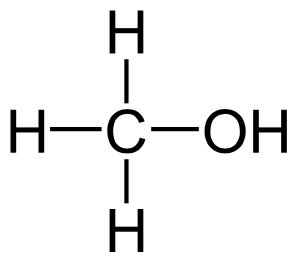
Today's MOTD needs no introduction, it's methanol.
Methanol was first isolated by the man behind Boyle's law in 1661 when he distilled the wood from a small tree. Today, the world produces 175 million tons of methanol each year primarily from syngas. The main companies making that methanol behind the scenes are Methanex, Celanese, BASF, and SABIC.
About half of the methanol produced is used to make formaldehyde (30%), acetic acid (10%), and methyl tert-butyl ether (10%). Most of the rest of it is used to make methylamines, methyl halides, and methyl ethers (or they are converted into olefins and gasoline!).