| WTI Crude | $63.50/bbl | -2.3% |
| Brent Crude | $67.73/bbl | -0.8% |
| HH Nat Gas | $2.86/MMBtu | -1.7% |
| MB Propane | $0.86/gal | -4.4% |
| 3:2:1 Crack | $18.41/bbl | +0.6% |
Mitusi and IBM want to bring the blockchain to chemicals
Japanese chemical company, Mitsui Chemicals, has announced that it is working with IBM to start working on a blockchain-based resource circulation platform.
A little background:
When you hear "blockchain" the first thing you probably think of is bitcoin—or the various other cryptocurrencies (if you're into that sort of thing). But the blockchain technology also has the potential to revolutionize industry supply chains by making them more transparent. Eventually you'll see the blockchain built into existing ERP systems that chemical companies already use to track the manufacturing and sales of their products.
What it means for chemicals:
Basically, Mitsui Chemicals and IBM have agreed to develop a platform, using blockchain, to ensure that individual molecules can be traced through their life cycle. That has huge implications for the recycling of plastics and the circular economy at large. If you're still interested, try giving this more generic article from the Harvard Business Review a read.
Read the press release here.
Repsol wants to help turn waste into methanol
Spanish petroleum company, Repsol, has announced that will be joining this waste management company and Canadian process technology company, Enerkem, to build a waste-to-methanol plant in Spain.
The plans:
The three companies are planning to convert 440,000 tons of non-recyclable solid waste into 242,000 tons of methanol each year. If the companies make their final investment decision by early next year (as expected), the plant would be operational sometime in 2025.
How they would do it:
Enerkem's proprietary gasification technology converts non-recyclable waste into syngas. Syngas, the well-known mixture of hydrogen and carbon monoxide, will then be converted into methanol for use in the chemical industry. This approach to utilizing waste should remind you of LanzaTech's biotechnology that can produce ethanol (and potentially many other chemicals) from syngas.
Read the press release here.
Nouryon's new plant in India is up and running
Global specialty chemicals company, Nouryon, has announced that it has started up its recently expanded joint venture monochloroacetic acid (MCA) plant in Gujarat, India.
Bringing you up to speed:
Last October, we saw Nouryon get the environmental clearance required to start producing more MCA at this plant. The company expected the plant to reach its full production capacity by the first half of this year—so this announcement is basically just saying "we did it".
Why they did it:
While MCA is primarily used to make cellulose gum and modified starch (which end up in ice creams, mac n' cheese, and adhesives), this plant was probably built to make this herbicide that Nouryon's JV partner produces. Herbicides, like that one, have always played a critical role in ensuring that there is food for rapidly expanding populations (like India's).
Read the press release here.
The Reboiler:
- LyondellBasell licensed a polyethylene technology to Shandong Yulong Petrochemical
- Bloom Energy deployed its first hydrogen-powered fuel cells
- McDermott is going to help Michelin make its tires from depolymerized polystyrene
- Ingevity invested in GreenGas to develop biogas capture and cleanup systems
- Sika is acquiring Yokohama Rubber Company's adhesives business
- Acron and Haldor Topsoe finished this plant expansion to make more ammonia
MOTD: acrylicacid
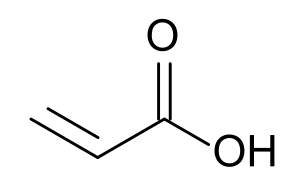
Today's MOTD is the one you've been waiting for… acrylic acid.
Owing its name to the smell of burnt fat (glycerol in the fat thermally degrades into acrolein—which smells acrid), acrylic acid is commonly produced by oxidizing propylene to acrolein and then oxidizing that acrolein.
Today, the world produces over 6 million tons of acrylic acid each year. The largest portion of it (about half) is used to make acrylates and about 30% is used to make superabsorbent polymer (mainly for use in diapers). Those acrylates and other monomers are typically combined to make polyacrylic acid and other polymers that become plastics, coatings, adhesives, and elastomers.
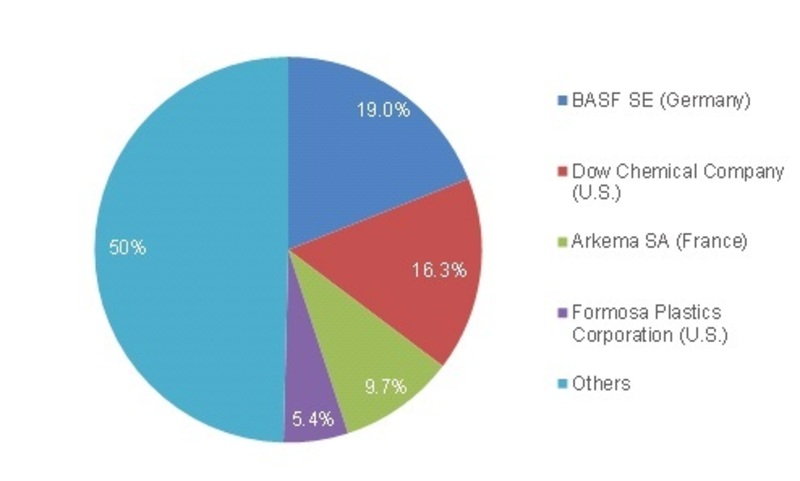
The acrylic acid market is fairly consolidated with BASF, Dow Chemical, Arkema, and Formosa making up about half of global production.