
| WTI Crude | $61.34/bbl | -3.1% |
| Brent Crude | $64.02/bbl | -3.8% |
| HH Nat Gas | $2.72/MMBtu | -1.1% |
| MB Propane | $0.75/gal | -4.2% |
| 3:2:1 Crack | $16.81/bbl | -6.0% |
Sinopec wants in on syngas fermentation
Carbon-recycling start-up, LanzaTech, has announced an investment from Chinese oil & gas giant Sinopec.
What is LanzaTech up to?
We’ve seen this company quite a few times recently—LanzaTech has a role in this waste-to-polyolefins plant and this waste-to-jet fuel plant (just to name a couple). While the company's core technology is fermenting syngas to produce ethanol, Sinopec expressed a specific interest in "LanzaTech’s synthetic biology capability which enables the production of chemicals directly from waste carbon". That means directly producing other chemicals (like acetone and isopropyl alcohol) without making ethanol first.
Bigger picture:
LanzaTech's technology promises the ability to turn emissions from things like steel mills and gasified waste into valuable chemicals. And just like virtually every other nation, China is also looking to decarbonize its heavy industries. Sinopec is a huge chemical company with plenty of cash to throw at the start-up should this initial investment prove to be fruitful.
Read the press release here.
Johnson Matthey is going to need a lot more lithium hydroxide
British chemicals technologies company, Johnson Matthey (JM), has signed a long-term lithium hydroxide supply agreement with SQM for another new cathode manufacturing plant.
Bringing you up to speed:
The last time we talked about JM was when the company announced its plans to produce cathodes in Poland. Now, JM is looking to build another cathode manufacturing plant, but three times larger and in Finland.
Zooming out:
JM will be producing a brand new cathode material called enhanced lithium nickel oxide (eLNO) by combining SQM's lithium hydroxide with some rare earth metals. As the world demands more batteries, we'll need more cathodes, which means we'll need more lithium hydroxide. That's why SQM (and basically every lithium producer) is scrambling to make more of it.
Read the press release here.
Nova Chemicals' new polyethylene plant is making progress
Canadian chemical company, Nova Chemicals, has announced that its new linear low-density polyethylene (LLDPE) expansion is expected to start-up next Spring.
The details:
The company is in the midst of expanding its nearby steam cracker to produce 50% more ethylene. That ethylene will be used to produce 500,000 tons of LLDPE each year—effectively doubling its current capacity at that site in Ontario.
Bigger picture:
This plant will be the second time Nova implements its solution-phase process technology to make LLDPE. Nova's process uses a cheaper Ziegler-Natta catalyst (relative to metallocene) and octene to make LLDPE. That process competes with CP Chem's slurry phase process and Unipol's gas-phase process that uses metallocene and hexene.
Read the press release here.
The Reboiler:
- Steam crackers might rely on hydrogen to reduce their emissions
- Sinopec's "First 3 Million Tons Of PTA" project just started construction
- Air Products is supplying syngas to this company in India
- Linde is using ITM's electrolyzer for a green H2 project in Austria
- PetroChina decided to sell its equity stake in a pipeline and LNG company
- Technip Energies completed its petrochemical project in Azerbijan
MOTD: mpg
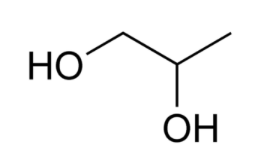
Today's MOTD is the best one yet: propylene glycol.
First produced by this French chemist in 1859, we didn't start making this molecule (reffered to as MPG) commercially until the Carbide and Carbon Chemicals Corporation set up shop in 1931.
Today, the world produces roughly 2 million tons of this stuff each year primarily by the noncatalytic hydrolysis of propylene oxide. A lot of it (about 45%) is used to make thermosets and polyurethanes. The rest of it ends up in things like coffee-based drinks, pharmaceuticals, deodorant, and vape juice just to name a few.
The main companies producing all of this MPG (in the US) are Shell, Dow Chemical, LyondellBasell, and Huntsman.